How renewables are helping EU avoid the ‘price of other people's wars’
An analytical look at how the European Union is leveraging renewable energy sources to mitigate the economic impact of geopolitical conflicts and stabilize energy costs.

Latest news and stories about energy policy in europe in Portugal for expats and residents.
An analytical look at how the European Union is leveraging renewable energy sources to mitigate the economic impact of geopolitical conflicts and stabilize energy costs.

Prime Minister Montenegro advocates for a European Union guiding framework to address energy crises, emphasizing the need for crisis management mechanisms and state aid while protecting renewable energy strategies.

The Trump administration has temporarily lifted sanctions on Russian oil for one month, a move analyzed by experts regarding its limited impact on global market shortages and the potential European reaction.

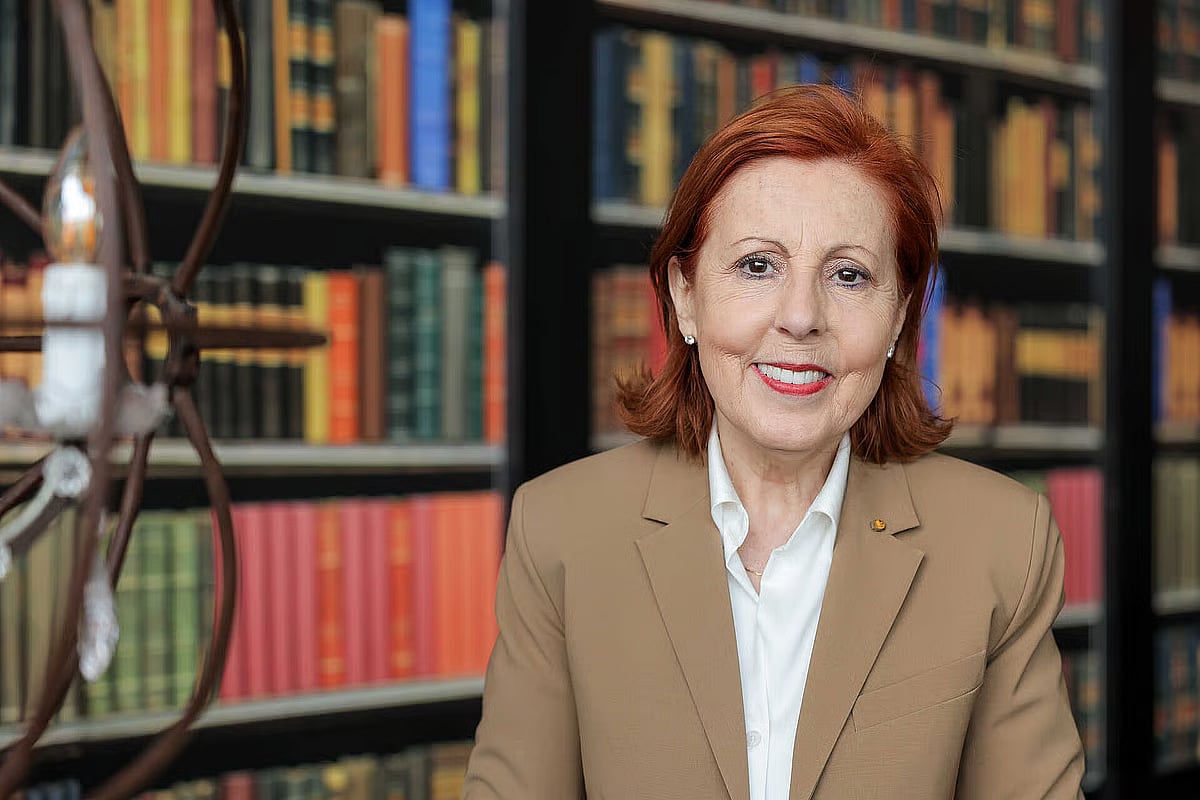
Minister of Environment and Energy Maria da Graça Carvalho has ruled out nuclear energy for Portugal, asserting that the nation's high potential for solar, wind, and hydroelectric power makes renewables the only logical path for energy independence and competitiveness.

A new law will aim to use artificial intelligence to boost efficient use of power as electricity demand threatens to overwhelm Europe's grids.

The Dutchman argues that the 27 EU member states must be more energy-independent, and that nuclear power can be a solution.

The agreement represents a new step in Europe's efforts to reduce energy dependence on Russia, following that country's invasion of Ukraine.

The demands are part of an urgent and unprecedented appeal to EU institutions made by organisations from 20 EU countries, titled 'Europe, be faithful to our common home'.

Von der Leyen warned this Tuesday that the EU will remain “vulnerable” as long as it depends on imported oil and gas, advocating for an acceleration of electrification in the face of the energy crisis.

Boasting about having 100% renewable energy is like boasting about knowing how to ride a bike with training wheels. The gas power plants that we are forced to keep on standby to avoid blackouts are very expensive training wheels.

The European Commission admitted this Monday that there could be “regional supply constraints” for oil if the blockade in the Strait of Hormuz continues until June, which primarily affects aviation fuel, and is considering saving measures within the community. “Although there is currently no fuel shortage in the EU [European Union], regional supply constraints may arise in the...”,

The European Union has included Portugal's social energy tariff and electric mobility incentives in its official catalogue of best practices for energy policy.

Exports of liquefied natural gas from Russia to the European Union reached their highest level in the first quarter since 2022, when the war in Ukraine began, according to a study by the Institute for Energy Economics and Financial Analysis (IEEFA). Driven by France, Spain, and Belgium, EU purchases of Russian LNG rose 16% year-on-year in the first quarter of 2026. Despite EU plans to ban Russian gas imports by autumn 2027, Russia remains the second-largest LNG supplier to the bloc. The report warns that Europe's shift toward LNG has created new vulnerabilities, with the EU becoming increasingly dependent on US supplies amid global supply chain disruptions.

The European Commissioner for Climate Action, Carbon Neutrality and Clean Growth, Wopke Hoekstra, warned today of the “very difficult times” the world is experiencing and cautioned that the European Union (EU) must move towards its own energy production.
European governments must create the conditions—faster and simplified licensing, access to the power grid, and long-term energy agreements—that make it attractive for the private sector to build alongside them.
Portugal stands out as the sole member state in the European Union projected to achieve nearly all of its established climate goals by the year 2030.

The President of the European Commission argued today, in Armenia, for a “Europe independent” of fossil fuel imports and military capabilities, with “reliable supply chains” through “like-minded partners”. The Portuguese Prime Minister, Luís Montenegro, is not attending the meeting.
The statements were made upon arrival at the eighth summit of the European Political Community.

Governments are taking a bigger role in the sector as private operators balk at the cost and risk of aging plants.

Conflicts in Ukraine and Iran are fuelling geopolitical instability which, experts argue, can only be countered by greater investment in renewable production and increased energy sovereignty. This was one of the conclusions of the conference 'Energy: what future for Europe?', organised this afternoon by the Francisco Manuel dos Santos Foundation, for which Expresso was a media partner.

An analysis of strategies and potential improvements for the energy infrastructure and policies within Portugal and the broader European context.

A new study argues that Europe can only reconcile energy security, lower prices, and decarbonisation by strengthening grids and increasing interconnections between member states. The topic will be at the centre of a conference organised by the Francisco Manuel dos Santos Foundation on the 29th, for which Expresso is a media partner.
Life after Viktor Orbán means that, in the future, leaders will have no one to blame but themselves.

At a time when the energy crisis has increased the value of energy products, the European Union wants energy to be safer and more resilient. To achieve this, the energy system needs to be more equitable across the 27 countries of the Union.
Energy dependence on fossil fuels makes the European Union more vulnerable to 'geopolitical storms', such as the one we are currently witnessing in the Strait of Hormuz. There is only one 'single way' to achieve 'European energy autonomy' - and it involves 'finding a way to produce electricity that does not depend on non-European geopolitical space'.

The measures presented by the European Commission to address the fuel crisis are “timid”, say several environmental protection organisations in Europe.

The European Commission presented a package of measures this Wednesday to address the energy crisis caused by the war in the Middle East region.

The European Commission will create the Fuel Observatory. In the first 60 days of the conflict alone, Europe spent an additional 24 billion euros on the import of petroleum products.

Die Kommission will unter anderem das Befüllen von Gasspeichern und die Freigabe von Ölreserven besser koordinieren.

Dan Jørgensen argued that Europe must never again import “a single molecule” from Russia.