Latest news and stories about government policy in europe in Portugal for expats and residents.
After new threats from Trump towards the EU, the European Parliament decided to postpone indefinitely the ratification of the deal that removes tariffs on US exports to the Single Market.

EU ambassadors are expected to meet in an emergency session this Sunday to assess the bloc's response to Donald Trump's threats and may decide to activate the European anti-coercion mechanism.
Ramalho Eanes says NATO may 'explode', expressing concern about a potential breakdown of the alliance.

The European Union's anti-coercion instrument, which French President Emmanuel Macron will ask to be activated today if Donald Trump's threats of additional customs tariffs are carried out, was adopted in June 2023 but has never been used.
In 2023 Brussels approved a new instrument to respond to trade pressures from third countries, at a time of growing tension with the United States.

On Wednesday, 14 January, the European Commission approved the plan for Portugal to access €5.8 billion in loans on favourable terms to invest in defence capabilities, making it one of eight countries given preliminary backing — alongside Romania, Belgium, Bulgaria, Cyprus, Denmark, Spain and Croatia — within the framework ...

Donald Trump raised the level of diplomatic tension by announcing tariffs of 10% (which could rise to 25% in June) against eight European countries that oppose the US purchase of Greenland. Among those targeted are countries such as France, Germany and Denmark. In response, French President Emmanuel Macron described the threats as “unacceptable” and urged the European Union to activate its powerful Anti-Coercion Instrument. This mechanism, never used before, would allow Brussels to respond with severe trade sanctions to protect European sovereignty.

The former President of the Republic says these presidential elections are “very important for the country's future”, not least because of the international context which, he says, “could create many difficulties for Portugal”.

Voters remain undecided after a campaign in which the polls prompted candidates to change their strategies. At a time when Europe is particularly fragile, what challenges will the new president face?

The Draghi Report's ambitions force Europe to confront uncomfortable realities: it is falling significantly behind global competitors. The analysis argues that the ‘race’ has been underway for years and that closing the gap requires urgent, active policy choices — including structural reforms, targeted investment and a renewed focus on competitiveness across the single market.

U.S. President Donald Trump announced tariffs on eight European countries tied to a dispute over Greenland, prompting President of the European Council, António Costa, and EU ambassadors to meet urgently on Sunday and leaders to promise a coordinated response. Brussels and several national leaders warned the measures threaten transatlantic relations; the European Parliament has signalled it will not advance a pending EU–US trade deal while tensions escalate. The political uncertainty could stall trade policy and affect exporters and markets; business owners and exporters should monitor developments closely.
Update: Multiple outlets (RTP, POLITICO Europe, ECO) report French President Emmanuel Macron pressed EU leaders to activate the bloc’s anti‑coercion instrument if Washington imposes the threatened surtaxes; the tool would require a qualified majority of member states to be deployed and is meant as a legal-political deterrent. Markets, exporters and import‑dependent businesses should monitor diplomatic developments and any concrete EU measures that could affect trade flows.

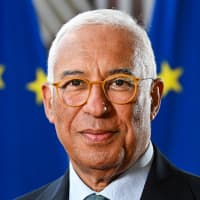
António Luís Santos da Costa (born July 17, 1961, in Lisbon) is a Portuguese lawyer and Socialist politician who served as Prime Minister of Portugal from 2015-2024 and currently serves as President of the European Council since December 1, 2024. After leading the Lisbon Municipal Assembly and practicing law, he was elected MEP (2004-2005) and entered parliament in 2002. He led the Socialist Party from 2014-2024, building unprecedented parliamentary coalitions with the Communist Party and Left Bloc (2015-2019) before winning an absolute majority in 2022. He resigned as PM in November 2023 following a corruption investigation, though subsequently cleared. The 27 EU member states elected him Council President in June 2024, making him the fourth full-time President and the first southern European socialist in that role.
Political Philosophy:
Costa represents moderate European social democracy, combining orthodox fiscal responsibility with progressive social investment. He prioritizes European integration, consensus-building, and pragmatic compromise over ideological confrontation. As Council President, he champions mediation between member states, improved EU inter-institutional relations, shorter decision-making processes, and regular visits to every EU capital to reconnect citizens with European institutions. His approach emphasizes "creative bridges" reconciling divergent interests while maintaining firmness on European values, particularly regarding Ukraine.
The term refers broadly to negotiations or arrangements between the European Union and the United States to manage tariffs, market access and trade disputes; there is no single comprehensive EU–US free-trade agreement, so relations are handled through sectoral deals, WTO rules and ad‑hoc talks. Tariffs or threats of tariffs (the recent row that prompted Brussels to warn about damage to transatlantic ties) can raise prices, disrupt supply chains and prompt coordinated EU responses or reciprocal measures, which is why EU capitals are sensitive to any escalation.
The EU anti‑coercion instrument is a tool the European Union agreed in 2021 that lets the bloc adopt targeted countermeasures (such as tariffs, trade restrictions or other trade-related measures) in response to economic pressure from third countries. Activating it in response to threats of U.S. tariff surcharges would allow the EU to coordinate a collective reaction that could affect trade flows, prices and businesses across member states.
Emmanuel Macron is the President of France, first elected in 2017 and re‑elected in 2022, and is associated with the centrist Renaissance movement. He is engaging European counterparts about using EU tools like the anti‑coercion instrument to respond to international trade threats.
In the EU Council context, a qualified majority means approval by at least 55% of member states representing at least 65% of the EU population (the standard since the Lisbon Treaty). It’s a higher threshold than a simple majority but lower than unanimity; decisions taken by qualified majority can authorise actions such as activating the EU’s anti‑coercion instrument, so businesses and travellers should watch Council votes when trade measures are at stake.

The European Council (Conselho Europeu) brings together EU heads of state or government to set the bloc’s overall political direction and priorities; it does not adopt ordinary legislation. Its president, Charles Michel, has chaired meetings since December 2019, and the Council’s political endorsement is important for major trade and investment deals, so those following EU policy should note its stance on agreements like the EU–Mercosur deal.

EU lawmakers say a proposed EU–US trade pact—intended to shield European exporters from heavy duties—is effectively on hold after the US announced tariffs on eight European countries in response to their opposition to Washington’s actions regarding Greenland. EU ambassadors have been summoned to an extraordinary meeting to discuss the diplomatic fallout and next steps, underscoring how escalating US threats risk derailing broader trade cooperation and raising the prospect of a wider economic and political rift.
Portugal faces a mixed outcome from the EU–Mercosur trade agreement. Export-oriented sectors such as wine, olive oil and cheese see expanded market access to Argentina, Brazil, Paraguay and Uruguay as growth opportunities, while domestic meat and rice producers fear increased competition, downward price pressure and quota-driven market disruption. The deal thus creates winners and losers within Portugal’s agricultural and food industries, highlighting the need for safeguards, support measures and sectoral adaptation strategies.
Update: The trade agreement between the European Union and Mercosur is due to be signed this Saturday. The impending signature has intensified debate in Portugal: wine, olive oil and cheese sectors are positioning to capture growth in the four South American markets, while meat and rice producers renew warnings about heightened competition, downward price pressure and quota effects. Stakeholders are pressing for concrete safeguards, transitional support and clear implementation timetables to mitigate adjustment costs and protect sensitive domestic producers.

A press roundup reporting an increase in foreign doctors in Portugal — though not being brought into the SNS (Portuguese National Health Service) — and coverage that Spain is acting as a stumbling block to Mário Centeno’s prospects at the European Central Bank (ECB).
Portuguese Prime Minister António Costa defended the EU–Mercosur agreement as a historic deal and rejected European criticism as based on a “totally wrong perception”. Costa framed the pact as both a trade and an investment agreement, arguing it does not simply favour Europe. His remarks come after the 27 EU member states reached a qualified majority to approve the accord; Brazil’s president Jair Bolsonaro? No — the content states Brazil’s president Luiz Inácio Lula da Silva will not attend the signing ceremony in Paraguay as the long-delayed pact moves into the ratification phase in Europe.
Update: Diário de Notícias reports that António Costa will attend the signing ceremony in Asunción and reiterated that concerns about farmers’ opposition are misplaced, saying the agreement includes safeguards for European agriculture.
Update 2: Additional coverage quotes Costa saying criticisms rest on a “completely wrong perception” and using the image of the EU and Mercosur “building bridges” rather than raising barriers; RTP and Expresso note he continues to portray the pact as both trade and investment, emphasising expected benefits for Portuguese exporters.

António Luís Santos da Costa (born July 17, 1961, in Lisbon) is a Portuguese lawyer and Socialist politician who served as Prime Minister of Portugal from 2015-2024 and currently serves as President of the European Council since December 1, 2024. After leading the Lisbon Municipal Assembly and practicing law, he was elected MEP (2004-2005) and entered parliament in 2002. He led the Socialist Party from 2014-2024, building unprecedented parliamentary coalitions with the Communist Party and Left Bloc (2015-2019) before winning an absolute majority in 2022. He resigned as PM in November 2023 following a corruption investigation, though subsequently cleared. The 27 EU member states elected him Council President in June 2024, making him the fourth full-time President and the first southern European socialist in that role.
Political Philosophy:
Costa represents moderate European social democracy, combining orthodox fiscal responsibility with progressive social investment. He prioritizes European integration, consensus-building, and pragmatic compromise over ideological confrontation. As Council President, he champions mediation between member states, improved EU inter-institutional relations, shorter decision-making processes, and regular visits to every EU capital to reconnect citizens with European institutions. His approach emphasizes "creative bridges" reconciling divergent interests while maintaining firmness on European values, particularly regarding Ukraine.

The European Council (Conselho Europeu) brings together EU heads of state or government to set the bloc’s overall political direction and priorities; it does not adopt ordinary legislation. Its president, Charles Michel, has chaired meetings since December 2019, and the Council’s political endorsement is important for major trade and investment deals, so those following EU policy should note its stance on agreements like the EU–Mercosur deal.

Mercosur is the South American trade bloc (Southern Common Market) whose main founding members are Argentina, Brazil, Paraguay and Uruguay. An EU–Mercosur trade agreement — which the story says may be approved and signed soon — would reduce tariffs and open markets on both sides, affecting agricultural and industrial trade flows and therefore prices and business opportunities relevant to residents and companies in Portugal.

RTP (Rádio e Televisão de Portugal) is Portugal's state-owned public service broadcaster, operating since 1935 (radio) and 1957 (television). It runs 8 television channels (including RTP1, RTP2, RTP3) and 7 radio stations (Antena 1, 2, 3), plus international services reaching Portuguese diaspora worldwide. Funded by a broadcasting tax on electricity bills and advertising revenue, RTP serves as Portugal's cultural reference, providing quality news, education, and entertainment. Its archive represents "irreplaceable heritage in Portuguese collective memory", and it pioneered online streaming with RTP Play in 2011. RTP connects "Portugal and the Portuguese to themselves, to each other, and to the world"
The EU–Mercosur agreement will create clear winners and losers in agriculture: EU wine and olive oil producers stand to gain improved access and competitive opportunities, while beef, rice, sugar and honey are likely to face the greatest pressure from increased imports and tariff concessions. Farmers warn of 'unfair competition' and say small family farms risk bankruptcy unless safeguard clauses are rigorously enforced, with transparent monitoring, clear trigger mechanisms and targeted support measures. The agreement therefore raises political and policy questions about enforcement, compensation and the protection of vulnerable rural sectors.

With the Eurogroup set to choose the ECB vice-president on Monday, former Portuguese central bank governor Mário Centeno—one of two front-runners—says there remains a lack of alignment among major EU countries. Speaking to PÚBLICO, Centeno urges reaffirmation of the reasons for his candidacy and signals that political negotiations, policy priorities and regulatory direction will be decisive in the appointment. The comments frame the contest as both a balance-of-power and policy-choice moment for the ECB’s future leadership.

New proposals would create a two-tier EU that allows states to obtain membership while curbing some voting or decision-making rights. Supporters argue the model eases enlargement and protects institutional efficiency, while critics — including prospective members — say it risks unequal treatment, weakened solidarity and long-term fragmentation of the Union.

European Commission President Ursula von der Leyen has called for the Council of the EU to rapidly approve Portugal’s defence spending plan that would unlock about €5.8 billion in favourable loans after a preliminary Brussels approval under the SAFE framework. Coverage notes the funds are earmarked to strengthen national defence capabilities and will move to the Council for formal sign‑off. The approval would accelerate procurement and investment in defence-related projects; contractors and regions expected to host works should watch for tender and consultation notices.

Ursula Gertrud von der Leyen (born October 8, 1958, in Brussels, Belgium) is a German physician and politician serving as President of the European Commission since December 1, 2019, becoming the first woman to hold this office. She previously served as Germany's Minister of Defense (2013-2019) and held cabinet positions in family, labour, and social affairs under Chancellor Angela Merkel. Re-elected in July 2024 with 401 votes for a second term until 2029, Forbes named her the world's most powerful woman in 2022, 2023, 2024, and 2025. Relationship with Portugal:
Von der Leyen approved Portugal's Recovery and Resilience Plan in June 2021—the first among 27 EU member states—worth €16.6 billion to "profoundly transform the economy". In a 2025 tribute to Portugal's 40 years in the EU, she declared "Your Fado, your destiny, is right here at the heart of Europe," praising Portugal's renewable energy leadership, infrastructure transformation, and ocean protection. She highlighted Portugal's potential in lithium processing and AI startups while advocating for removing obstacles to economic growth. She also promoted energy interconnections like the Bay of Biscay project linking France-Spain, addressing Iberian energy isolation.

The Recuperar Portugal mission structure said the eighth payment request under the Recovery and Resilience Plan (PRR) — submitted to Brussels in November 2025 — is expected to be paid in February. The announcement gives a tentative timeline for a tranche of EU funds that support national investments under the PRR framework. Project managers and local authorities awaiting PRR cashflows should note the projected month and prepare for administrative steps tied to the payment.
The Recovery and Resilience Plan (Plano de Recuperação e Resiliência) is Portugal's national programme under the EU's NextGenerationEU to fund reforms and investments after COVID‑19; the plan includes roughly €16.6 billion in grants plus about €2.7 billion in loans approved in 2021. Payments are tied to specific milestones and targets — which the government said it is politically committed to meet — so missed milestones can delay projects and funding that affect public works, contractors and local services.
Recover Portugal (Recuperar Portugal) is the national mission structure set up to coordinate, monitor and manage Portugal's implementation of the Recovery and Resilience Plan, including preparing payment requests to the European Commission. The mission said the eighth payment request submitted in November 2025 is expected to be paid in February 2026, so businesses, contractors and municipalities waiting for PRR funds should follow its announcements.

Multiple outlets report that detections of irregular entries into the European Union fell in 2025 to their lowest level since 2021, marking a significant decline in recorded arrivals. Coverage is largely descriptive and does not yet draw a single cause; analysts may point to shifting routes, enforcement changes or seasonal factors. Migrant communities, NGOs and organisations offering legal aid should monitor follow-up reports and policy responses.

European Commissioner for Defence and Space Andrius Kubilius conducted his first official visit to Portugal, meeting Defence Minister Nuno Melo and Education Minister Fernando Alexandre to discuss defence and space policy. He signalled that SAFE funds could reach the Portuguese government in the coming weeks or months, prompting analytical questions about budget timing, allocation between defence and civil space programmes, and coordination between national ministries and EU institutions. The visit underlined the need for clear planning to integrate incoming EU funding with Portugal’s defence and space policy priorities.

The EU's Entry-Exit System will require more non-EU nationals entering Schengen to provide extra personal data at arrival and departure; outlets say more than a third of non-EU arrivals will be affected. The change may alter arrival procedures at airports and could lengthen border checks for some travellers. Non-EU expats and visitors should check ID and documentation requirements ahead of travel and expect possible longer processing at Portuguese airports.
The Entry-Exit System (Sistema de Entrada e Saída) is an EU border-register that records biometric data (fingerprints and a facial image) and travel details for short-stay non‑EU travellers, replacing passport stamping and creating a searchable entry/exit record. According to recent reporting, the new rules now require over a third of non‑EU nationals entering Schengen to provide this extra data at the border; the aim is to improve security and migration tracking, but travellers should be prepared to submit biometrics at kiosks or border control and ensure their travel documents are valid. For expats and visitors this usually means slightly longer checks on arrival/departure and more robust digital records of your travel history.

The European Commission president will sign the EU–Mercosur trade agreement on Saturday, 17 January, the EU confirmed. The deal is expected to lower trade barriers between the EU and South American Mercosur countries; coverage focuses on the formal signature rather than implementation details. For expats in Portugal, the immediate effect will be minimal day-to-day, but the agreement could influence prices, imports and export opportunities over time.

Mercosur is the South American trade bloc (Southern Common Market) whose main founding members are Argentina, Brazil, Paraguay and Uruguay. An EU–Mercosur trade agreement — which the story says may be approved and signed soon — would reduce tariffs and open markets on both sides, affecting agricultural and industrial trade flows and therefore prices and business opportunities relevant to residents and companies in Portugal.

During a tense election campaign swing through Ovar, São João da Madeira and Lamego, AD-backed candidate Marques Mendes publicly challenged Health Minister Ana Paula Martins to “show up and explain” mounting problems in the National Health Service, notably failings in emergency departments. Mendes, accompanied by two ministers and supported at events by Porto mayor Rui Moreira, pressed for direct public explanations as the health portfolio becomes a campaign battleground; the minister already has a public engagement scheduled. Elsewhere on the campaign trail, André Ventura “survived” an incident in Aveiro—famously described as a "chuva de cavacas"—and later thanked supporters in Viseu's so-called “Cavaquistão,” underscoring how confrontational moments and popular gestures are shaping voter perceptions. The episodes highlight healthcare policy and political accountability as central issues in the race and illustrate how personalised campaign incidents are influencing public debate.

European Commission President Ursula von der Leyen will travel to New Delhi at the end of January for the EU–India summit with the explicit aim of finalising a long‑sought EU–India trade agreement. Having concluded the Mercosur talks, von der Leyen says the Commission is working intensively to wrap up negotiations, a move with significant economic and geopolitical implications for EU trade policy and relations with India.

Forty years after accession, Henrique Burnay assesses whether the original expectations of political stability, economic convergence and stronger international standing have been realised. He argues that while membership delivered important structural gains — market access, institutional stability and funding — unfulfilled promises remain in terms of full economic convergence, social cohesion and consistent EU foreign and defence policy. The conversation lays out short- and long-term scenarios, highlighting the need for renewed domestic reform, clearer European-level strategic choices and pragmatic adaptations if the Union is to meet citizens’ expectations in the coming decades.

A new IPPS/ISCTE opinion poll finds that almost half of Portuguese expect 2026 to bring continuity at the national level, with a majority forecasting political stability next year. Respondents were asked about expectations for their families, the nation and the international situation: while domestic outlooks skew towards stability and steady consumption confidence, many express concern about a possible deterioration in international affairs. The results highlight a cautious public mood—optimistic about internal political continuity but wary of external risks.


TLDR News EU •