Latest news and stories about investment in europe in Portugal for expats and residents.
The agreement will eliminate billions of euros in customs duties, open up public procurement markets and give businesses the predictability to plan, expand and invest. Opinion piece by Ursula von der Leyen

The Draghi Report's ambitions force Europe to confront uncomfortable realities: it is falling significantly behind global competitors. The analysis argues that the ‘race’ has been underway for years and that closing the gap requires urgent, active policy choices — including structural reforms, targeted investment and a renewed focus on competitiveness across the single market.

The Portuguese Industrial Association says the agreement signed this Saturday strengthens the European Union's external standing and could open a new cycle of growth and competitiveness for the national industry.

The signing of this agreement marks a turning point in the European Union's foreign policy. It is not merely a trade partnership concluded after more than 25 years of advances and setbacks; it is a strategic assertion by the Union in a rapidly changing world.
Economist António Nogueira Leite says the agreement with Mercosur means “a trade gain that will benefit both areas” and that the EU “gains access to a market with growth potential”.

The signing of the agreement opens the door to the world’s largest free-trade area, covering more than 700 million consumers. Negotiations began 25 years ago. There are still constraints in the health sector.

Portuguese Prime Minister António Costa defended the EU–Mercosur agreement as a historic deal and rejected European criticism as based on a “totally wrong perception”. Costa framed the pact as both a trade and an investment agreement, arguing it does not simply favour Europe. His remarks come after the 27 EU member states reached a qualified majority to approve the accord; Brazil’s president Jair Bolsonaro? No — the content states Brazil’s president Luiz Inácio Lula da Silva will not attend the signing ceremony in Paraguay as the long-delayed pact moves into the ratification phase in Europe.
Update: Diário de Notícias reports that António Costa will attend the signing ceremony in Asunción and reiterated that concerns about farmers’ opposition are misplaced, saying the agreement includes safeguards for European agriculture.
Update 2: Additional coverage quotes Costa saying criticisms rest on a “completely wrong perception” and using the image of the EU and Mercosur “building bridges” rather than raising barriers; RTP and Expresso note he continues to portray the pact as both trade and investment, emphasising expected benefits for Portuguese exporters.

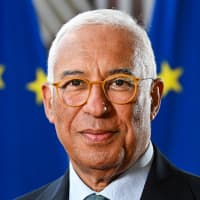
António Luís Santos da Costa (born July 17, 1961, in Lisbon) is a Portuguese lawyer and Socialist politician who served as Prime Minister of Portugal from 2015-2024 and currently serves as President of the European Council since December 1, 2024. After leading the Lisbon Municipal Assembly and practicing law, he was elected MEP (2004-2005) and entered parliament in 2002. He led the Socialist Party from 2014-2024, building unprecedented parliamentary coalitions with the Communist Party and Left Bloc (2015-2019) before winning an absolute majority in 2022. He resigned as PM in November 2023 following a corruption investigation, though subsequently cleared. The 27 EU member states elected him Council President in June 2024, making him the fourth full-time President and the first southern European socialist in that role.
Political Philosophy:
Costa represents moderate European social democracy, combining orthodox fiscal responsibility with progressive social investment. He prioritizes European integration, consensus-building, and pragmatic compromise over ideological confrontation. As Council President, he champions mediation between member states, improved EU inter-institutional relations, shorter decision-making processes, and regular visits to every EU capital to reconnect citizens with European institutions. His approach emphasizes "creative bridges" reconciling divergent interests while maintaining firmness on European values, particularly regarding Ukraine.

The European Council (Conselho Europeu) brings together EU heads of state or government to set the bloc’s overall political direction and priorities; it does not adopt ordinary legislation. Its president, Charles Michel, has chaired meetings since December 2019, and the Council’s political endorsement is important for major trade and investment deals, so those following EU policy should note its stance on agreements like the EU–Mercosur deal.

Mercosur is the South American trade bloc (Southern Common Market) whose main founding members are Argentina, Brazil, Paraguay and Uruguay. An EU–Mercosur trade agreement — which the story says may be approved and signed soon — would reduce tariffs and open markets on both sides, affecting agricultural and industrial trade flows and therefore prices and business opportunities relevant to residents and companies in Portugal.

RTP (Rádio e Televisão de Portugal) is Portugal's state-owned public service broadcaster, operating since 1935 (radio) and 1957 (television). It runs 8 television channels (including RTP1, RTP2, RTP3) and 7 radio stations (Antena 1, 2, 3), plus international services reaching Portuguese diaspora worldwide. Funded by a broadcasting tax on electricity bills and advertising revenue, RTP serves as Portugal's cultural reference, providing quality news, education, and entertainment. Its archive represents "irreplaceable heritage in Portuguese collective memory", and it pioneered online streaming with RTP Play in 2011. RTP connects "Portugal and the Portuguese to themselves, to each other, and to the world"
'More trade means new jobs on both sides of the Atlantic,' said Brazil's President about the signing of the trade agreement covering a market of more than 700 million people.

A World Economic Forum report points to moderate growth in the US and weak growth in Europe. Trade between China and the US is expected to remain stable despite tariffs in 2025.

The Brazilian President will receive on Friday the presidents of the European Council and the European Commission, on the eve of the signing of the agreement between the European Union and Mercosur, which is expected to increase Brazil's GDP by €6 billion by 2044. The meeting between António Costa and Ursula von der Leyen and Lula da Silva, one of ...

“If Europe continues to treat connectivity as a basic, low‑cost service, it will be exposing citizens, democratic institutions and allies to ever greater risks,” prioritising connectivity strengthens “one of the most important lines of defence against modern threats,” Vodafone warns in the report “Secure Connectivity: The new ...

The Recuperar Portugal mission structure said the eighth payment request under the Recovery and Resilience Plan (PRR) — submitted to Brussels in November 2025 — is expected to be paid in February. The announcement gives a tentative timeline for a tranche of EU funds that support national investments under the PRR framework. Project managers and local authorities awaiting PRR cashflows should note the projected month and prepare for administrative steps tied to the payment.
The Recovery and Resilience Plan (Plano de Recuperação e Resiliência) is Portugal's national programme under the EU's NextGenerationEU to fund reforms and investments after COVID‑19; the plan includes roughly €16.6 billion in grants plus about €2.7 billion in loans approved in 2021. Payments are tied to specific milestones and targets — which the government said it is politically committed to meet — so missed milestones can delay projects and funding that affect public works, contractors and local services.
Recover Portugal (Recuperar Portugal) is the national mission structure set up to coordinate, monitor and manage Portugal's implementation of the Recovery and Resilience Plan, including preparing payment requests to the European Commission. The mission said the eighth payment request submitted in November 2025 is expected to be paid in February 2026, so businesses, contractors and municipalities waiting for PRR funds should follow its announcements.

Industrial output in both the European Union and the euro area increased by over 2% in November, according to official data.

European Commissioner Maria Luís Albuquerque wants everyone to have access to financial markets to invest, even if they have only saved €10. 'Investing cannot be just for a few,' the former Portuguese minister said in Parliament. 'A person has only managed to save €10, only has €10 to invest; it must be possible to invest those €10.'

A confrontation between former US president Donald Trump and Federal Reserve Chair Jerome Powell could destabilise the dollar and alter market expectations about the path of interest rates, raising volatility and complicating the outlook for monetary policy.

In a session marking the 30th anniversary of the Portugal–US Cooperation and Defence Agreement, Americans highlighted 'the enduring strength of the partnership' between the two countries.

Credit insurer Crédito y Caución reports that Spain, Portugal, Italy and Greece are leading economic growth in the eurozone.

A key reason to review your wealth management is to confirm it is up to date. Establish how tax and regulatory reforms in Portugal and the UK could affect you, The post Strategic financial planning for 2026 and beyond appeared first on Portugal Resident.

The European Commission will approve on Wednesday the plan for Portugal to access €5.8 billion in loans on favourable terms to invest in defence capabilities.

The European Commission will approve on Wednesday the plan for Portugal to access €5.8 billion in loans on favourable terms to invest in defence capabilities.

Brazil's Ministry of Foreign Affairs welcomed the European approval of the Mercosur–European Union agreement, which will create one of the largest free trade zones in the world.

Galp and Moeve have entered detailed talks to combine their refining operations and filling-station networks, a complex transaction that is likely to be lengthy and closely scrutinised. The Portuguese Communist Party has already criticised the proposed deal and the government will have a role in the approval process, raising political as well as regulatory stakes. The transaction will test Brussels’ evolving approach to competition and regulation in the energy sector, with implications for pricing, investment and market structure in Portugal.

Julien Jarjoura, an investor based in Switzerland, has acquired Claire’s European business, preserving roughly 200 jobs in Portugal and maintaining the brand’s retail footprint across Europe. The purchase effectively separates the continental operation from insolvency proceedings affecting Claire’s in the United States, the United Kingdom and Ireland, stabilising local employment and stores while broader group restructuring and creditor processes continue.