

Master Arnaldo Malho, the 'poet of iron' from Viseu
The story of a master blacksmith who founded a school of artistic metalwork, a friend of Aquilino, with works throughout the country and even in the Grão Vasco Museum.
observador.pt

Latest news and stories about craftsmanship in Portugal for expats and residents.
The story of a master blacksmith who founded a school of artistic metalwork, a friend of Aquilino, with works throughout the country and even in the Grão Vasco Museum.
We visited the workshop of Carlos Guerreiro, following a period of relocation from Bairro Alto to the Rego neighbourhood, where the craftsman is experiencing a new phase with his usual taste and dedication.

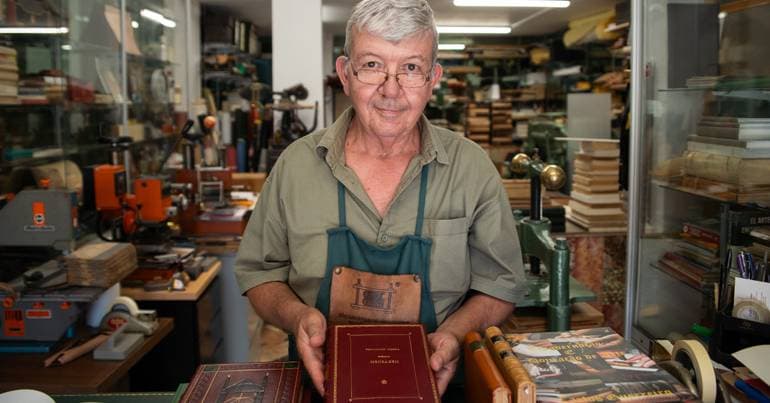
From the Pope to the Gambrinus menu, from Bairro Alto to the Rego neighbourhood, he has dedicated 54 years to binding, gilding, and restoring pieces. A pile of manual work that he is now passing on to the next generation.
The art of the coppersmiths of Santa Marta de Rossas has been inscribed in the Intangible Cultural Heritage, under an urgent safeguarding regime. The municipality welcomes the distinction and commits to providing support.

It is necessary to preserve and innovate basketry in Portugal to face challenges such as the advanced age of artisans and competition from low-priced pieces arriving from Asia. This is a warning from the Passa ao Futuro Association, which has been working to engage new generations and ensure this craft does not disappear.
In a global market, where so many proposals end up looking similar, what truly distinguishes a creation is its authenticity.

“Throughout my whole life, the basket has always reigned supreme,” says artisan Fernando Sampaio, who inherited the craft from his father and for about 30 years has brought to the São Mateus Fair a tradition that still endures in Viseu.

The Vila Real City Council aims to promote the conservation of Bisalhães black pottery, a UNESCO heritage site, and the Senhora da Pena float through workshops, exhibitions, and other activities.
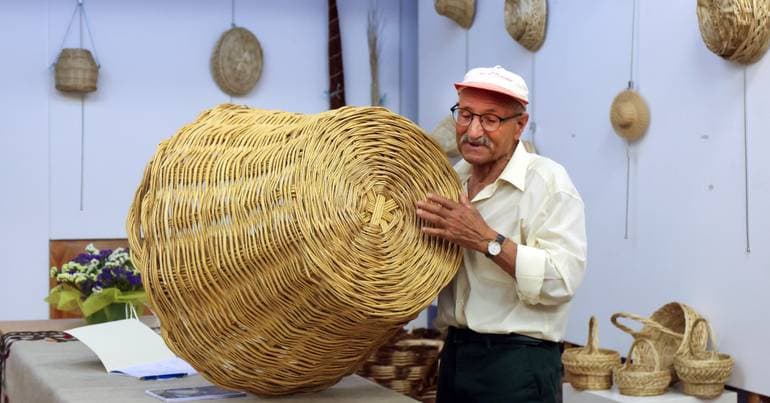
At 83 years old, he presents himself as “the last basket weaver from Miranda”. Unique in his techniques and materials, his work is on display at the ethnographic exhibition currently held at the Casa da Cultura Mirandesa.
The instruments built by Daniel Garfo have also captivated Rui Veloso, Ricardo Ribeiro, and Pedro Jóia.

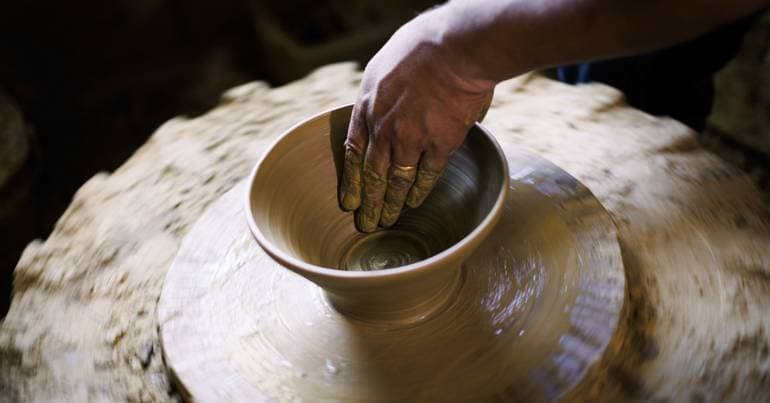
The characteristic black colour of the clay comes from the smoke of the 'suenga' kiln. In Castro Daire, great master potters lived and the tradition is kept alive out of passion. A conversation with Cristina Gomes.
Luxury speaks increasingly of craftsmanship, but it does not always return to the artisans the value and visibility it claims to defend. The boundary between appreciation and appropriation is becoming thinner. A column by Célia Macedo.

Mr. João de Baltar provided footwear for the entire population of Castro Daire and beyond. The art of the clog maker 'went very far', but today it has been lost. The legacy is on display at the Castro Daire Municipal Museum.
She is the first female potter in the parish, despite being told it was “a man's job”. Constança Santos continues the family business in São Pedro do Corval, in Reguengos de Monsaraz.

She created Wicker It in 2018 after taking a life-changing wicker craft course. Catarina Jesus is the unexpected guardian of an art form on the verge of extinction in Madeira.

Animated with romantic and naive phrases and decorated with colourful motifs that everyone recognises, they are the first Portuguese artisanal product with 'Geographical Indication in the European Union'.

Portugal knows how to do it. It knows how to choose materials, preserve crafts, serve with intimacy, and create objects and experiences. But luxury does not live on quality alone. It also lives on the aura built around it. That is precisely where Portugal still falls short. It is necessary to embrace the small scale. Small is beautiful. The conclusion belongs to a...

The International Organ Festival kicks off this Saturday in Guimarães, continuing to Famalicão and Santo Tirso. The couple were the main driving force behind this series of performances, which began in 2015.

The artisan could neither read nor write, but 'told stories like no one else', notes Inês Correia. Among the pieces exhibited at the Resende Municipal Museum is the Christ figure that won a national award.
Flax has not been produced in Resende for about 20 years. However, for centuries, flax cultivation was a common agricultural practice that arose from 'necessity' for personal use.


This season, fashion is made by hand and wants it to be noticed

The Lazarim room is highlighted at the Iberian Mask Interpretive Centre. Masks in different stages of construction and the costumes that accompany them during Carnival and Shrove Sunday. By the way, what is it?
It is essential that Portalegre tapestries receive greater international recognition; this should be a task promoted by those who take them abroad.

Seven artisans had a “helping hand” from artificial intelligence to help them conceive their pieces even before they existed. “It was interesting on one hand and scary on the other.”

Today, 'panu di téra' is in fashion and its colours are no longer limited to the more traditional black and white, with it being common to find this fabric in blue, green, or red.

Home Lifestyle The Jewellery We Carry The Jewellery We Carry Filigree and the Stories We Hold Against Our Skin By Advertiser, in Lifestyle · 8 hours ago · 0 Comments Credits: Supplied Image;Author: Carl Hinds ; Some objects feel almost alive.

The duo Inês Amorim and Reid Baker organised their first show at Paris Fashion Week aboard a boat on the Seine, championing the ‘quality of Portuguese garment making’.

The Government will set up a working group for the Calçada Portuguesa to study the situation of this professional and artistic practice and propose measures to valorise it, the Ministry of Culture, Youth and Sport announced today.


Everybody feels famous in Portugal
Portugal - The Simple Life • 55:05 • 14 Sept