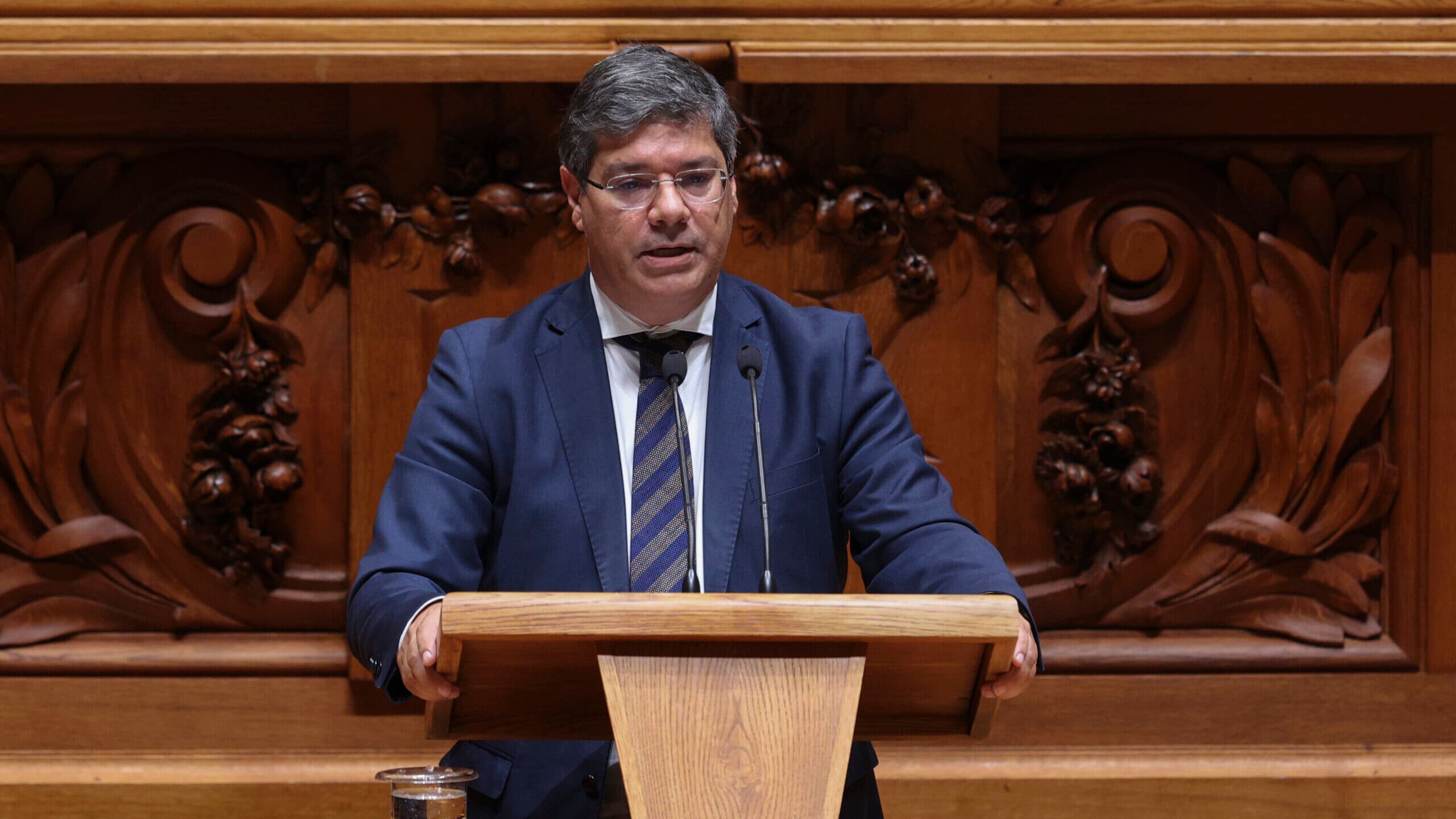
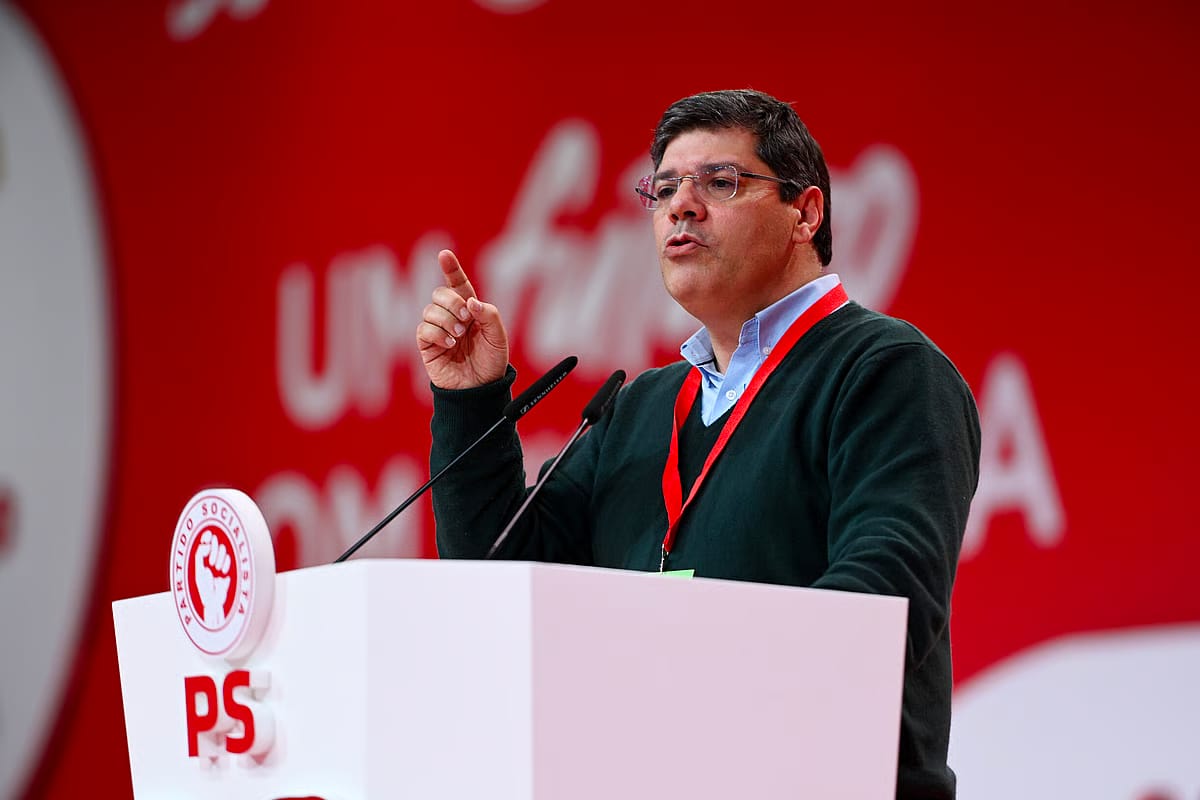
The PS will again request that the Constitutional Court (TC) review the decree amending the Penal Code, which provides for the loss of nationality as an accessory penalty, approved earlier this month by the PSD, Chega, IL, and CDS-PP. This decision was announced by the PS parliamentary leader, Eurico Brilhante Dias, in statements to journalists.
The Portuguese Constitution (CRP) stands out for its clear international agenda, particularly regarding cooperation with Portuguese-speaking states. Unlike its limited influence in broader European federalist structures, Portugal plays a significant role in the Lusophone sphere, where constitutional provisions translate into tangible policies, such as special rights for Lusophone citizens and the CPLP. The author argues for a shared Lusophone constitutional identity, rejecting the notion that this is a form of post-colonial dominance. Instead, it is a circular exchange of legal solutions that fosters a 'constitutional humanism of the Lusophony,' characterized by robust fundamental rights protections and sophisticated systems of judicial review.
The 50th anniversary of the Constitution and the complexities surrounding the appointment of judges to the Constitutional Court have brought renewed focus to constitutional matters. The author clarifies a historical misconception regarding the 'activism' of former President Cavaco Silva during the troika era, noting that it was actually a group of 25 deputies—just over the required one-tenth threshold—who successfully challenged the 2012 State Budget laws in the Constitutional Court. This power, granted to one-tenth of the members of the Assembly of the Republic, serves as a vital constitutional safeguard for minority oversight, acting as a check on the power of the majority.
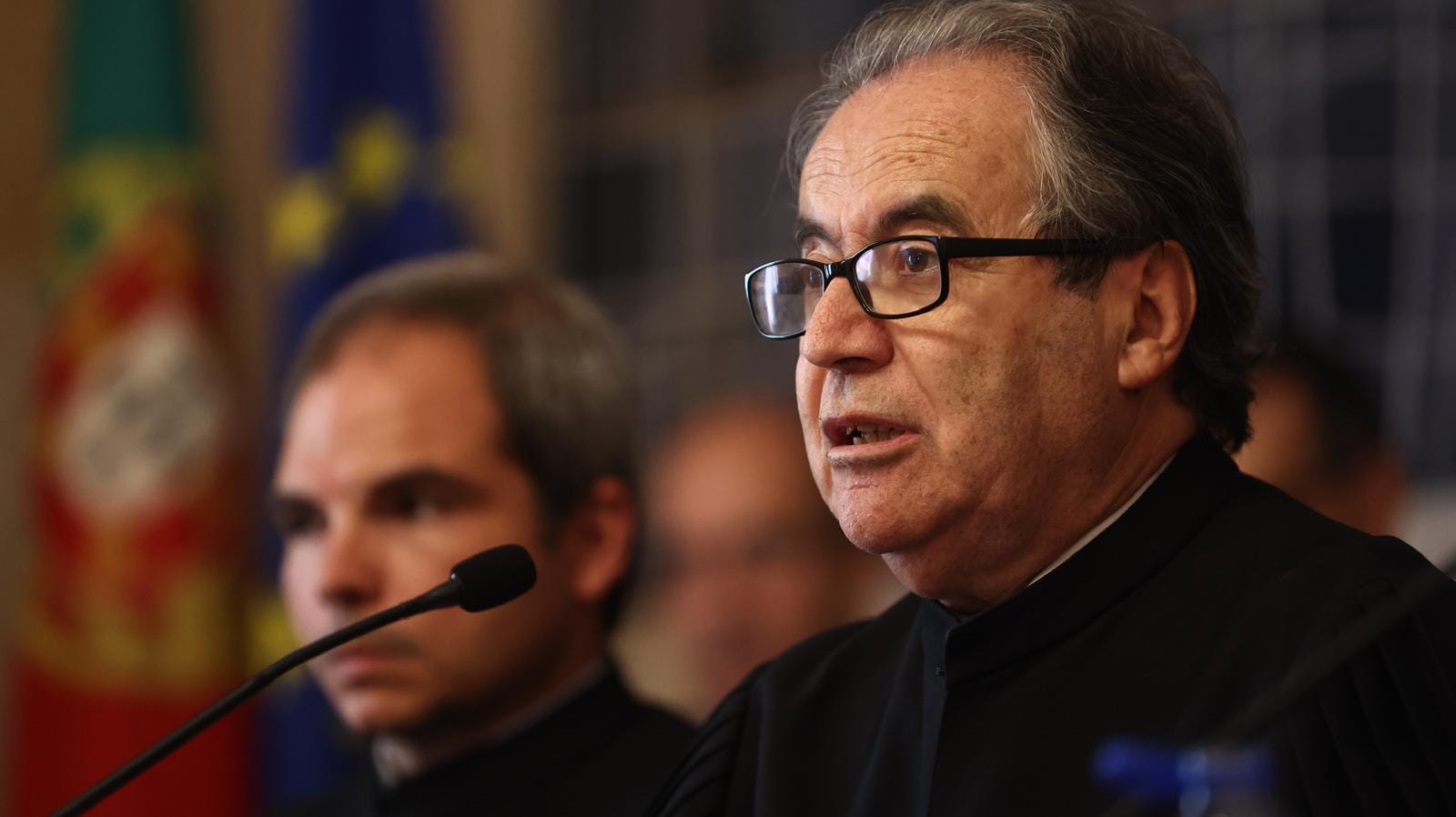
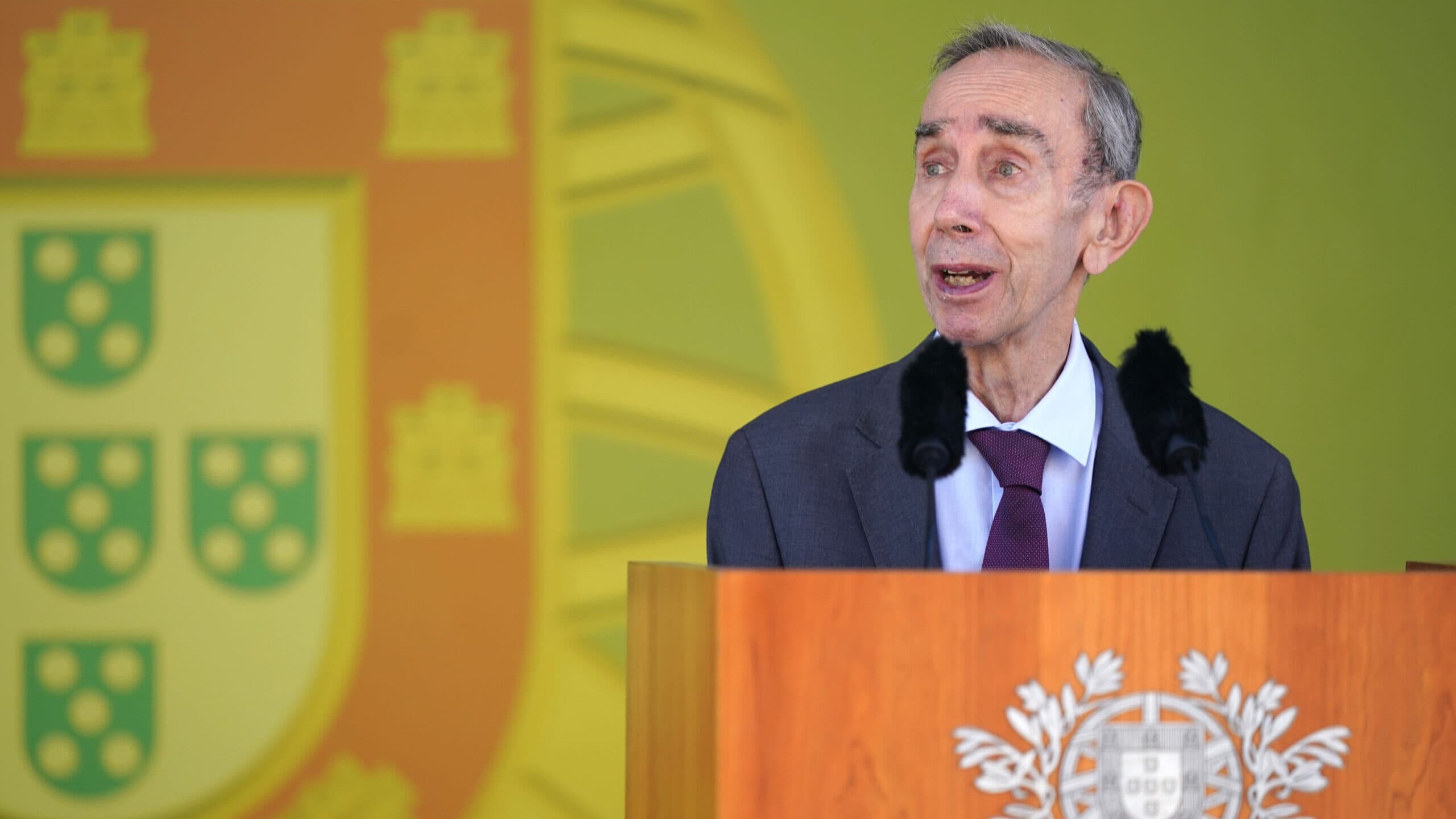
The president of the Constitutional Court (TC), José João Abrantes, argued this Wednesday (15) that the separation of powers is a pillar as essential to democracy as the vote, rejecting criticisms that question the court's role in the face of parliamentary majorities. During the opening session of the colloquium “50 Years of the Constitution of the Portuguese Republic (1976-2026)”, held at the Calouste Gulbenkian Foundation, Abrantes directly addressed positions that challenge the legitimacy of TC decisions when they contradict the will expressed by elected deputies. He dismissed the need for an imminent constitutional review, suggesting only the possibility of “surgical changes” in specific areas, and insisted that the Constitution is not the problem, echoing the view that failures in achieving a “just and solidary society” are due more to government (in)action than to the constitutional text.
If we want to have a serious debate about the quality of our democracy, we should look less at the principles enshrined in the constitutional text and more at the distance between the elected and the voters. Column by Francisco Garcia
The concept of privacy corresponds to the protection of intimate private and family life, guaranteed by Article 26(1) of our Constitution. Most citizens have a general idea of what privacy entails: the ability to delimit a part of one's life where behaviours are freely adopted, protected from interference by public authorities. Transparency, originating from the Anglo-Saxon concept of 'open file', applies to administrative procedures where public officials must justify their decisions to ensure they serve the public interest rather than private ones. While citizens have a right to access administrative records to scrutinise public decisions, this does not strip public officials of their right to privacy. Media exposure that reveals personal assets without evidence of wrongdoing constitutes an intolerable violation of privacy rather than a promotion of transparency. The pursuit of transparency must not devolve into a mix of gossip and punitive impulses that damage reputations and discourage public service.
Constitutional monarchy is not, by definition, a step backwards. On the contrary, it is a model where the head of state operates within legal limits, in a system where effective political power belongs to elected institutions. In several European democracies, the monarch acts as an institutional arbiter and symbol of continuity, separate from partisan disputes. This separation is an advantage: a non-elected but politically neutral head of state can reinforce stability and reduce the personalization of power. Furthermore, the predictability of succession eliminates electoral disputes for the head of state, allowing political debate to focus on the government and Parliament. Implementing a constitutional monarchy in Portugal in a democratic way is currently impossible. Not for lack of arguments, but due to constitutional imposition. The Constitution of the Portuguese Republic enshrines in Article 1 that 'Portugal is a sovereign Republic', symbolically closing the door to any alternative. More than that, Article 288, paragraph b), prevents revisions that alter the 'republican form of government', turning a political option into an untouchable clause. In other words: the Constitution not only defines the regime, it shields it against the popular will. In a system that claims to be democratic, this rigidity raises an obvious contradiction. Even the use of a referendum is conditioned. Article 115 excludes matters that imply constitutional revision, which, in practice, prevents consulting citizens on the very form of the State. Thus, the people can express their opinion on almost everything, except on the regime in which they live. If constitutional monarchy can offer advantages such as institutional stability, neutrality of the head of state, and a clearer separation between State and government, this should be a matter of free debate, not legal prohibition. When there is so much talk about revising the Constitution, taking this topic seriously requires courage: revising Article 1, eliminating the rigid definition of the regime; amending Article 288 to remove the absolute character of the republican form; and reformulating Article 115, allowing referendums on structural issues. It is not about defending the monarchy. It is about questioning a more fundamental principle: can a democracy prevent its citizens from choosing their own regime? If the answer is 'yes', then the problem is not the monarchy, it is the Portuguese democracy itself. Taking this debate seriously requires, first and foremost, a constitutional revision that eliminates or makes this material limit more flexible. Not to impose a change, but to allow for a choice. A mature democracy does not fear structural questions, it institutionalizes them. Discussing the monarchy is not returning to the past. It is testing the coherence of the democratic present.
Constitutional law expert Raquel Brízida Castro details the function of a constitutional revision in light of the current debate surrounding the Constitution.
During the 50th anniversary celebrations of the Constitution, JPP deputy Filipe Sousa speaks of a country that remains highly centralised and highlights the importance of the document for the affirmation of the islands' autonomy.
On the day marking the 50th anniversary of the Portuguese Constitution, constitutional expert Vitalino Canas argues that the document is 'permanently under revision'. He highlights that he believes constitutional revisions serve to resolve serious problems where Portuguese society lacks consensus and it is necessary to obtain it.
There is a solid consensus surrounding the social and economic rights of the Constitution, which the right wing would like to change. 85% defend labour and trade union rights (the second most protected area), only 5% accept dismissal without just cause, only 12% admit to limiting the right to strike, and only 27% want more private involvement in public services. Voting patterns change faster than values. The Constitution reflects a sociological majority that is resistant to political cycles.
Fifty years after the Constituent Assembly approved the text, the constitutional framework for the judiciary differs significantly from today's. The original 1976 text separated the two magistracies but did not establish the autonomy of the Public Prosecutor's Office, nor did it mandate specific internal structures or term limits for the Attorney General. Many features now considered constitutional, such as the existence of the Supreme Administrative Court or specific career access rules, were not present in the original document. The author argues that the 1976 text was more sober and left more room for legislative choice, whereas subsequent revisions have increasingly incorporated corporatist demands.
Constitutional expert and historic constituent deputy Jorge Miranda sees no need for a revision of the fundamental law, but admits there would be an “advantage” in refining it on two points.
The PS parliamentary leader expressed hope this Wednesday that a joint list for external bodies can be presented by tomorrow, while deferring any decision on a potential constitutional review to the party's leadership. Eurico Brilhante Dias also reiterated that the Socialist Party will vote against the proposal to strip nationality following criminal convictions, arguing it is incompatible with the Portuguese constitutional legal order.
Successive revisions have broadened the constitutional consensus instead of narrowing it, and today, no programmatic alternative can be seen that is capable of promoting a wider space for compromise. Opinion by Pedro Adão e Silva
José Manuel Cardoso da Costa, João Caupers, and Joaquim Sousa Ribeiro reject any revision of the Constitution that could diminish the established constitutional consensus. Plurality is the 'golden rule' of the Court.
The discussion about the fundamental text is politically irresistible due to the ideological weight that fuels it. But there are other interesting and important debates taking place alongside it: the erosion of trust. Editorial by Pedro Candeias.
The PS moved forward this Monday with proposals to overcome the unconstitutionality of the nationality law and to balance it, after the PSD and CDS presented amendment proposals on this matter.
The constitutional expert states that the selection of judges should be the sole responsibility of the parties that founded the democracy. Additionally, António José Seguro visited Alcácer do Sal this morning.
One of the main authors of the Constitution, Jorge Miranda, believes that if the Fundamental Law were followed, many problems in Health or Justice would be solved, with constitutional experts Jorge Reis Novais and Teresa Violante blaming political agents. 'The Constitution remains perfectly stable, there is no difficulty. The country's difficulties come from factors...'
Against the backdrop of a possible constitutional revision from the right, Jorge Miranda, Jorge Reis Novais, and Teresa Violante argue that the Fundamental Law remains stable and adequate, and that the country's problems are the result of its non-compliance by political agents.
It is mandatory for the mainland to have administrative regions, but it may never have them, as creating them requires a very complicated referendum that must be favourable. Opinion by António Cândido de Oliveira.
Constitutional law expert Vitalino Canas argues that the selection for top positions should avoid dramatisation and be based on consensus between the PSD, PS, and Chega, while respecting the spirit of the Constitution.
Vasco Rato, a professor of political science and international relations, says that André Ventura's objective is to 'presidentialise the regime', which he disagrees with.
The constitutional law scholar explains her support for Seguro after voting for Gouveia e Melo and emphasises that Montenegro is 'torn between conviction and responsibility'.