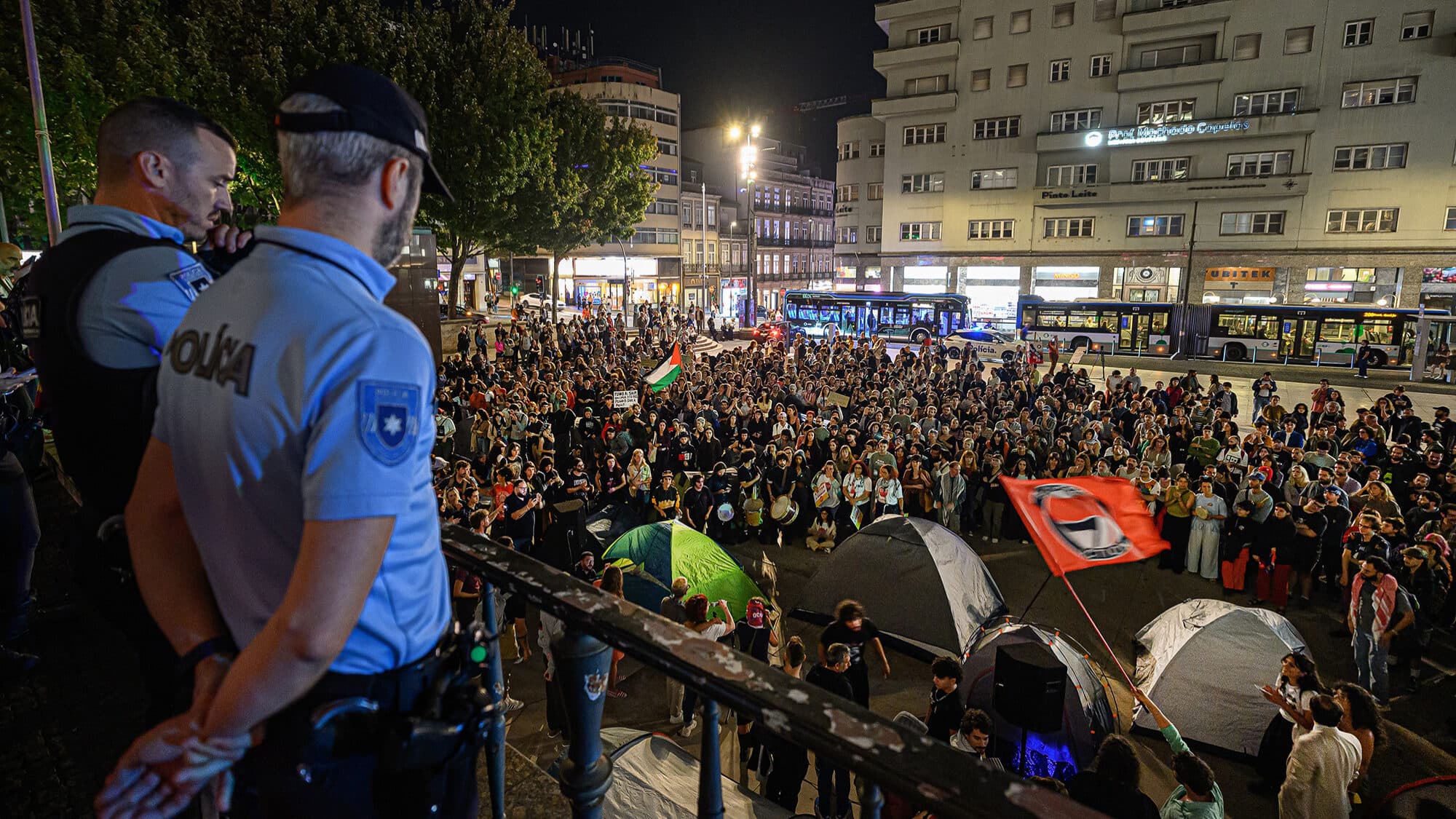
The Public Prosecution Service (Ministério Público) has opened an official investigation into the conduct of the Public Security Police (Polícia de Segurança Pública or PSP) during housing protests in Porto on October 15. The Attorney General's Office (Procuradoria-Geral da República or PGR) confirmed the inquiry remains under judicial secrecy following allegations by housing activists that police violence left 39 demonstrators injured. In a separate proceeding, 55 protesters detained during recent unrest have been summoned to appear before prosecutors on October 27.
Prosecutors Investigate Police Conduct at Porto Housing Demonstration
Friday, 23 October 2026AI summary
Context & Explainers
The Ministério Público (Public Prosecution Service) is Portugal's independent state prosecution body, responsible for leading criminal investigations, bringing charges, and representing the public interest in court.
The MP operates autonomously from the government and the police, though it directs criminal investigations carried out by the Polícia Judiciária, PSP, and GNR. It is led by the Procurador-Geral da República (Attorney General), who is appointed by the President on the government's proposal.
The MP gets involved in high-profile cases including corruption, financial crime, and incidents of potential institutional negligence. It also defends the legality of government actions and protects citizens' fundamental rights through the courts.

The PSP (Polícia de Segurança Pública) is Portugal's national civilian police force, founded in 1867. Responsible for defending Republican democracy and safeguarding internal security and citizens' rights, the PSP polices major cities—Lisbon, Porto, Faro—and large urban areas, covering only 4% of Portugal's territory but roughly half the population. Led by a National Director under the Ministry of Internal Affairs, its approximately 21,500 officers handle preventive policing, crime investigation, public order, airport security, diplomatic protection, private security regulation, firearms licensing, and border control (since 2023).
PSP vs. GNR: The PSP is civilian with police-focused training and urban jurisdiction, while the GNR (Guarda Nacional Republicana) is military (gendarmerie) with military training, covering 96% of Portugal's rural and suburban territory. Both share core public safety missions but differ fundamentally in nature, training, and geographic responsibility.
4 sources
- Public Prosecutor's Office opens inquiry into clashes at protest in Portoeco.sapo.pt ·
- Public Prosecution Service opens inquiry into police intervention in Porto on the early morning of October 15thdn.pt ·
- Public Prosecutor's Office opens inquiry into PSP conduct during October 15th protests in Portortp.pt ·
- Public Prosecutor's Office opens investigation into police intervention that left 39 injured in Portocnnportugal.iol.pt ·