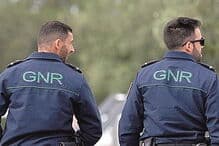
The National Road Safety Authority (Autoridade Nacional de Segurança Rodoviária or ANSR), alongside the Public Security Police (Polícia de Segurança Pública or PSP) and the National Republican Guard (Guarda Nacional Republicana or GNR), has launched a nationwide zero-tolerance campaign against drunk driving. Running until August 24, the initiative focuses on raising awareness and increasing enforcement operations to reduce risky driving behaviors.
Zero-tolerance alcohol campaign begins on Portuguese roads
Tuesday, 18 August 2026AI summary
Context & Explainers
The National Road Safety Authority (Autoridade Nacional de Segurança Rodoviária or ANSR) is the agency responsible for traffic safety and law enforcement on Portuguese roads. It manages the country's speed camera network and oversees public awareness campaigns to reduce traffic fatalities. The agency is currently planning to integrate artificial intelligence into its surveillance systems to better monitor driver behavior.

The PSP (Polícia de Segurança Pública) is Portugal's national civilian police force, founded in 1867. Responsible for defending Republican democracy and safeguarding internal security and citizens' rights, the PSP polices major cities—Lisbon, Porto, Faro—and large urban areas, covering only 4% of Portugal's territory but roughly half the population. Led by a National Director under the Ministry of Internal Affairs, its approximately 21,500 officers handle preventive policing, crime investigation, public order, airport security, diplomatic protection, private security regulation, firearms licensing, and border control (since 2023).
PSP vs. GNR: The PSP is civilian with police-focused training and urban jurisdiction, while the GNR (Guarda Nacional Republicana) is military (gendarmerie) with military training, covering 96% of Portugal's rural and suburban territory. Both share core public safety missions but differ fundamentally in nature, training, and geographic responsibility.

The GNR (Guarda Nacional Republicana) is Portugal's national gendarmerie—a military police force founded in 1911, with origins dating to 1801. With over 22,600 personnel, GNR patrols 94-96% of Portuguese territory, covering rural areas, medium towns, and highways. Members are military personnel subject to military law, responsible for public order, customs, coastal control, environmental protection (SEPNA), firefighting/rescue (GIPS), border control, and ceremonial guards. GNR vs. PSP: The PSP (Polícia de Segurança Pública) is Portugal's civilian police force, covering major cities (Lisbon, Porto, Faro) and large urban areas—only 4% of territory but roughly half the population. PSP handles airport security, diplomatic protection, and private security regulation. Both share core missions (public order, crime prevention), but differ in nature: GNR is military with military training; PSP is civilian with police-focused training.