The intolerance of the so-called tolerant
No one needs to ban an opinion to silence it. It is enough to make the social price of saying it too high.
observador.pt

Latest news and stories about social commentary in Portugal for expats and residents.
No one needs to ban an opinion to silence it. It is enough to make the social price of saying it too high.
A reflection on the state of the nation after two years, suggesting a country that is divided or looking away from its own problems.

The idea that it is unbearable to share a poster with a pro-Israel Jew is depressing for four different reasons — and none of them are related to what we think about the Israeli-Palestinian conflict. Opinion by João Miguel Tavares

If there are adults in the room, it is worth remembering that suffering is not exclusive to one side.

A statement or sentiment expressing faith or confidence in the country of Portugal.

Do not forget that, since Ancient Greece, since the times of Sophocles, it has been said—and my old man says it too, always in that tone of disapproval—oh, the youth of today. A column by Cláudia Lucas Chéu.

It is not my fault that I was born in a country with the highest density of poor souls per square metre, it is not my fault that I have healthy self-esteem and that I am proud of my appearance. A column by Cláudia Lucas Chéu.
Investing in beauty to be a model and earning only €100? A difficult life. And after all, where does all that money for the luxury cars come from?

Did you think all animals were cute? Between wild boars ramming people, mosquitoes causing typhoid fever, and dry wine cellars, even Joana Amaral Dias is staggering.
We live in a totalitarianism of the image. The image silences us. It replaces us. If there is a poisonous lie in this life, it is that an image is worth a thousand words. Chronicle by Miguel Esteves Cardoso
It is completely false that there exists in Portugal “a deafening silence and a real blockage of the self-critical capacity of very many Portuguese people,” as São José Almeida claimed.

The demonisation of right-wing women has entered the realm of the pathetic, such is the disconnect from reality.
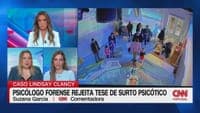
In an analysis of the Lindsay Clancy case, Suzana Garcia, a commentator for CNN Portugal, believes that “we are doing a disservice to the women's cause” by “infantilising a woman.”
What, for example, would he make of the current Prime Minister or Portugal’s new president, and what about America’s? What would be his view of the great number of foreigners The post What would Zé say? appeared first on Portugal Resident.

A certain feminism has never come to terms with women who, by virtue of the freedom and confidence gained through the achievements of the first generation, emancipated themselves from the subsequent central committees of feminism.

I refuse to buy into the idea that turning one's own intimacy into a product is almost synonymous with emancipation. A column by Carmen Garcia.
Take the opportunity to praise yourself, but discreetly, with a hint of victimhood, which always goes down well.

Two lives, one person. In this episode of Geração 40, Júlio Isidro talks to Rui Manuel Costa, but above all to Mário Cláudio, the writer who reinvented his own identity and who continues to question Portugal, literature, and the future of the Portuguese people. In this particular excerpt, he highlights the lack of directness in the country.

That a conservative would prefer to distance themselves from this rather than greet it has only one name: pedantry. Ultimately, it is a harmless lunch whose great sin is simply being a little ridiculous.
Broadcast live on television, Lídia Jorge's words could not be ignored. Pope Leo XIV's encyclical, however, is easier to silence. Opinion by São José Almeida
Portugal put on a show during the eclipse: ants attacked the TV, Donald Trump hovered around Greenland, and players got lost in the ellipses. In the end, Colombo is what's cool, and the sun was just a detail.
Living in freedom means accepting that we are the sole authors of our choices and the primary custodians of our failures.

It is not an old-fashioned left-wing speech. It is a progressive liberal presenting himself as left-wing. And it was a breath of fresh air.

One might say that this generation confuses genuine working-class oppression with the existential angst of an unstable Wi-Fi connection.

I am alarmed by this ideological shift in which the defence of human rights is being converted into a supposed extremist, leftist, and 'woke' practice. Opinion by Luísa Semedo
There are still maids. The only difference is that they are not as poorly paid, they have rights, and they do not have to put up with being hit by their bosses. A column by Miguel Esteves Cardoso.

João Carvalho, the head of the Vodafone Paredes de Coura festival, argues that politics does not have to be left out of music festivals: “Artists are free to express their opinions, as long as they do not undermine the essential values of living in society.”

Recently, in one of those synthetic decompression exercises that X forces upon us, I wrote a sentence that seems to me to summarise the tragedy of our development model: 'The most advanced countries are not so because they have perfect elites, but because they have raised the level of the common citizen. True patriotism consists of increasing the quality of...'

Ceuta in Lisbon, communist 'finos' (draught beers) and Chega fleeing the hearing. Meanwhile, at the Avante festival, the Russian salad sparks an ideological crisis over black-eyed peas.
Living implies noticing the differences between people, but it is saddening to see middle-class suburbanites offering themselves up to be exploited by the audiovisual industry.