From Brussels ambiguity to the urgency of 2030
Europe faces the critical challenge of developing autonomous defense capabilities while navigating complex migration policy shifts and the urgency of 2030 goals.

Latest news and stories about security in Portugal for expats and residents.
Europe faces the critical challenge of developing autonomous defense capabilities while navigating complex migration policy shifts and the urgency of 2030 goals.

The mandatory implementation of two-factor authentication for the Direct Social Security portal has been postponed from May 12th to May 16th due to technical issues with access code delivery.

There are increasing voices warning of a possible conflict between NATO and Russia. Major General Philippe de Montenon, one of the main leaders of the French army, warns that the French armed forces are preparing for combat similar to what happened this Monday in Ukraine.

Anthropic has suspended access following an order from the United States, which cites national security reasons. The order to prevent access from outside US territory or by foreign nationals within the country arrived yesterday afternoon.

Ending Europe's dependence on U.S. capabilities is one thing, denying allies the ability to defend themselves is an entirely different matter.

The Secretary-General of the Portuguese Republic Intelligence System (SIRP), Vítor Sereno, challenges political authorities to revise the Constitution to allow intelligence services access to mobile phone metadata in cases of terrorism, cybercrime, or organised crime, reports Expresso. The head of the Portuguese intelligence services notes that metadata can be decisive for understanding networks.

German Army chief Christian Freuding has warned that Germany must prepare to defend against Russian attacks by 2029, or even sooner, stressing that there is a broad consensus within NATO that Russia could attack allied territories before the end of the decade. “We have to be prepared... We must be ready for...”

Sovereignty does not mean absolute control. It is not self-sufficiency, isolation, or disconnection from the economic, financial, and technological flows that connect nations. Opinion by Arthur Machado

António José Seguro's first presidential speech on Portugal Day, Camões and the Portuguese Communities had a special focus on the international context, highlighting ideas such as NATO being the “fundamental pillar” of security in Europe and North America. At the ceremony taking place this Wednesday in Angra do Heroísmo, in...

The Greek government warned this Tuesday, based on alleged confessions from a recently detained suspect, that the Palestinian Islamist group Hamas may be planning attacks on European soil. Speaking to the television station Action24, the Greek Minister of Civil Protection, Michalis Chrisochoidis, stated that a 37-year-old Palestinian citizen, detained in...

The 37-year-old suspect was arrested in Crete on Saturday. He had explosives in Athens and was allegedly trained at a Hamas camp in Malaysia. A Greek minister warns of a change in the group's strategy.

The President of the European Council, António Costa, stated today that a stronger NATO “remains essential for Europe's security,” calling for the European Union and the Alliance to work together to respond to common threats.
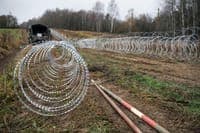
European Union Defence Commissioner Andrius Kubilius has called on European capitals to make surveillance of Europe's eastern border a priority and to finalise their proposals for joint projects of common interest by the end of this month, against a backdrop of several security incidents involving Russian drones on the eastern border.


In an exclusive interview at the Estoril Conferences, strategist Carlo Masala warns of a growing window of opportunity for Russia to advance into NATO territory. With Europe still rearming and the US focused on the Middle East, the expert anticipates risks and rules out an early end to the war in Ukraine.

The new plan highlights that emphasis should be placed on strengthening the 'follow-the-money' approach and tightening the maritime dimension.


A militarily strong, economically competitive, and technologically advanced Europe will remain vulnerable if it loses something more fundamental: its autonomous capacity.

European security is facing a growing context of hybrid pressure, marked by incidents in airspace, maritime zones, and critical infrastructure. The debate over the European Union's role in defending its own strategic space has been intensifying, amid a framework of greater transatlantic uncertainty. The European Union must be, beyond a 'peace project', a project for the active defense of its territory.
The central bank of Portugal has introduced a new initiative aimed at strengthening security and preventing online financial crimes.

The Army Chief describes the Russian attack as “very serious”. Galati is home to a base used by Portuguese forces and is the site where a drone carrier is being built.

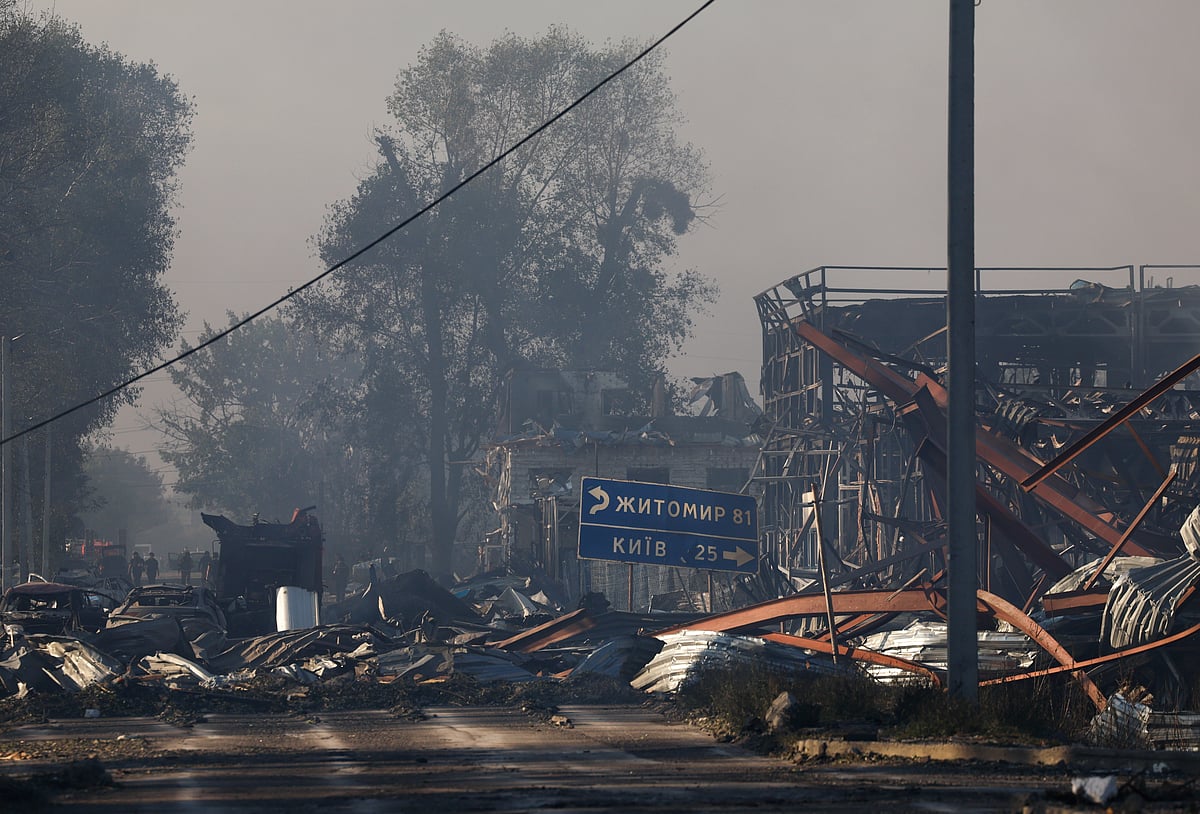
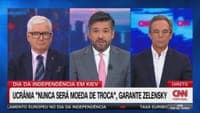
European Commission and Council leaders, alongside Germany, France, Italy, the UK, and Spain, have condemned Russia's 'massive attack' on Ukraine using a nuclear-capable Oreshnik hypersonic missile. European Council President António Costa and Commission President Ursula von der Leyen denounced the strike as a brutal act of desperation, while other Western leaders echoed these sentiments, reaffirming their support for Ukraine. Ukrainian President Volodymyr Zelensky reported significant damage to civilian infrastructure, including water supplies and schools, with casualties rising as the conflict intensifies.

Believing that the simple accumulation of missiles, drones, and armoured vehicles guarantees peace, while ignoring the cost imposed on daily life, is not strategic realism, but a dangerous illusion.

Portuguese authorities have participated in an international operation to take down a major cybercrime network.

CDS-PP MEP Ana Miguel Pedro warned on Wednesday, May 20, at the European Parliament plenary session in Brussels, about the recruitment of minors by criminal networks in the digital space. She stressed the urgency of a more effective and coordinated European response, noting that in recent months, youths aged 12, 13, and 14 have been suspected of terrorism after being lured and manipulated online. She highlighted that jihadism remains a major threat to European security and that one-third of those detained for terrorism-related crimes in the EU are between 12 and 20 years old. The MEP, part of the European People's Party, advocated for stronger legal tools to identify early signs of radicalisation and for faster action in removing terrorist content.

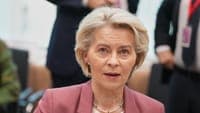
Von der Leyen stated that a threat against one of the member states represents “a threat to the entire Union”.
US Vice President JD Vance has ruled out a total withdrawal of American military personnel stationed in Europe, while admitting to a potential redistribution based on security interests and encouraging Europeans to take on more responsibility. “We are not talking about withdrawing all US troops from Europe. We are talking about redistributing some resources to...”

JD Vance declared that the US cannot “be the world's policeman” and that the withdrawal of American troops is not total, but serves as an incentive for Europe to assume more responsibility.

The American Vice President rejects a total withdrawal of US troops from Europe and explains that the country is simply “redistributing some resources to maximise the security” of the US.