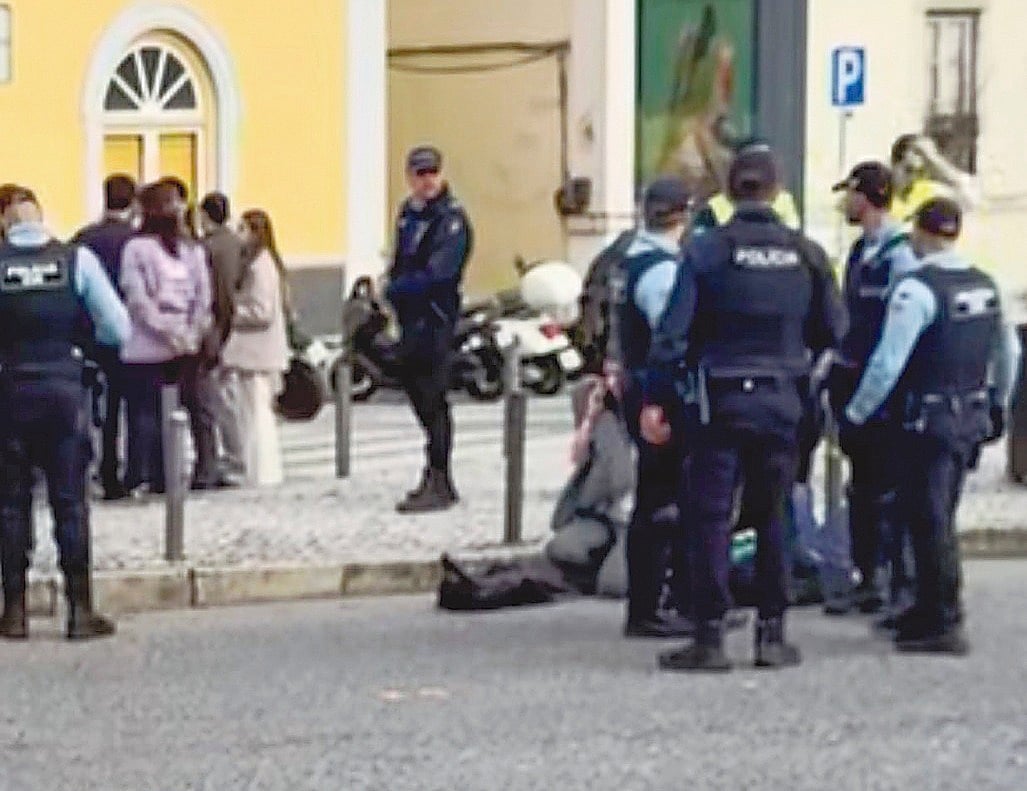
PSP arrests six protesters and identifies "several" others following clashes with police near the Assembly…
Those arrested face charges of resisting police action, disobedience, and setting fire to street furniture

Latest news and stories about protest in Lisbon, Lisboa, Portugal for expats and residents.
Those arrested face charges of resisting police action, disobedience, and setting fire to street furniture
Thousands of teachers marched in Lisbon today in a protest organized by the National Federation of Teachers (Federação Nacional dos Professores or Fenprof). The demonstrators expressed opposition to the government's proposed labour package and the revision of the Teaching Career Statute (Estatuto da Carreira Docente), while also announcing their participation in a general strike scheduled for June 3rd.
Update: Teachers confirm participation in June 3rd general strike
Thousands of teachers gathered in Lisbon this Saturday to protest against the government's proposed labour reforms and the revision of the Teaching Career Statute. During the demonstration, Fenprof officially confirmed that teachers will join the national general strike scheduled for June 3rd.
Fenprof is the National Federation of Teachers (Federação Nacional dos Professores), the main public‑school teachers' union in Portugal that represents teachers in pay, working conditions and education reforms. Its criticism matters because Fenprof can organize strikes and mobilise teachers, which directly affects school operations and the implementation of government changes — something families and expat educators should monitor.
The Teaching Career Statute (Estatuto da Carreira Docente) is the law that sets how teachers are recruited, evaluated, promoted and dismissed in Portugal. The proposed revision matters because it would introduce a centralised national competition for entry, a one-year trial period and an exceptional route for teachers without formal qualifications, changes that affect job access and stability for current and future teachers.

The Permanent Coordinating Commission (CCP), representing major security force unions including the Public Security Police (Polícia de Segurança Pública or PSP) and the National Republican Guard (Guarda Nacional Republicana or GNR), has announced a national protest for April 16. The demonstration will take place in front of the Prime Minister's residence in Lisbon to oppose legislative changes since 2005 that have reduced pension values for security personnel.

The PSP (Polícia de Segurança Pública) is Portugal's national civilian police force, founded in 1867. Responsible for defending Republican democracy and safeguarding internal security and citizens' rights, the PSP polices major cities—Lisbon, Porto, Faro—and large urban areas, covering only 4% of Portugal's territory but roughly half the population. Led by a National Director under the Ministry of Internal Affairs, its approximately 21,500 officers handle preventive policing, crime investigation, public order, airport security, diplomatic protection, private security regulation, firearms licensing, and border control (since 2023).
PSP vs. GNR: The PSP is civilian with police-focused training and urban jurisdiction, while the GNR (Guarda Nacional Republicana) is military (gendarmerie) with military training, covering 96% of Portugal's rural and suburban territory. Both share core public safety missions but differ fundamentally in nature, training, and geographic responsibility.

The GNR (Guarda Nacional Republicana) is Portugal's national gendarmerie—a military police force founded in 1911, with origins dating to 1801. With over 22,600 personnel, GNR patrols 94-96% of Portuguese territory, covering rural areas, medium towns, and highways. Members are military personnel subject to military law, responsible for public order, customs, coastal control, environmental protection (SEPNA), firefighting/rescue (GIPS), border control, and ceremonial guards. GNR vs. PSP: The PSP (Polícia de Segurança Pública) is Portugal's civilian police force, covering major cities (Lisbon, Porto, Faro) and large urban areas—only 4% of territory but roughly half the population. PSP handles airport security, diplomatic protection, and private security regulation. Both share core missions (public order, crime prevention), but differ in nature: GNR is military with military training; PSP is civilian with police-focused training.

More than 100 collectives have organized a series of protests under the slogan “It's not enough” (Já não dá) to demand better access to affordable housing. The demonstrations, scheduled for the coming weekend in several cities, show the growing gap between wages and rental prices. Organizers argue that recent government measures have failed to protect tenants from irregular rent increases and precarious living conditions. Tenants and those seeking housing should be aware of the protests in major urban centers.

The Casa Para Viver platform has submitted an open letter to the Portuguese Minister of Infrastructure and Housing, formally demanding a reduction in rental costs amidst the ongoing national housing crisis.

Cultural mediators from the Agency for Integration, Migration and Asylum (AIMA) are striking at the Government headquarters in Lisbon to demand permanent employment status and salary equality, protesting the ministry's reliance on precarious labor.

The Portuguese Federation for Life is demanding that a Molotov cocktail attack on their recent March for Life be prosecuted as an act of terrorism, following the arrest of a suspect linked to an anarchist group.
The initiative was announced by communist leader Vasco Cardoso during a press conference at the PCP national headquarters in Lisbon.

Drivers are demanding tax relief, including cuts to the ISP and VAT, during protest actions on the 25 de Abril Bridge and in Sines. They accuse the government of padding its coffers with successive price increases.

The protest on the Pragal Bridge, near the 25 de Abril Bridge, coincides with another day of rising prices this Monday, with petrol increasing by 9 cents and diesel by 12 cents per litre.

About 300 people marched in Lisbon calling for rights for all animals, “regardless of species”.

Actress Inês Aires Pereira announced she will not participate in the festival, expressing solidarity with Palestine and refusing to “normalise a genocide”. Jerry Seinfeld, one of the guests, defends Israel, refers to Palestine as non-existent, and compares pro-Palestinian movements to the Ku Klux Klan.
The protest concerns technical failures that occurred during the digitisation of national exams.

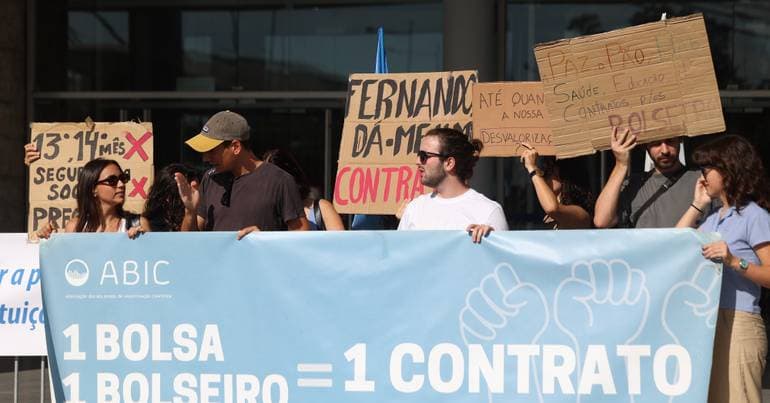
Two hundred students demonstrated against the Minister of Education. The protesters called for the resignation of Fernando Alexandre and criticised the changes implemented by the Government.

More than a hundred students and teachers were protesting this afternoon in Lisbon, in front of the Ministry of Education, demanding the resignation of Minister Fernando Alexandre following technical failures during the digitisation of national exams. “It's time, it's time for the minister to go,” “Government listen, the students are fighting”...

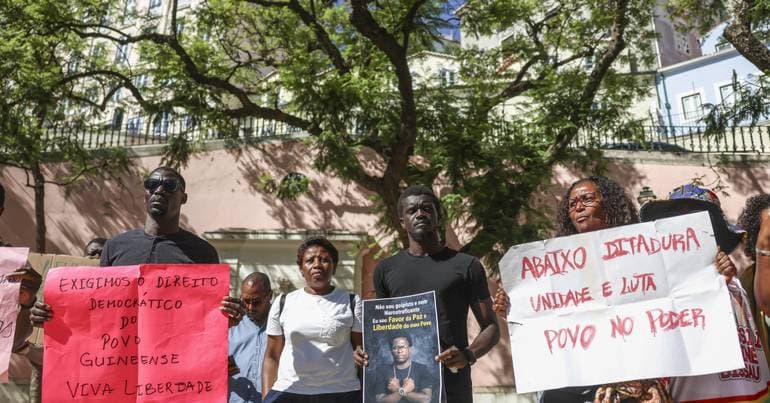
In front of the Belém Palace, protesters accused Sissoco Embaló of being a “traitor to the homeland” and called for Seguro's intervention with the CPLP, ECOWAS, and the UN.

Around 30 Guineans gathered in front of the CPLP headquarters, which is marking its 30th anniversary, accusing the Lusophone organization of 'complicity with the dictatorship'.
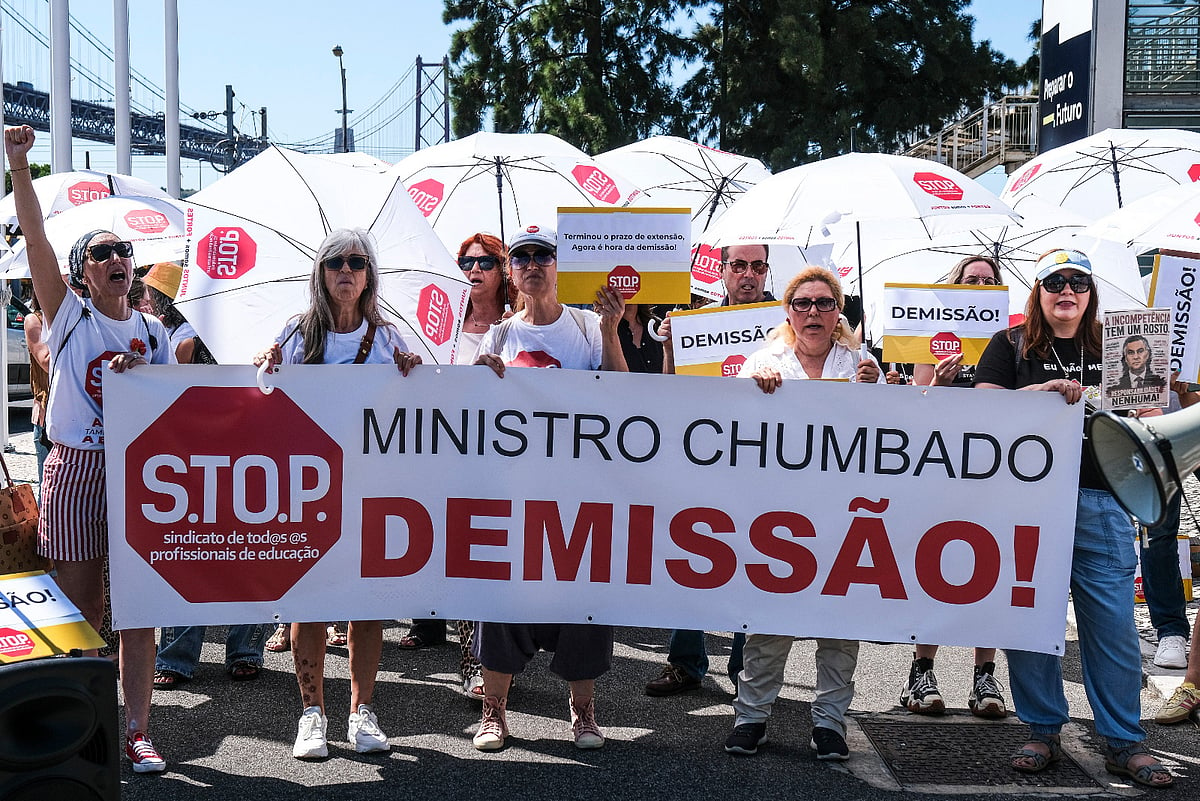
Approximately 50 people are demonstrating this Thursday, July 16, in front of the Lisbon Congress Centre to demand the resignation of the Minister of Education, Fernando Alexandre, in a protest organised by the S.T.O.P. union. Protesters chanted slogans criticising the minister over delays in grading national exams, with union leader Daniel Martins stating that the minister is no longer fit for office. The protest took place during the Science and Innovation Meeting, the first event organised by the new Agency for Research and Innovation (AI²).
The Frente Comum organized a public forum this morning near the Assembly of the Republic in Lisbon. The slogan was 'Government called to the Workers' Land'.

Fifty teachers are at the Lisbon Congress Centre this Thursday.

A protest near the Lisbon Congress Centre, where the Minister of Education is located, calls for the resignation of Fernando Alexandre.

S.T.O.P argued that the Ministry of Education must find a solution for students affected by the delays in exam grading.

The gathering took place in front of the Lisbon Congress Centre, where the Prime Minister and Minister Fernando Alexandre were present.
Around 500 people gathered in Lisbon today to denounce the threats made by the United States (US) against Cuba and to call for an end to the aggression and blockade against the Caribbean island, which has been the target of successive sanctions by Washington.

The march started at the University City and ended at the American embassy. Organisers denounce “more than 60 years of criminal blockade” and illegal sanctions.

The demonstration began at the University City in Lisbon and proceeded to the United States embassy.

Schools fear they will not be able to open for the next academic year if they do not receive adequate funding.
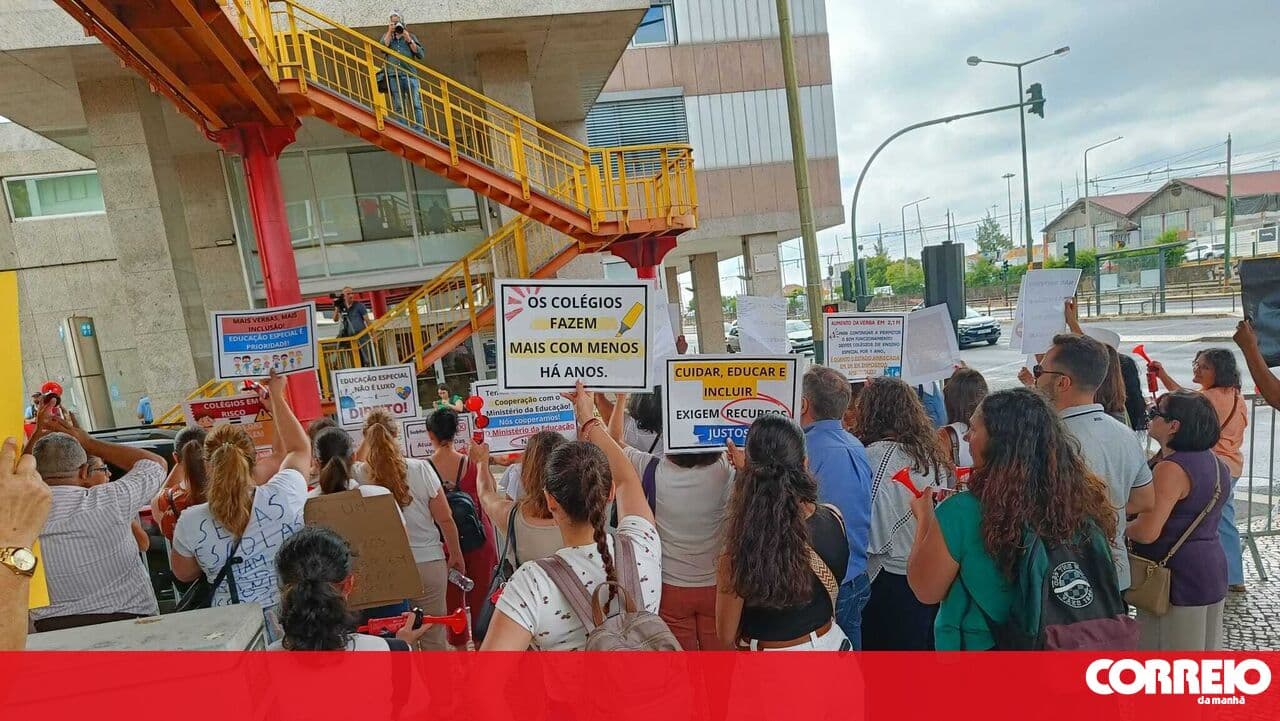
These schools will not open their doors this Wednesday. They will be protesting outside the Ministry of Education.
Hundreds of people marched through central Lisbon this evening to protest against the suspended sentence handed to a PSP police officer convicted of shooting dead Cape Verdean chef Odair Moniz. The post Hundreds rally in Lisbon over suspended sentence for policeman who killed Odair Moniz appeared first on Portugal Resident.

Hundreds of people demonstrated in downtown Lisbon in an initiative organised by the Vida Justa movement

The protest takes place this afternoon in Lisbon. Also in this news, a woman dies and 1,700 people are evacuated from a resort in the Dominican Republic following a fire.