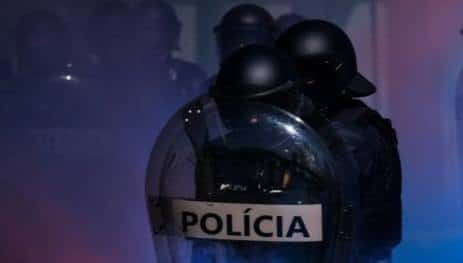
PSP arrests six protesters and identifies "several" others following clashes with police near the Assembly…
Those arrested face charges of resisting police action, disobedience, and setting fire to street furniture

Latest news and stories about protest in legal in Lisbon, Lisboa, Portugal for expats and residents.
Those arrested face charges of resisting police action, disobedience, and setting fire to street furniture
The Permanent Coordinating Commission (CCP), representing major security force unions including the Public Security Police (Polícia de Segurança Pública or PSP) and the National Republican Guard (Guarda Nacional Republicana or GNR), has announced a national protest for April 16. The demonstration will take place in front of the Prime Minister's residence in Lisbon to oppose legislative changes since 2005 that have reduced pension values for security personnel.

The PSP (Polícia de Segurança Pública) is Portugal's national civilian police force, founded in 1867. Responsible for defending Republican democracy and safeguarding internal security and citizens' rights, the PSP polices major cities—Lisbon, Porto, Faro—and large urban areas, covering only 4% of Portugal's territory but roughly half the population. Led by a National Director under the Ministry of Internal Affairs, its approximately 21,500 officers handle preventive policing, crime investigation, public order, airport security, diplomatic protection, private security regulation, firearms licensing, and border control (since 2023).
PSP vs. GNR: The PSP is civilian with police-focused training and urban jurisdiction, while the GNR (Guarda Nacional Republicana) is military (gendarmerie) with military training, covering 96% of Portugal's rural and suburban territory. Both share core public safety missions but differ fundamentally in nature, training, and geographic responsibility.

The GNR (Guarda Nacional Republicana) is Portugal's national gendarmerie—a military police force founded in 1911, with origins dating to 1801. With over 22,600 personnel, GNR patrols 94-96% of Portuguese territory, covering rural areas, medium towns, and highways. Members are military personnel subject to military law, responsible for public order, customs, coastal control, environmental protection (SEPNA), firefighting/rescue (GIPS), border control, and ceremonial guards. GNR vs. PSP: The PSP (Polícia de Segurança Pública) is Portugal's civilian police force, covering major cities (Lisbon, Porto, Faro) and large urban areas—only 4% of territory but roughly half the population. PSP handles airport security, diplomatic protection, and private security regulation. Both share core missions (public order, crime prevention), but differ in nature: GNR is military with military training; PSP is civilian with police-focused training.
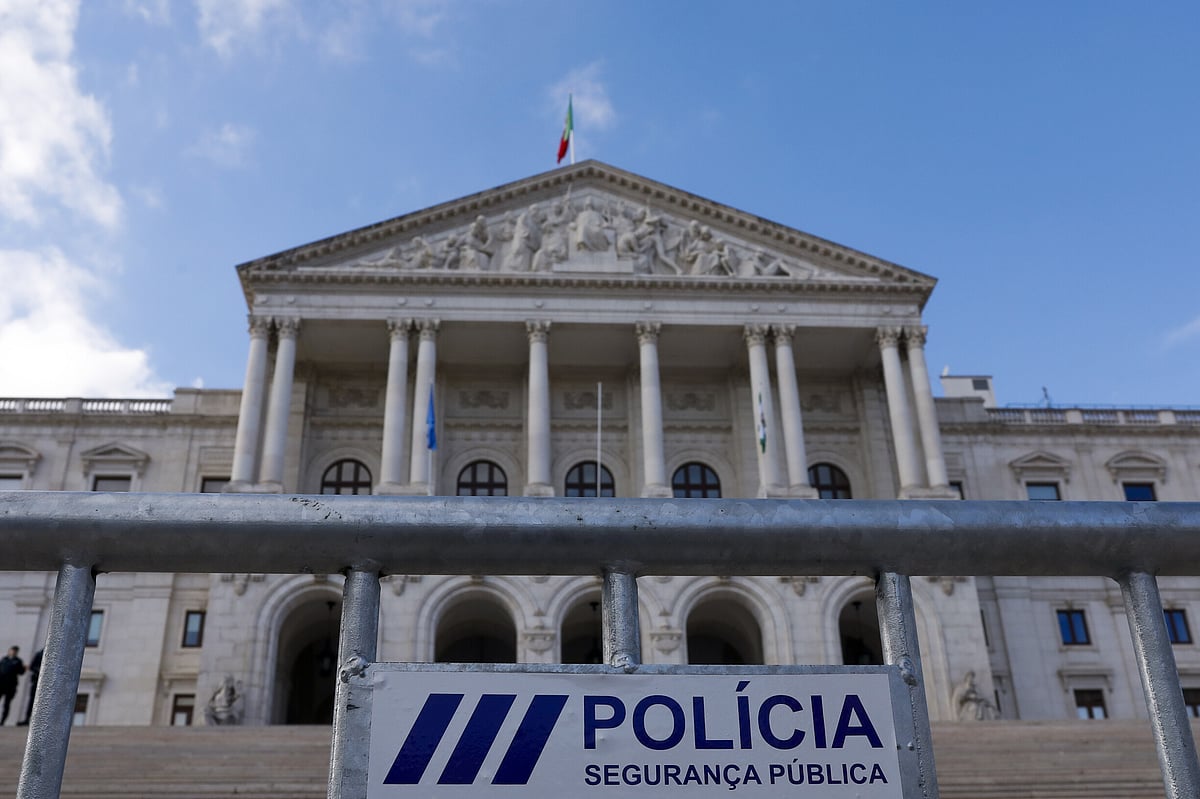
The Portuguese Federation for Life is demanding that a Molotov cocktail attack on their recent March for Life be prosecuted as an act of terrorism, following the arrest of a suspect linked to an anarchist group.
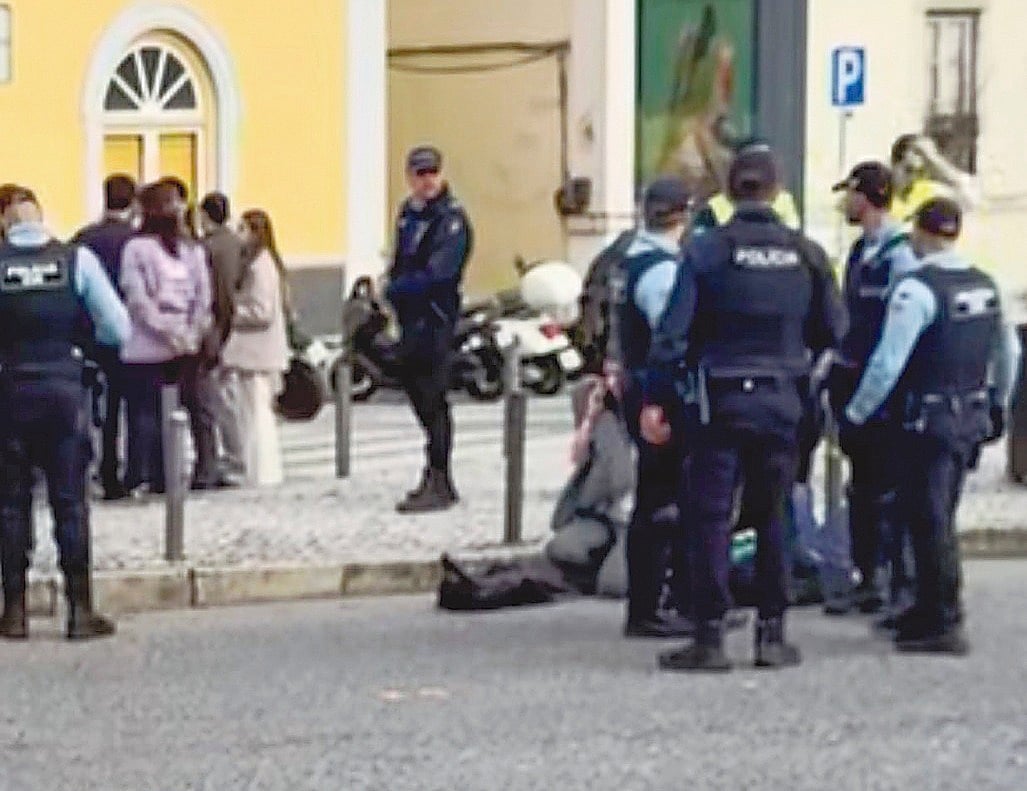
In front of the Belém Palace, protesters accused Sissoco Embaló of being a “traitor to the homeland” and called for Seguro's intervention with the CPLP, ECOWAS, and the UN.

Around 30 Guineans gathered in front of the CPLP headquarters, which is marking its 30th anniversary, accusing the Lusophone organization of 'complicity with the dictatorship'.
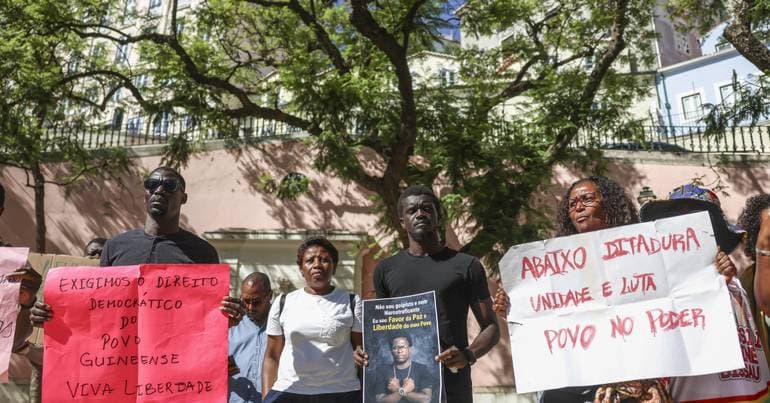
Hundreds of people marched through central Lisbon this evening to protest against the suspended sentence handed to a PSP police officer convicted of shooting dead Cape Verdean chef Odair Moniz. The post Hundreds rally in Lisbon over suspended sentence for policeman who killed Odair Moniz appeared first on Portugal Resident.

Hundreds of people demonstrated in downtown Lisbon in an initiative organised by the Vida Justa movement

The protest takes place this afternoon in Lisbon. Also in this news, a woman dies and 1,700 people are evacuated from a resort in the Dominican Republic following a fire.

At 5 pm on Saturday, at Largo de São Domingos, protesters from the Vida Justa Movement are demonstrating against Bruno Pinto's suspended sentence: “It turns victims of racism and police violence into the guilty ones.”
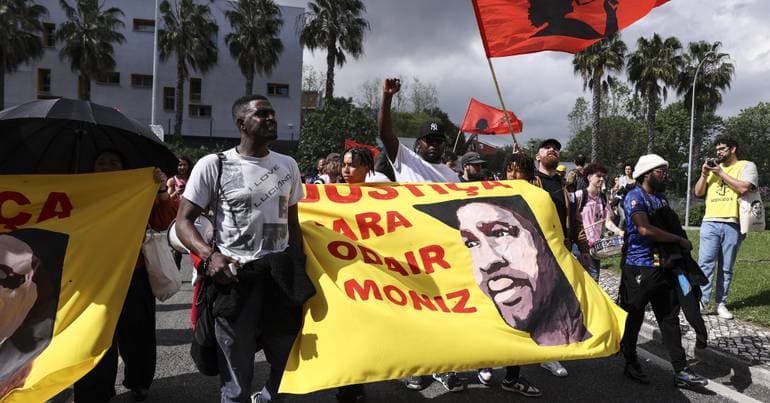
“We do not accept an unjust ruling,” the movement states. The demonstration is scheduled for next Saturday afternoon at Largo de São Domingos in Lisbon.
The PSP states that 80 to 90% of the protesters are already known for illicit activities.
There are people who do not give up fighting for their rights and those are the ones who count.

All six protesters arrested near parliament on Wednesday, following the CGTP demonstration on the day of the general strike, were released with an identity and residence requirement.
At least six people were arrested on Wednesday near parliament in Lisbon at the end of the CGTP demonstration, following clashes with the PSP.

Those arrested are charged with disobedience, resistance, and coercion against a public official.
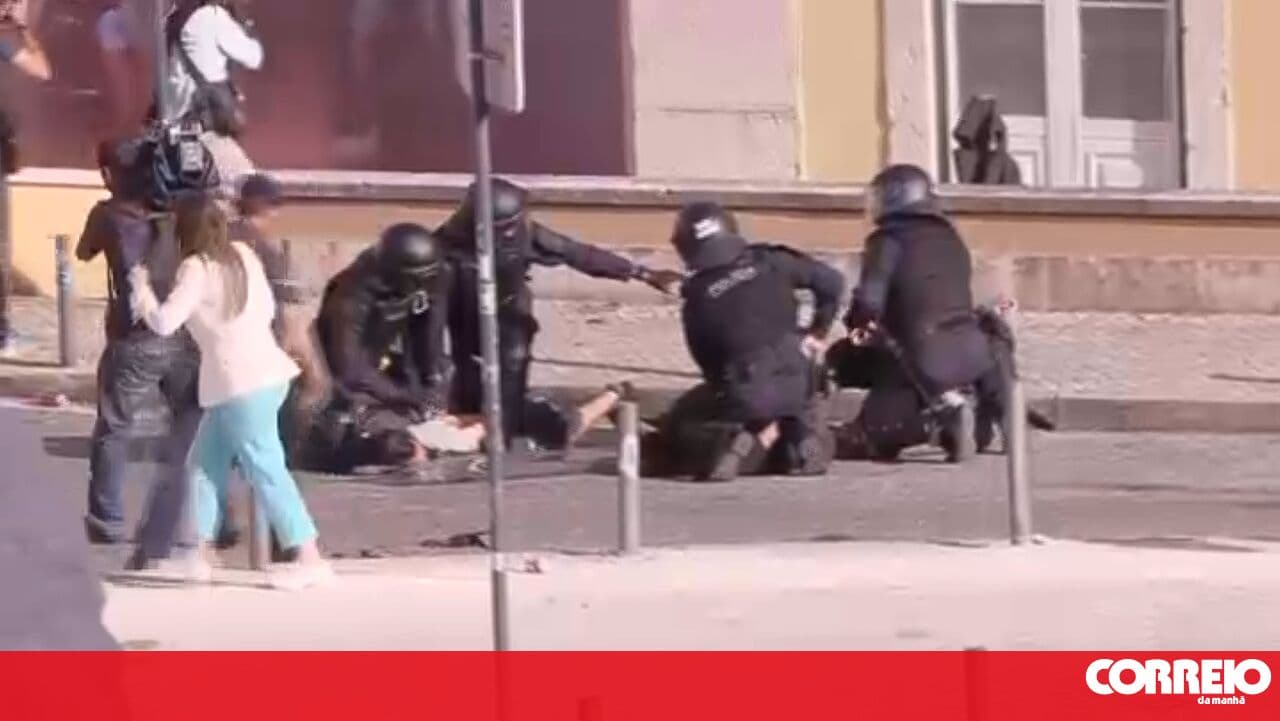
The activist network points to around 10 detainees and over 50 identified individuals. It reports arrests inside police vehicles and the obstruction of a vigil at the Lapa Police Station, and demands a public clarification.
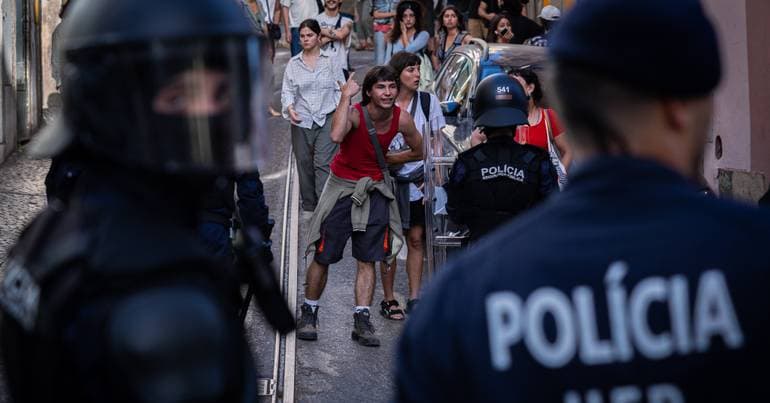
Tiago Oliveira argued that the clashes with the PSP near Parliament diverted focus from the general strike's demands. He also guaranteed that no member of the union was involved in the clashes with the PSP.
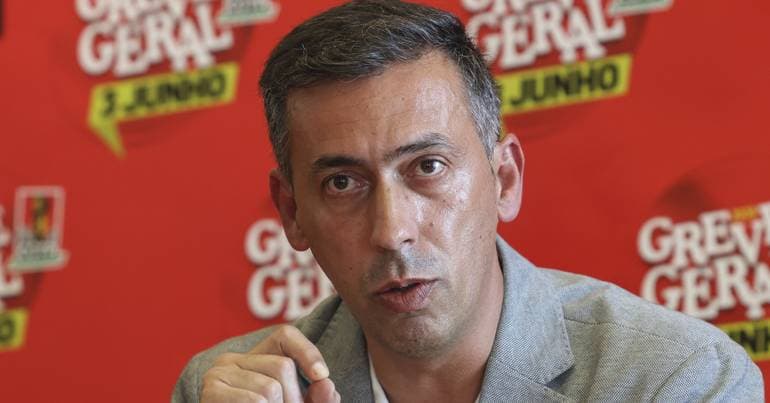
With six detainees charged with disobedience and resisting arrest, the Ministry of Internal Administration rejected any tolerance for violence or defiance against the authorities.
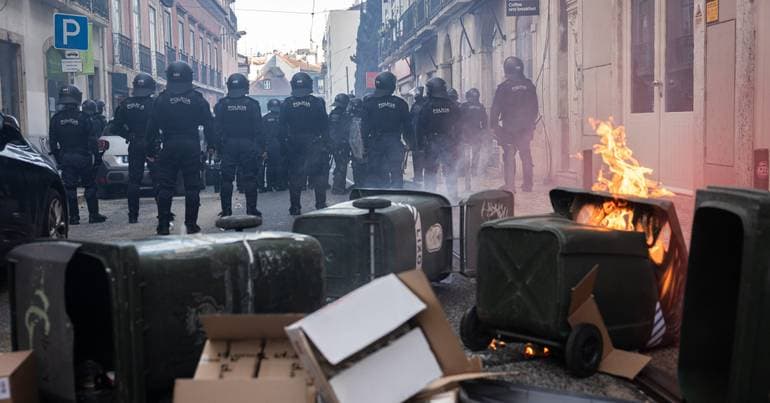
The PSP confirmed to CM that firecrackers were detonated during clashes at protests on the day of a general strike, where one police officer was injured. The Lisbon Fire Department had to be called to extinguish fires in rubbish bins.
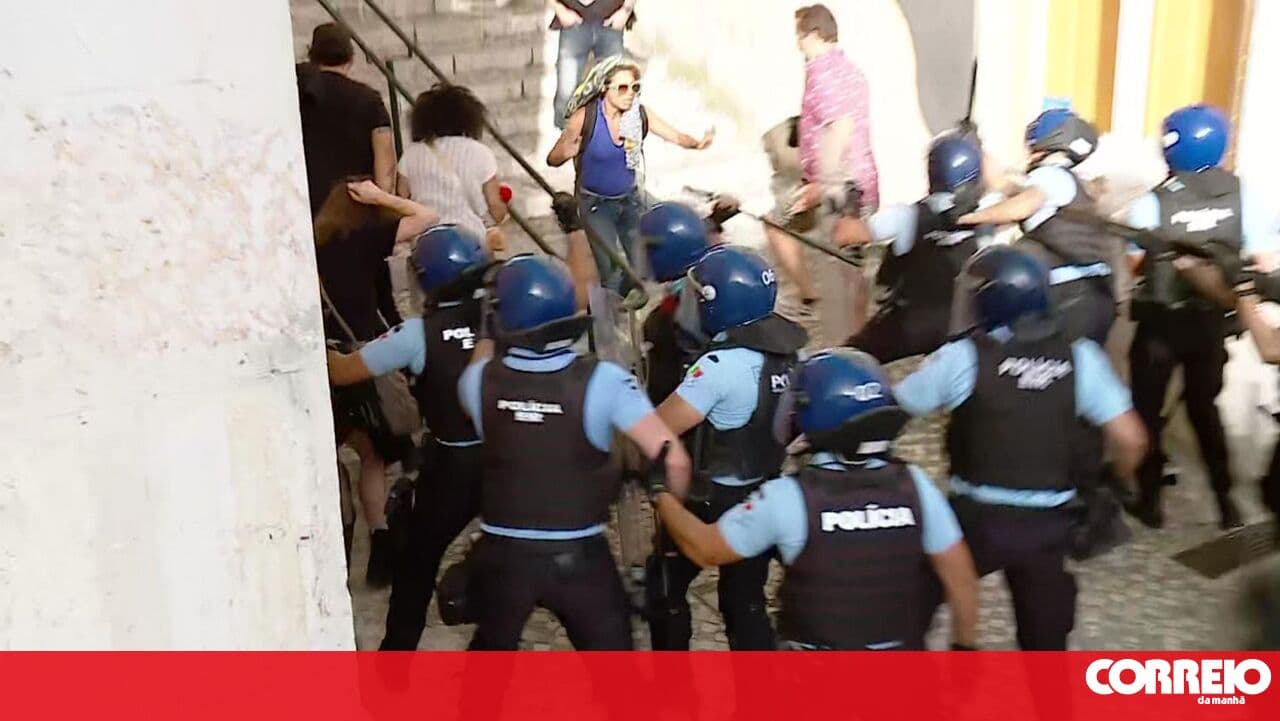
The PSP took protesters who were resisting at the doors of the Assembly of the Republic to the police station, as part of the demonstrations on the day of the general strike.
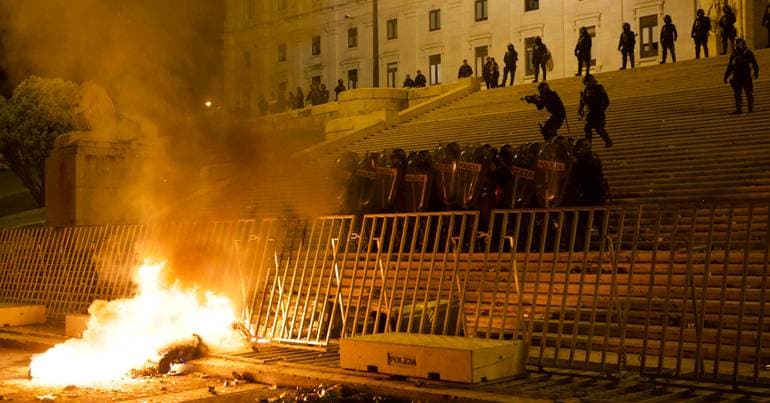
The situation spiralled out of control in the vicinity of the Assembly of the Republic after protesters continued to clash with the PSP. Three people have already been detained.
The action was intended to protest against the profits of large retail chains in the context of fossil fuel war and to draw attention to the effects of climate change on food supplies.

The movement explains that a dozen supporters entered the Continente store in Campo Pequeno and took food and personal hygiene items, leaving without paying and distributing these goods at a stall near the Oriente station.

A lawyer argues that the firing of rubber bullets and baton strikes to the head indicate crimes of physical assault and abuse of power. One of the victims suffered hearing loss.
Protesters held signs accusing Lula da Silva of being a “corrupt thief”.

Chega has called for a demonstration near the Belém Palace in protest against the Brazilian head of state's visit. Also in this news bulletin, the Amnesty International annual report.

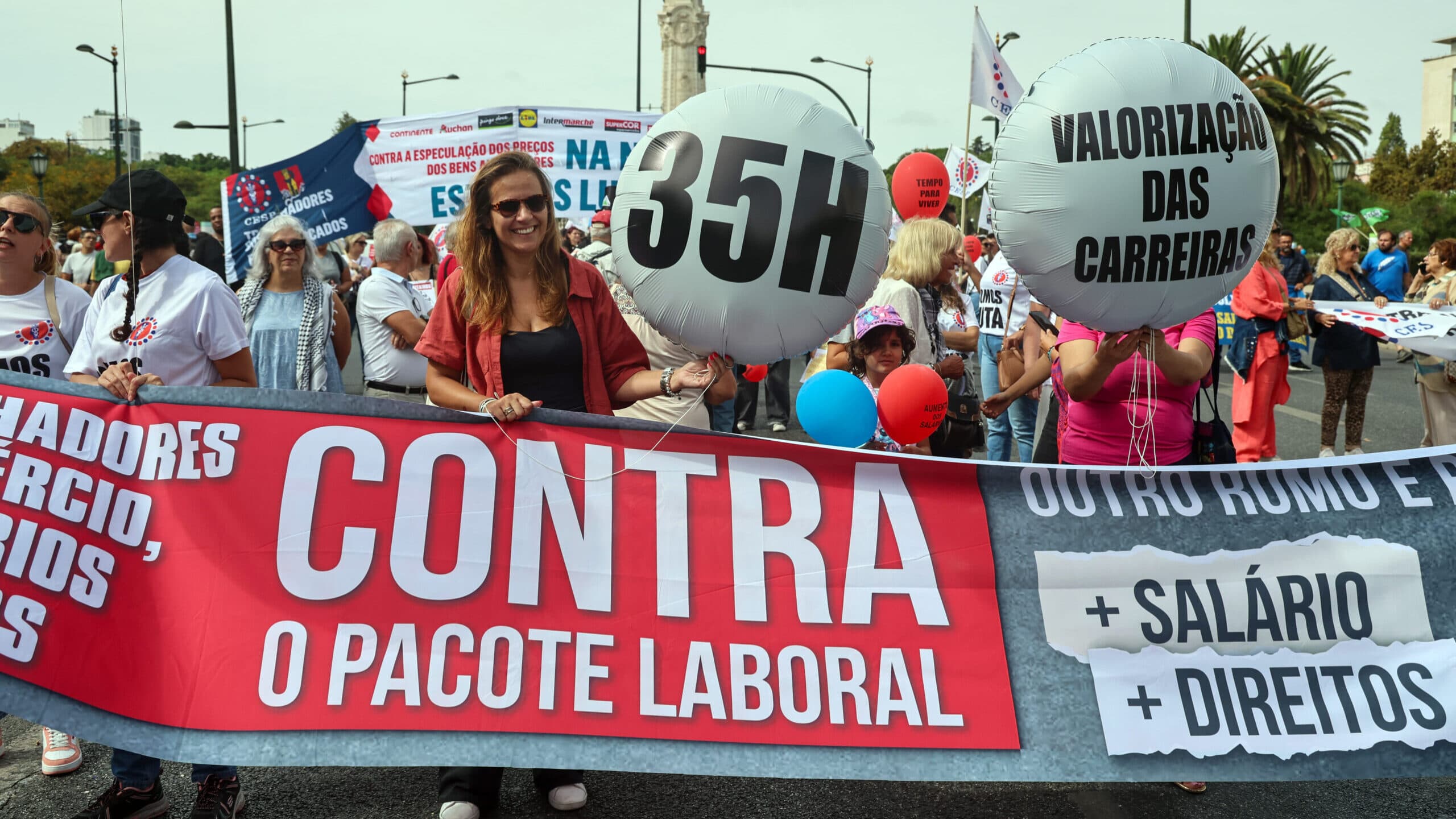
The secretary-general of the CGTP anticipates that “thousands of workers will be on the streets” for the demonstration taking place this Friday in Lisbon against changes to labour law, and warns that “the greater the scale of the attack, the greater the response will be.” Under the slogan “Down with the Labour Package! Increasing wages, guaranteeing rights, a better life is possible”, ...
Around a thousand members of the PSP, GNR, prison guards, and Maritime Police are gathered today in front of the Prime Minister's residence in Lisbon to protest against cuts to pension calculations, which could exceed 30%.

ASPP, one of the unions present, argues that members of the security forces and services must have 'an exception' regarding pensions, taking into account the 'specificities in the exercise of their mission'.

Members of the security forces are holding a demonstration this Thursday in front of the Prime Minister's residence in Lisbon.