Government meets today with UGT and employers to resume negotiations on labour law
The meeting is scheduled for 3:00 PM at the Ministry of Labour, Solidarity and Social Security (MTSSS) in Lisbon.

Latest news and stories about labour law in legal in Lisboa, Portugal for expats and residents.
The meeting is scheduled for 3:00 PM at the Ministry of Labour, Solidarity and Social Security (MTSSS) in Lisbon.

The Minister of Labour reconvenes with the UGT and business confederations to resume labour law reform negotiations following an appeal from the President of the Republic to resolve the recent impasse.
The webpage provides a broad overview of current news across various topics, including politics, economy, and international affairs, with some focus on Portugal. Key points related to Portugal include: - The CGTP union plans to visit the ministry on a scheduled meeting day, despite not being officially summoned. - Former Banco de Portugal governor Mário Centeno has retired and entered into retirement. - Politician Paulo Rangel downplays discussions about the Lajes base, stating it is not a current issue. - The Salesianos school in Cascais has admitted to offering different meals for paying and non-paying students. Overall, the article highlights ongoing political and social developments in Portugal, alongside international news and other societal issues.

The trade union federation does not accept the 'attempted exclusion' from negotiations and reinforces that 'no process is valid with exclusion'.

The person in charge admits to payment delays, but claims that “none exceeded 60 days,” further alleging that “everything was done” to ensure salaries were paid on time.

The webpage features various news updates related to Portugal, including political, economic, and social issues. Key highlights include António Costa criticizing the lifting of sanctions on Russian oil, expressing concern over potential consequences. There is also coverage of a police officer injured during a chase on the Ponte 25 de Abril, and protests in Lisbon demanding higher wages in the public sector. Additionally, the site reports on Portugal's weather forecast indicating an early transition from winter to spring, and a supercomputer analysis assessing the chances of FC Porto and Sporting Braga in the Europa League. Overall, the page provides a broad overview of current events impacting Portugal across multiple domains.

Portuguese nursing and medical unions have called a general assembly at the Lisbon Western Local Health Unit (ULSLO) for Monday, March 16, following a computer system error that caused thousands of hours of unpaid overtime to disappear from staff records. While the hospital administration attributes the issue to a software migration and guarantees that all data will be recovered, union leaders remain skeptical and are demanding urgent clarification, warning that they are prepared to organize protests if workers' rights are not fully protected.

Some schools were closed due to the strike. The union reports that APDJ is going through a “difficult situation” and is hiring workers without informing them of the association's financial status.

Workers at the Portuguese news agency Lusa are striking from 10 a.m. to 2 p.m. to protest against recent restructuring and a new governance model approved by the government. The unions criticize the process as lacking transparency and argue that the new statutes threaten journalistic independence, potentially conflicting with the Portuguese Constitution and European media regulations. Concerns include plans for layoffs without clear strategies for strengthening teams and doubts about the independence of the agency if its headquarters move to the RTP building. The strike follows weeks of internal protests, including resolutions and demonstrations, with unions emphasizing the importance of maintaining editorial independence amid these changes. The government defends the reforms.

The article reports on protests by Lusa news agency workers in Lisbon and Porto, demanding that the Portuguese Regulatory Authority for Communication (ERC) address the recent revision of Lusa's statutes, which was carried out by the government. Union representatives argue that the restructuring and statutory changes conflict with European press freedom regulations and threaten the agency's independence. The protests included slogans and banners emphasizing the importance of autonomy and criticizing government influence. Workers plan to formally request ERC intervention and continue engaging with European institutions. The controversy centers on the company's reorganization, governance model, potential relocation to RTP facilities, and negotiations over working conditions, raising concerns about the future of Lusa and press freedom in Portugal.

Minister of Labour, Palma Ramalho, has summoned the UGT and the four business confederations to a meeting at the ministry next Monday to resume negotiations on labour law, an official source told Lusa. The Prime Minister announced on Wednesday morning (11) that the Government will meet with social partners early next week regarding labour law, stating that he does not want to “prolong the discussion indefinitely” but rather “exhaust all possibilities for reaching an agreement.” An official source from the Ministry of Labour, Solidarity and Social Security confirmed to Lusa that the meeting is scheduled for Monday, March 16, at 3:00 PM at the Ministry of Labour in Lisbon, and will be attended by the UGT, the Government, and the business confederations. Luís Montenegro calls for “courage to act and to change” labour legislation.

This morning, the Prime Minister said he does not want to “prolong the discussion indefinitely”, but rather “exhaust all possibilities for reaching an agreement”.

The Local Health Unit (ULS) stated that a new version of the attendance registration system is being implemented, with its completion expected soon.

An Asian buffet restaurant in Cacém was closed following an inspection operation, where serious hygiene and food storage failures were detected. The establishment served spoiled food and accommodated immigrant employees in makeshift rooms.

A police operation led to the closure of the restaurant. Officers found food in contact with the floor. Upstairs, 35 immigrants were living in unsanitary conditions, two of whom were in the country illegally.

The webpage provides a broad overview of current political, economic, and social news related to Portugal. Key highlights include President José António Seguro's recent inauguration, emphasizing national unity and inclusivity, with his activities beginning in Mourisia. The economic section covers statements from ECB President Christine Lagarde on inflation control and ongoing labor negotiations, where employers show willingness to resume talks, though unions remain cautious. Additionally, there are updates on Portugal's participation in international events, such as the Michelin Gala and the Euromillions lottery results. Other notable topics include Portugal's record rainfall in February, the ongoing Marquês trial, and Portugal's engagement in global issues like the Ukraine conflict and EU-Israel relations.

The Portuguese Public Ministry has charged 15 individuals, including six companies, with organizing a scheme to facilitate illegal immigration. The operation, called 'Contrato Formoso,' uncovered a network led by Mustafiz Sairniabat, based in Lisbon, that used fake employment contracts to legalize thousands of immigrants, mainly from Pakistan and India. The scheme involved charging each immigrant around €6,000 for documents, including false work contracts and social security contributions, generating over €448,000 in illicit profits. Sairniabat and accomplices also recruited Portuguese citizens to sign false residence attestations for small payments. The investigation revealed that the organization exploited legal changes to streamline immigration processes, with Sairniabat's company issuing fake employment records for hundreds of migrants.
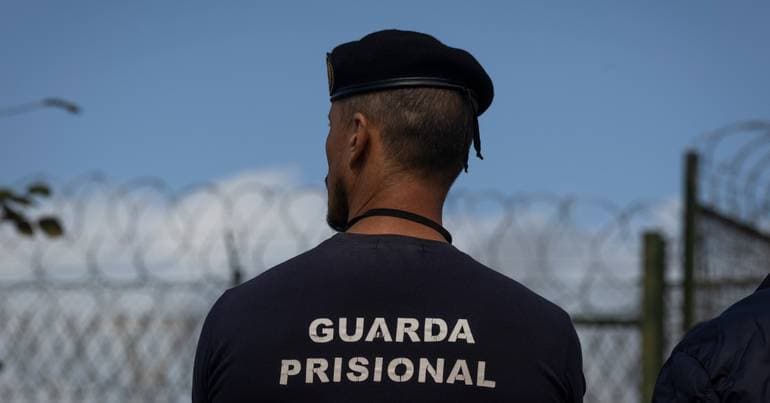
The strike is due to the lack of security at the prison from which five inmates escaped. Since then, various security measures have been discussed, but the union says the promises have not yet been fulfilled.

Strike called by the prison guards' union continues until April 30th.

Four GNR associations and the Armed Forces enlisted personnel association denounce pension cuts. They admit they may take to the streets in protest.

The Minister of Economy stated this Tuesday, March 10, that the lack of an agreement on labour legislation is not due to a lack of will from the Government, which “intensely wants” a consensus. Manuel Castro Almeida noted that the Government has been eager to reach an agreement, speaking on the sidelines of the Banca 2026 Forum in Lisbon. When asked if the law will proceed without a consensus in the Social Concertation, the minister replied, “We shall see.” Meanwhile, the CIP and CCP have confirmed that negotiations have ended without an agreement, leaving the next steps to the Government, which may now submit the “Trabalho XXI” reform proposal to the Assembly of the Republic.

Thousands of demonstrators took to the streets in Lisbon and Porto to protest against the government's proposed changes to the labour law, known as the 'Work XXI' reform. Led by the CGTP union, the protests highlighted concerns that the reforms would negatively impact workers' rights. CGTP's Secretary-General, Tiago Oliveira, called for the government to withdraw the labour package, emphasizing its detrimental effects on the workforce.

Lisbon firefighters' union says the Regimento de Sapadores Bombeiros de Lisboa (RSBL) is in 'utter disarray', citing delays in promotions, organisational failures and that more than 10% of operational personnel lack proper uniforms. Staff are considering issuing a pre-strike notice as a warning that industrial action could follow if complaints over safety, logistics and career progression are not resolved. The union warns these problems undermine emergency response and public safety and is calling for urgent management and municipal intervention.

The Supreme Administrative Court (STA) ruled in favour of two scientists in appeals against the University of Lisbon, ordering the university to open public competitions for career entry once the maximum term of their fixed‑term contracts expired. Two separate rulings — including one dated 8 January concerning the Instituto Superior de Agronomia (ISA) — require competitions to be launched within 30 days at ISA and at the Faculty of Letters, overturning earlier judgments. The decisions set a legal precedent on academic precarity and fixed‑term employment, with potential implications for higher education labour practices and reform of recruitment procedures in Portuguese universities.