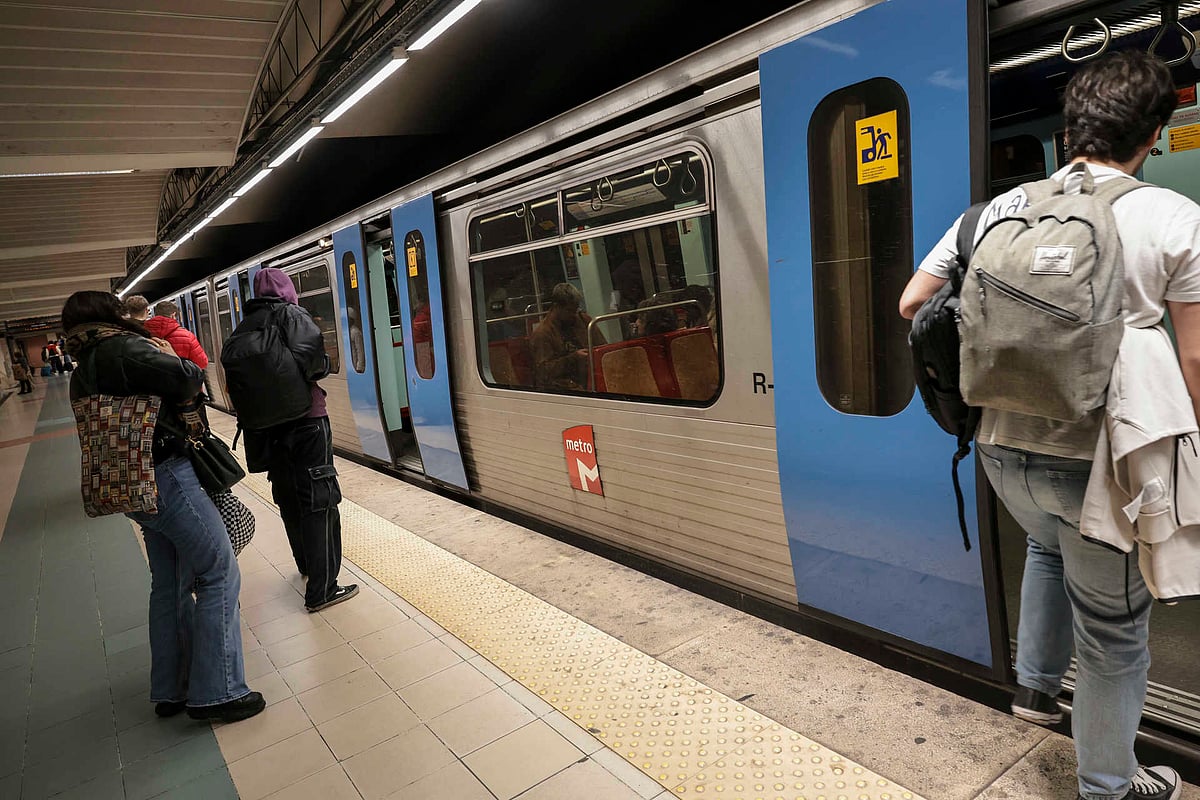
Service on the Red Line of the Lisbon Metro was restored around 16:45 on Friday, March 6, after a fire caused a disruption for about two hours. The fire was detected between Oriente and Moscavide near a ventilation shaft, with firefighters confirming that only smoke was present and no flames were involved. The incident began at 14:59 due to a pile of rubbish burning near the ventilation entrance, prompting the deployment of sixteen firefighters for ventilation efforts. The Metro had warned that the interruption could be prolonged due to unforeseen circumstances.
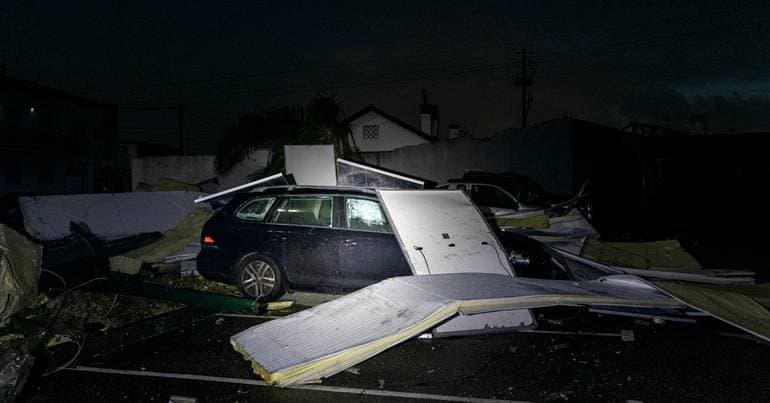
Approximately 1,800 customers of E-Redes in areas affected by storm Kristin remained without electricity as of 5:00 PM on February 22. The EDP group company stated it is focused on restoring electricity supply. Earlier, 4,500 customers were reported without power. The storms have caused significant damage, resulting in 18 fatalities and affecting 90,000 students due to school closures. The Central, Lisbon and Tagus Valley, and Alentejo regions were the most impacted, with estimated damages in Seixal around 15 million euros.
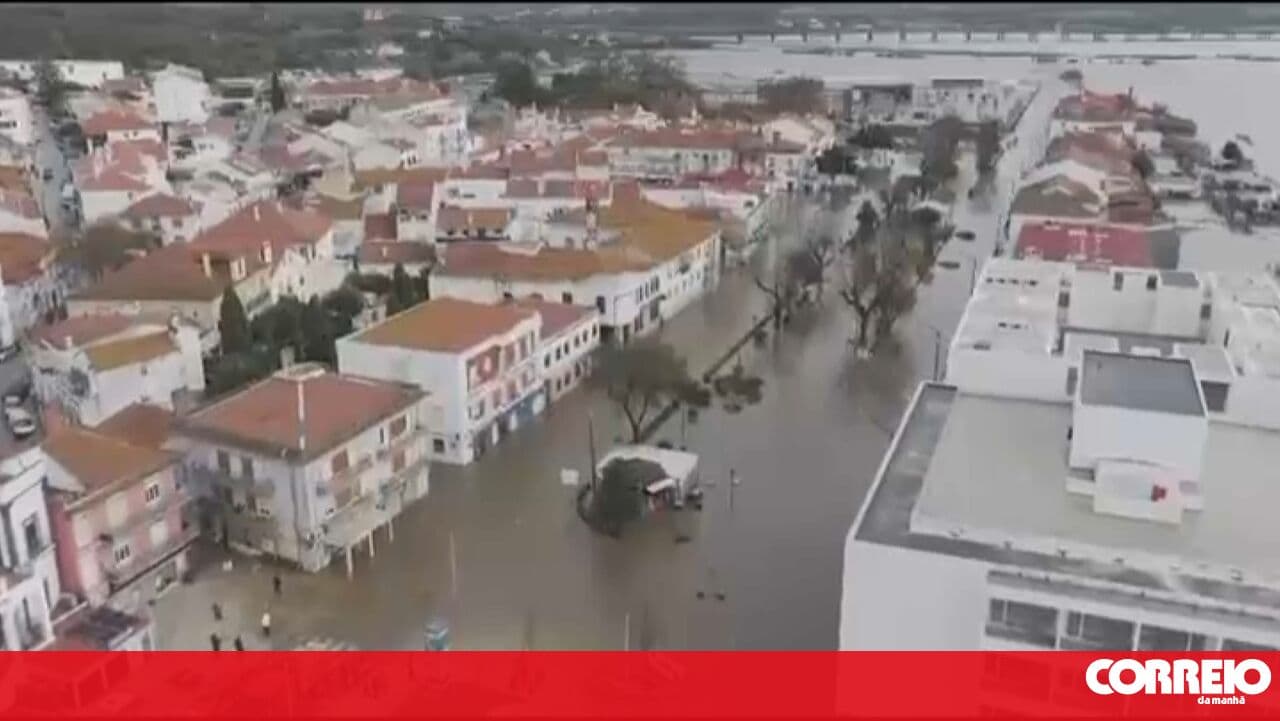
The storms that hit the country are yet another example of extreme climate phenomena that will become part of the new normal. We will increasingly have to deal with these realities, preparing better, reacting effectively, and adopting almost permanent reconstruction habits. This requires national management complemented by local authorities, public institution leadership with civil society involvement, emergency actions combined with medium-term interventions. In Lisbon, we first offered solidarity to severely affected regions, then alerted the population, limited risks, and protected critical areas. Immediate restoration interventions were launched, and we will recalibrate multi-year investments to adjust plans to new realities. The ongoing structural investments, such as the General Drainage Plan, have already shown containment effects during this crisis. However, this context should prompt the Portuguese to reflect on fundamental issues, including the effectiveness of our economic model and the quality of our institutions. We need robust infrastructures, installed capacities, and efficient response mechanisms, as well as ambitious, sustainable, and financeable investment plans. We must integrate the best contributions from academia, the private sector, and civil society to effectively address the structural challenges posed by new realities, ensuring that strategic planning is not merely an accessory but a necessity for good governance.
The article discusses the systemic failures of Portugal's infrastructure, particularly highlighted by recent storms that exposed coordination failures and decades of under-investment. It argues that the lack of redundancy in critical infrastructure leads to simultaneous failures in essential services, undermining the state's ability to protect its citizens. The author emphasizes the need for structural change in political decision-making and investment strategies to ensure resilience against future disasters, warning that the current approach prioritizes short-term savings over long-term security.
The mayor of Alvaiázere says the Government's support measures for areas affected by the bad weather are “a good start”, but does not know whether they will be sufficient. Around 60% of the municipality's population already has electricity.
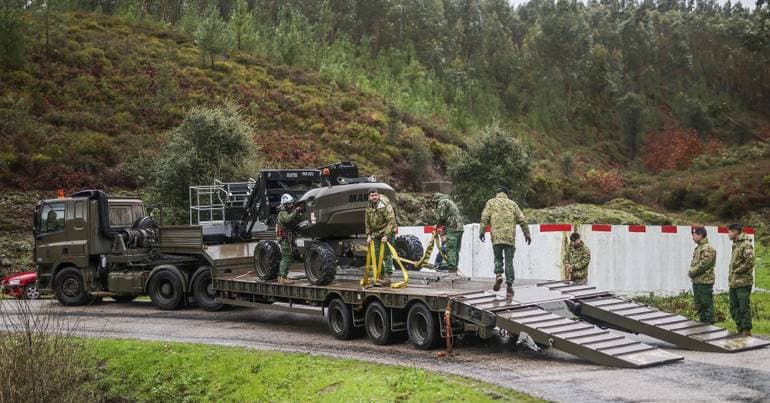
Around 1,200 Army personnel and 222 vehicles are on the ground conducting operations to support the population of the Centro region. For the municipality of Leiria alone, three platoons have been deployed.
The removal of the large crane that fell in the early hours of Monday in Figueira da Foz, on the coast of the Coimbra district, is expected to be completed by Wednesday, a municipal source told the Lusa news agency.
The local authority explains that the scale of the damage makes immediate restoration across the whole municipality impossible, but assures that every effort is being made to fully restore power.
Luís Montenegro will meet with the head of the task force for the reconstruction of the central region in Pombal. Also in this bulletin, the death toll following Storm Kristin rose to 10.
The PS secretary-general today proposed creating a national programme for recovery, stabilisation and climate resilience to respond to the impact of Storm Kristin, and asked for the state of calamity to be extended by between three and six months.
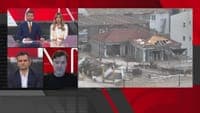
Bruno Batista highlights the extensive destruction in Leiria, with thousands of homes damaged and hundreds of factories affected, describing the scene as “dantesque.” The CNN Portugal commentator criticises the lack of leadership and logistics, saying there are still areas without electricity and communications and that communities need a “voice of command” and an effective presence of the central government on the ground.
The vast majority are in the Leiria district, but thousands of customers are also affected in Santarém, Coimbra and Castelo Branco. Additionally, there are villages in the Coimbra and Leiria districts that are cut off.
In Leiria, Marinha Grande and Coimbra, residents are rolling up their sleeves in response to the damage caused by Storm Kristin's passage through the country.
The mayor said he is in constant contact with E-Redes and mobile communications operators, but emphasised that “the situation is very difficult, despite teams being on the ground”.
At a 16:00 statement, the President argued that authorities must make clear to the public that rebuilding and recovery after Storm Kristin will be prolonged in the worst‑affected regions.
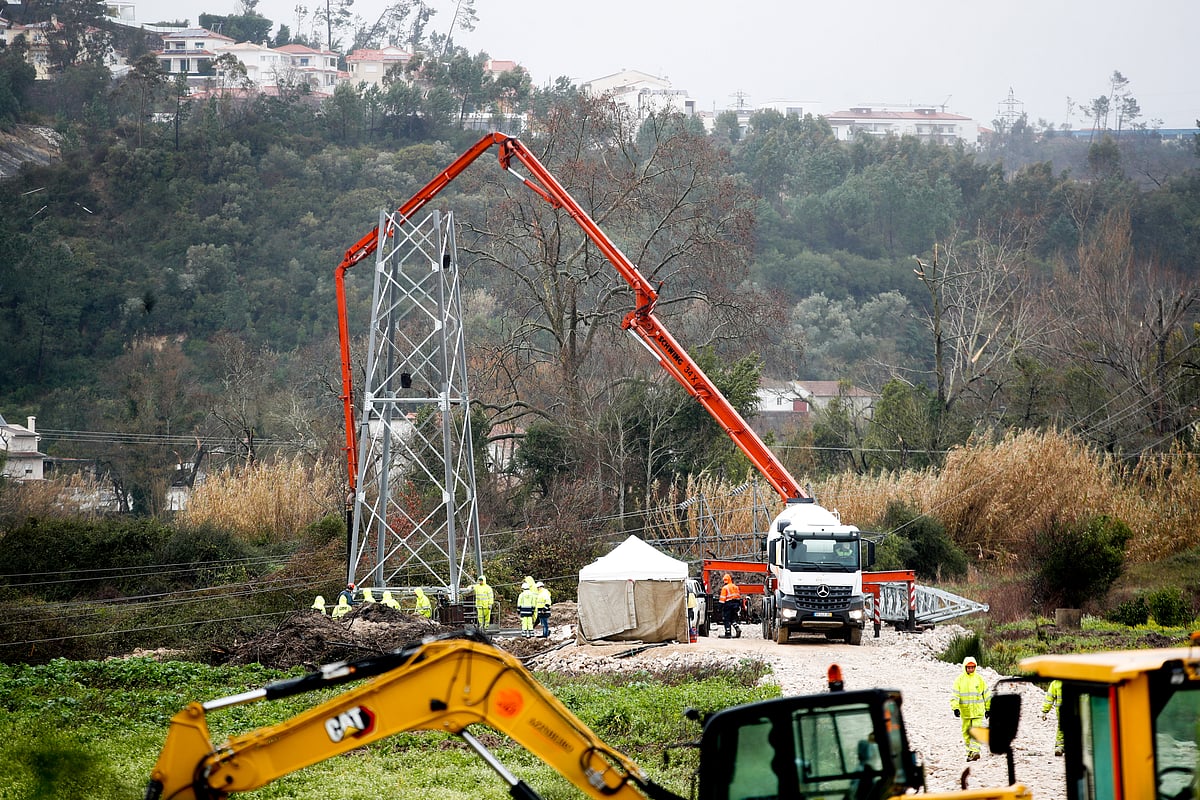
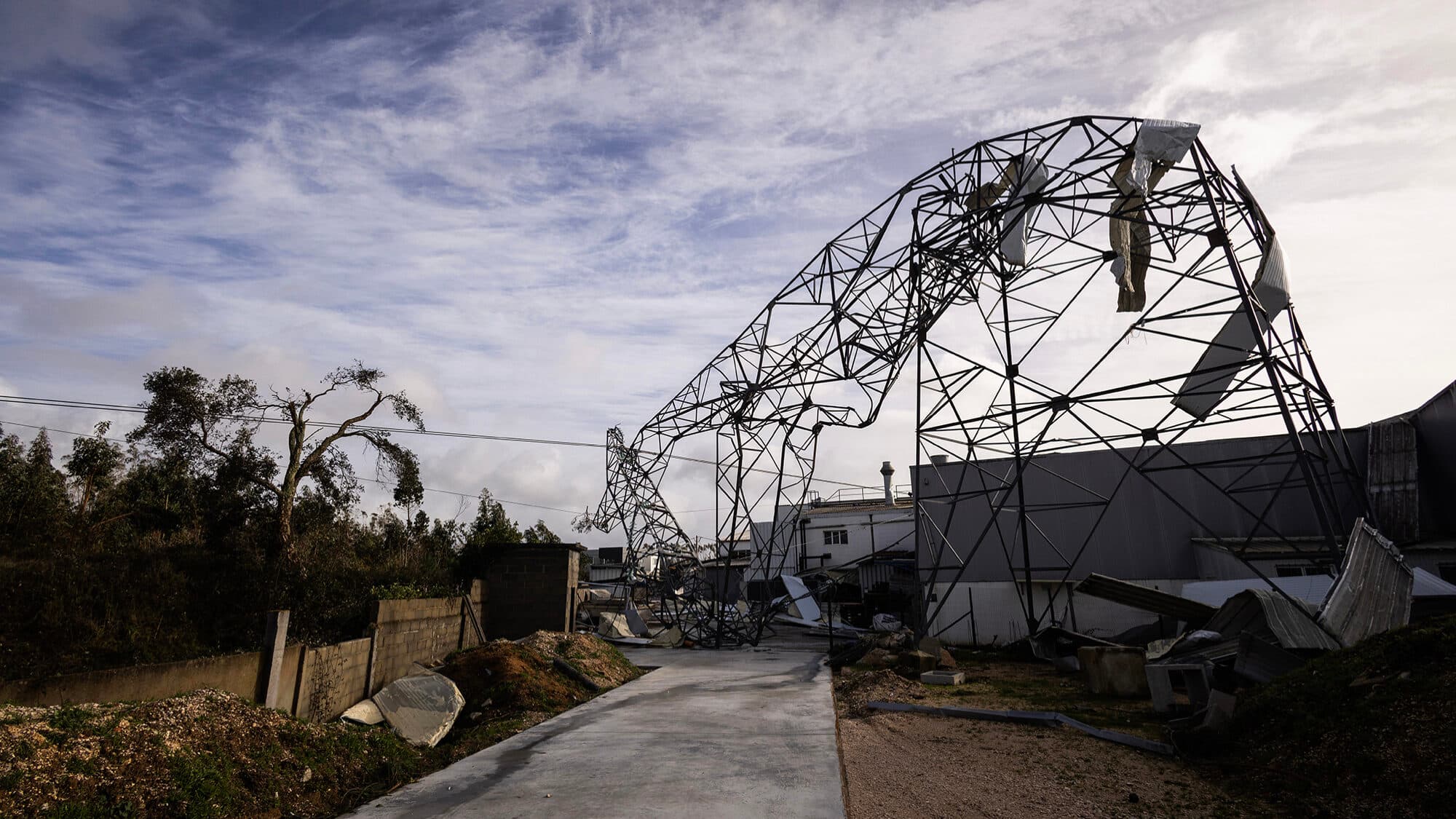
The president of REN, Rodrigo Costa, admitted that 'the damage to the network is indeed very large; we have never had so much destruction. In 2009 there was already a major storm that destroyed several substations and lines, but this one was truly brutal.'
At 06:00 on Wednesday, electricity failed for more than 1 million people and businesses, “stolen” by Storm Kristin. Two days later, many of those people still had not had their power restored: by 16:00 on that Friday, 266,000 customers remained without power, with the large majority, 209,000, ...
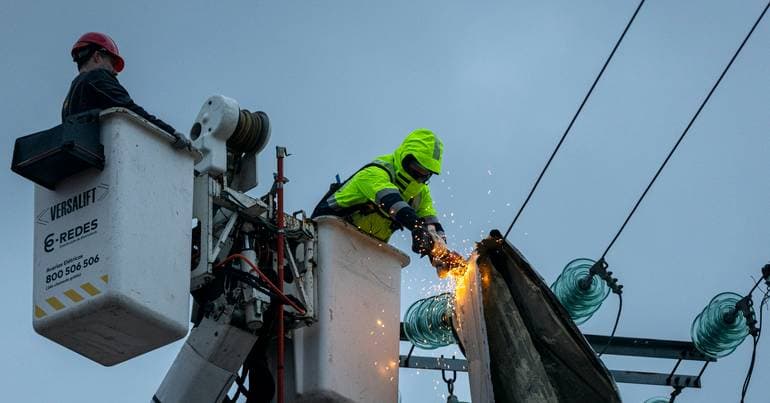
On the ground, the company says it has deployed personnel and equipment to the most affected areas, including three mobile power units and around 250 generators.
Electricity has been restored to some parishes of Leiria and Marinha Grande, but 290,000 customers still have no power. Mains water is unavailable in various locations and communications remain unstable.