Latest news and stories about lisbon in government in Portugal for expats and residents.
Man admitted to hospital reacted violently when he learned he would be discharged and returned to the prison in Sintra.

There were 27,653 voters registered for advance mobile voting in the capital, to vote at 118 polling stations at the University of Lisbon. Over 90% of those registered went to the polls last Sunday.

The CGTP has called a demonstration in Lisbon for this afternoon against the labour package. Presidential candidates Catarina Martins and António Filipe will be present, as will José Manuel Pureza, leader of the Left Bloc.

Presidential candidate Catarina Martins is taking part in the demonstration against the labour reform this afternoon in Lisbon.

Under the slogan “demand the withdrawal of the labour package”, the demonstration set off at 14:55 from Luís de Camões Square and finishes at the Assembly of the Republic in Lisbon.

Several presidential candidates attended the demonstration between Largo de Camões and the parliament. Also, Leiria City Council provided almost €410,000 in rental support over the past year.

PS unveils a package of urgent measures to tackle the housing shortage in Lisbon

The presidential campaign enters its 10th day with candidates in Lisbon, Setúbal, Coimbra, Minho and the Alentejo, amid street rallies, demonstrations, visits and public meetings ahead of Sunday's elections.

The Socialists won in Lisbon and Tagus Valley, Alentejo and the Algarve. The party considers Monday's elections a precursor to discussions on politico‑administrative regionalisation.

Portuguese will elect the successor to Marcelo Rebelo de Sousa on Sunday, in an election with a record number of candidates.

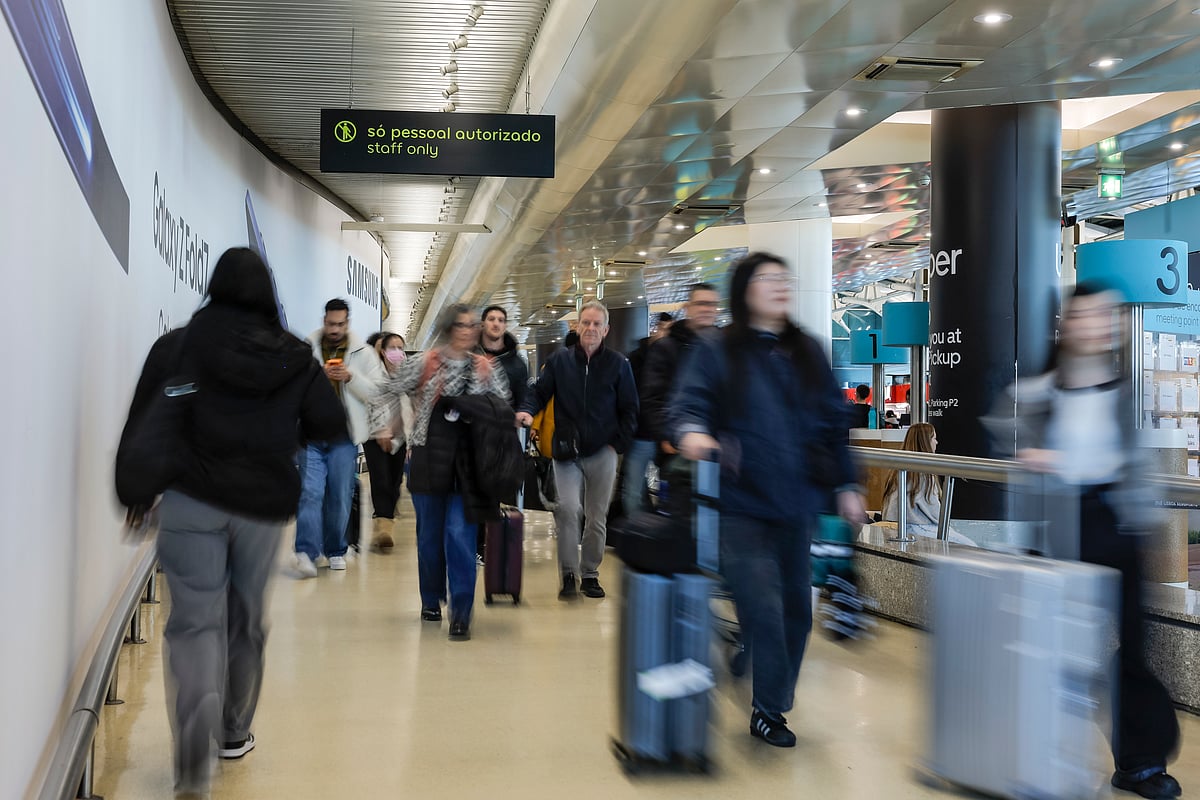
Portuguese outlets report the European border control system for non‑EU travellers (the Entry/Exit System, EES) has been reactivated for testing at Lisbon Airport (Aeroporto de Lisboa) after a temporary suspension; police sources told Lusa there will be an afternoon test to assess recent fixes. Separate reporting said the system could be re‑activated then suspended again while improvements are confirmed, and earlier problems were linked to long queues. For expats and travellers: expect possible delays at passport control for non‑EU nationals, check your flight and airline notices before travel, allow extra time at the airport and carry passport and supporting documents for faster processing.
The Entry-Exit System (Sistema de Entrada e Saída) is an EU border-register that records biometric data (fingerprints and a facial image) and travel details for short-stay non‑EU travellers, replacing passport stamping and creating a searchable entry/exit record. According to recent reporting, the new rules now require over a third of non‑EU nationals entering Schengen to provide this extra data at the border; the aim is to improve security and migration tracking, but travellers should be prepared to submit biometrics at kiosks or border control and ensure their travel documents are valid. For expats and visitors this usually means slightly longer checks on arrival/departure and more robust digital records of your travel history.
The border-control system is the set of checks and databases used to process non-EU travellers at entry points — passport and visa checks, biometric data capture and automated database searches such as the Schengen Information System (SIS) and the Entry/Exit System (EES). A temporary suspension of automated checks at Lisbon Airport means those arrivals may be processed differently (more manual checks or national procedures), which can change wait times, administrative workload and how security checks are carried out for non‑EU citizens.

The fiscal measures approved on Friday in Parliament are “unable to halt the escalating spiral of the housing crisis in Portugal, which seems unstoppable”, the Lisbon Tenants' Association (AIL) says in a statement. For the association, “the Government is once again the main driver” of the housing crisis, since the package ...

Rallies in Porto and Lisbon showed the first signs of vitality in a campaign that spent its first week running at half speed and battling Seguro. The party wants to demonstrate that it is capable and can renew itself.

More than 200,000 voters registered for advance and mobile voting that took place this Sunday for the presidential election. Lisbon and Porto were the districts with the highest number of registered voters. The most common reasons for voting early were work-related, but there were also some political leaders who wanted to set an example.

CNN Portugal spent time inside CODU, INEM’s medical call centre in Lisbon and found a centre under sustained pressure where high call volumes demand rapid, accurate triage and careful deployment of ambulances and other rescue resources. The report examines how operators prioritise calls, the protocols guiding decision-making, and the operational strain of matching limited resources to urgent needs.

Polls indicate João Cotrim de Figueiredo performs better with younger voters, while older voters show weaker support. However, on his visit this Saturday to Caldas da Rainha, it was precisely senior voters who came closest to the candidate. Earlier, he hosted his family at a rally in Lisbon.

Cities in the North and Minho are predominant on the presidential candidates' routes this Saturday, with the seventh day of campaigning for the 18 January election also due to make stops in the Lisbon area.
In his favour in this race to Belém, Vieira says his lack of political experience is an asset.

PSD MP Miguel Guimarães welcomed the announcement to purchase 245 ambulances, saying it will allow INEM to increase its response capacity across multiple locations, notably Greater Lisbon and Setúbal. Analytically, the investment should improve coverage and potentially reduce response times in high-demand areas, but its effectiveness will depend on deployment strategy, crew availability and integration with existing emergency services. Close monitoring of allocation and operational metrics will be required to ensure the intended gains in emergency healthcare delivery are realised.

Lisbon's municipal authority has proposed banning alcohol consumption in public streets from 11pm, with proposed fines of up to €3,000 that could also be applied to establishments. Framed as a measure to reduce nuisance and improve public safety, the proposal raises questions about enforceability, proportionality and the potential economic impact on nightlife and hospitality. Separately, Le Monde reports Emmanuel Macron accusing Donald Trump of 'breaking with international rules', underscoring a parallel debate about norms and accountability on the international stage.

When he was a Chega MP, he is suspected of using trips between Lisbon and Ponta Delgada to steal suitcases. His wife was accused of keeping several items: those they did not want were given away or sold.

Thirty weeks pregnant and diagnosed as high-risk for pre-eclampsia, she had to be hospitalised in Lisbon.

The PSP (Public Security Police) have identified around 30 people after shots were fired with prohibited weapons in Lisbon. A targeted operation — involving Rapid Intervention Teams and Traffic Division units — ran from 22:00 Friday to 02:00 Saturday; no incidents were recorded and no arrests were made. Enquiries and investigations remain ongoing as police follow up on those linked to the discharges.

At 18:00, the Chega party lodged a formal complaint reporting incidents of shots fired using prohibited weapons in Lisbon.

An IPMA yellow warning is in force this Friday for eight districts — Guarda, Castelo Branco, Coimbra, Leiria, Lisbon, Setúbal, Beja and Faro — calling for increased public caution due to adverse conditions that could affect travel, outdoor activities and local services. At the same time eight presidential candidates will convene in Lisbon for a radio debate, an event whose logistics and audience turnout may be influenced by the weather alert; organisers and the public are advised to monitor forecasts and prioritise safety while ensuring the debate proceeds with contingency plans for any disruptions. The overlap of a national weather warning and a key campaign event underscores the practical intersection of public safety and electoral logistics.


Portugal Resident •