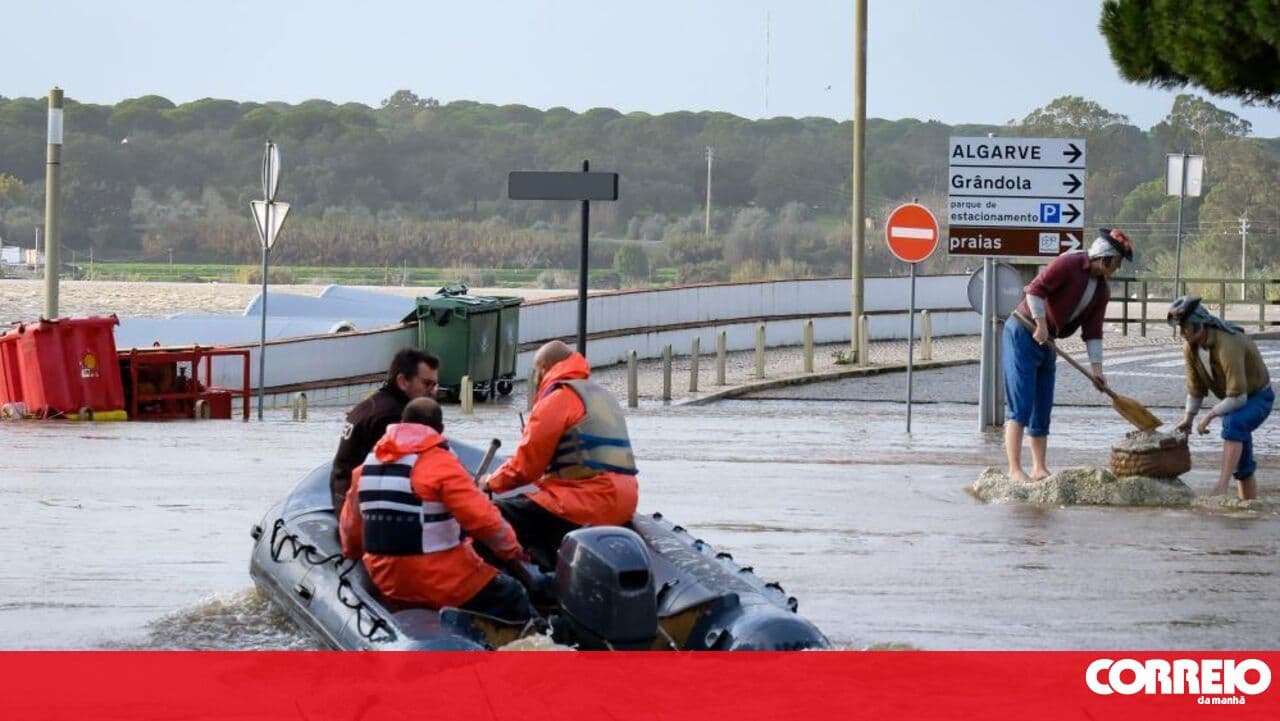
Golegã estimates over one million euros in damages
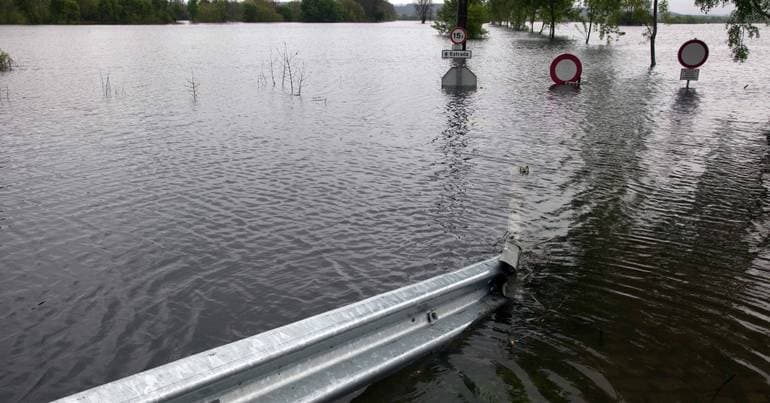
Municipal and rural roads that remain submerged are among the most affected. The value calculated by the local authority does not include agricultural damage or damage to private homes.

Latest news and stories about flooding in Portugal for expats and residents.
Municipal and rural roads that remain submerged are among the most affected. The value calculated by the local authority does not include agricultural damage or damage to private homes.

241 litres per square metre fell in mainland Portugal, which represents 329% of the usual value.

The latest bulletin from the European Copernicus system indicates that last February recorded rainfall well above average and widespread flooding in several European countries. It also confirms that in Portugal, it has not rained this much in almost half a century. Globally, it was the fifth warmest in terms of average temperature.

The article reports that the PS/Açores (Socialist Party of the Azores) has called for urgent government action to prevent flooding in the Arrifes parish of Ponta Delgada. Deputress Sandra Costa Dias, a former local council president, presented a resolution requesting the immediate implementation of a project to build six new retention basins—four managed by the regional government and two by the municipality—to address longstanding and worsening flood issues affecting streets, homes, businesses, and infrastructure. The proposal demands a detailed timeline within 60 days and the creation of a coordination group involving regional authorities to ensure transparency and effective execution. The initiative aims to protect residents and property from recurrent flooding, emphasizing the need for prompt and structured intervention.

Storm Regina is being felt in some regions of mainland Portugal.

Areas affected by the storms may experience a “greater impact” from the rainfall, which could have periods of increased intensity.

The Special Emergency Plan for Floods in the Tejo Basin was downgraded from red to yellow on Monday, but remains active as water levels continue to be above normal.

The improvement in weather conditions is alleviating flooding situations, albeit slowly in the most affected areas, with landslides being a particular concern for authorities, according to the national commander of Civil Protection. The latest update on the hydrometeorological situation in the country, presented by Mário Silvestre, indicates a reduction in flooding due to weather characterized by periods of rain, especially in Minho and Douro Litoral. Authorities continue to monitor river levels in several areas and have activated the Special Emergency Plan for Floods in the Tejo Basin at a red alert level. Silvestre warned of the risks of landslides, which have displaced many residents, and urged people to stay away from risk areas and report any ground fissures or fallen trees. He noted that 123 municipal emergency plans are still active, and efforts are being made to regulate river flows to prevent further issues. The situation may take three weeks to a month to normalise in Montemor-o-Velho, with significant impacts on local tourism and agriculture due to the adverse weather.
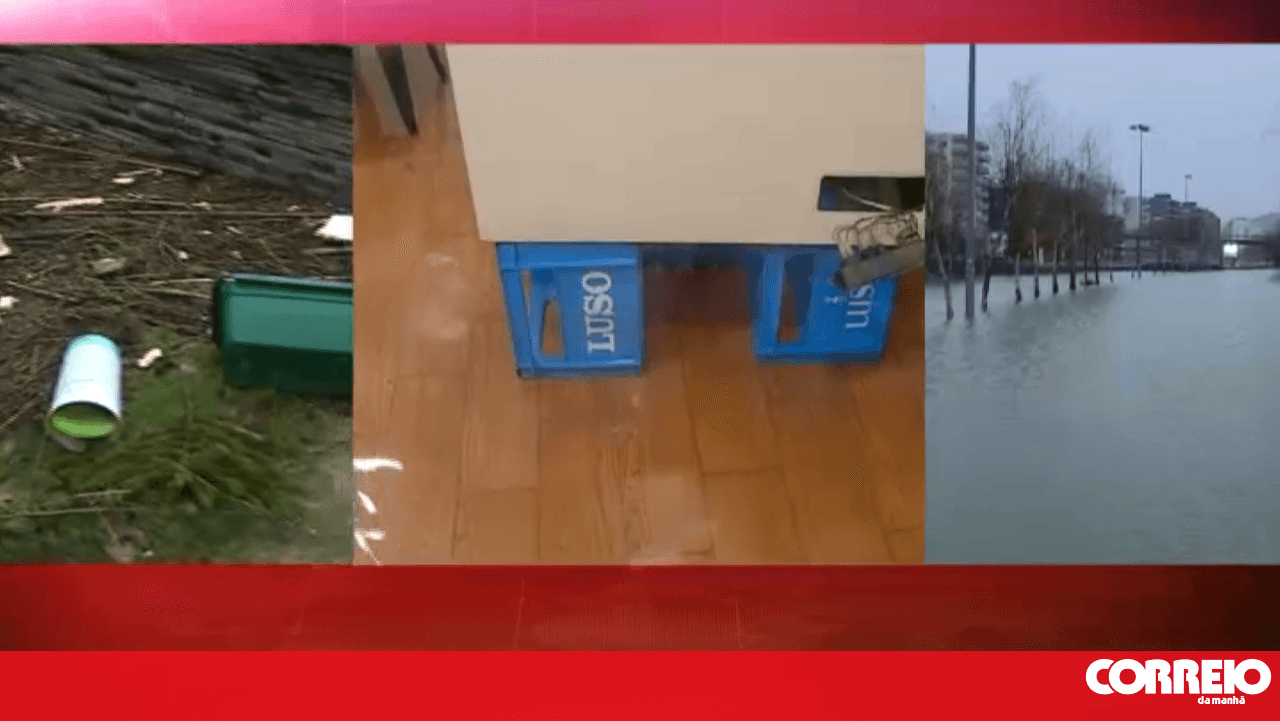
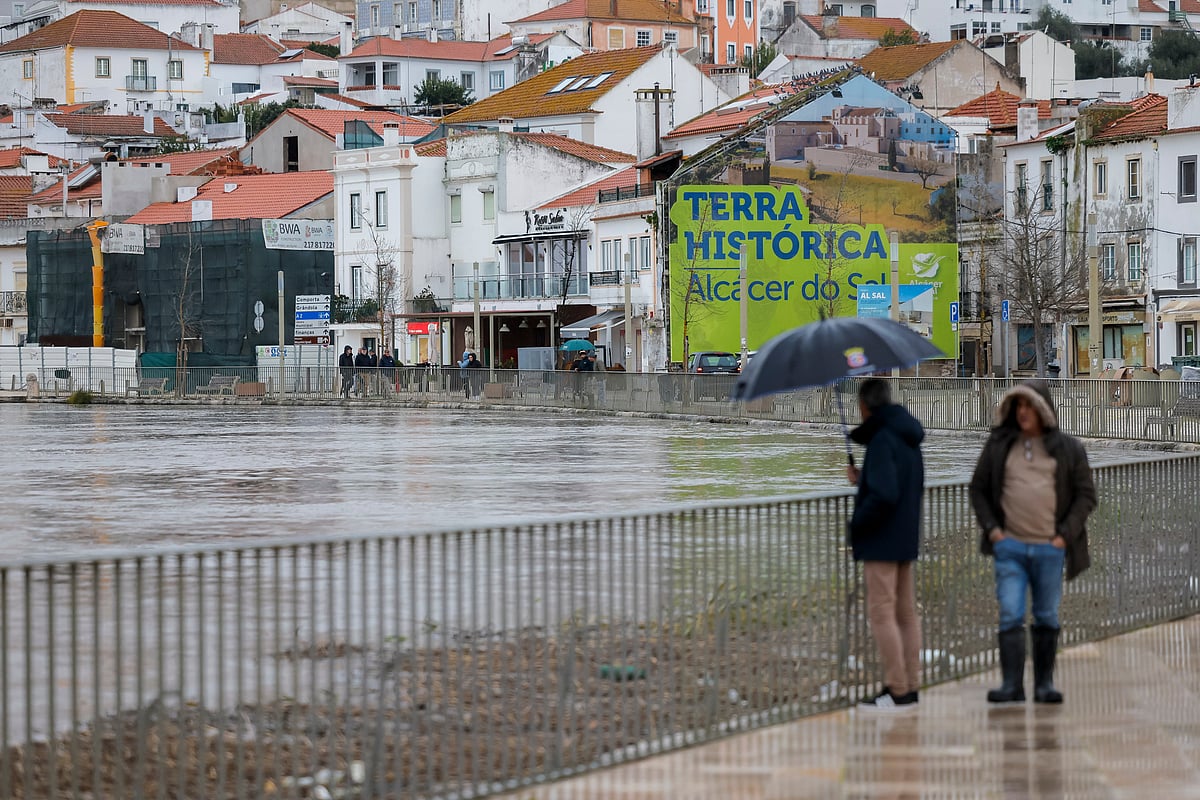
For two weeks, restaurants and shops in Coimbra have had no customers and many have closed after flooding. Owners attempted ad-hoc salvage measures, raising appliances onto chairs and other structures to protect equipment from water. The disruption has halted normal commercial activity and risks prolonged economic strain for small businesses, highlighting the immediate need for coordinated recovery support and assessments of flood resilience for local storefronts.

CMTV and Correio da Manhã journalist Diogo Carreira used an umbrella to demonstrate the water level to viewers.

The situation is becoming increasingly critical in Coimbra. The risk of major flooding in the city centre has intensified. We are providing live updates on the evolving weather situation.
The mayor states that a “very large peak” is expected around 3 PM this Friday, but the flood could be confirmed by morning. Classes have been cancelled in the municipality.

The rupture of the dike on the right bank of the Mondego caused flooding and led to the collapse of a lane on the A1. The government states that recovery will take “weeks”, while Brisa provides alternative routes.

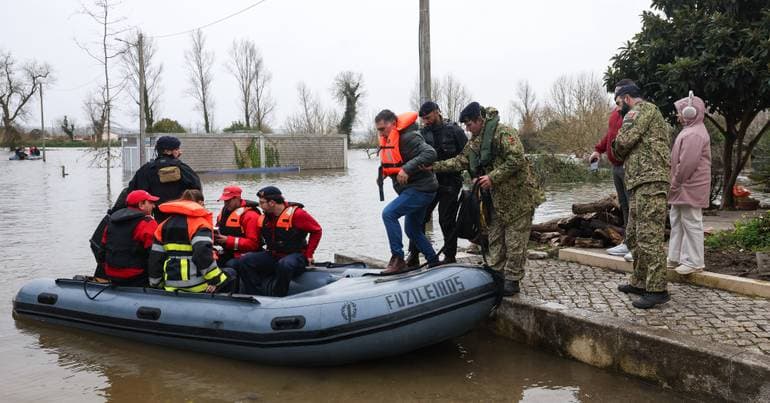
The volume of water necessitated the evacuation of nearly three thousand people. The country's main motorway was closed after the dyke gave way to the force of the water. Evacuated residents are not expected to return home until Saturday, according to the mayor.

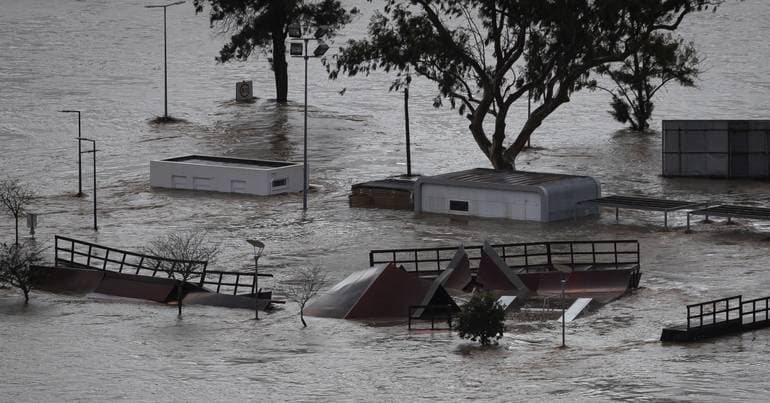
Satellite images reveal the severe flooding in the Tagus River basin in Portugal, caused by intense rainfall from three winter storms, as reported by the European Space Agency.

Around 1,200 individuals have been displaced in mainland Portugal due to severe flooding, particularly in the Central region. The evacuations were carried out as a preventive measure, affecting areas such as Beira Baixa, Coimbra, Leiria, and the Lisbon area.

Since 28 January, storms Kristin, Leonardo and Marta have caused 14 deaths and hundreds of injuries and displacements across Portugal. Civil Protection reports a calm night and a slight improvement in flooded areas after late-week river surges — notably in the Douro, Mondego, Tejo, Sado and Guadiana basins — but thousands of incidents were recorded and forecasts of further rain mean flood risk and pressure on emergency services remain elevated.

João Guarda, a resident of Leiria, is facing severe flooding for the second time this week. He has resorted to using a log in an attempt to manage the rising water levels around his home, highlighting the ongoing challenges posed by extreme weather conditions in the area.

The Municipal Civil Protection Service of Porto has raised a red alert due to imminent flooding risks along the Douro River, indicating severe weather conditions that could lead to significant emergency situations.
Train services on the North Line between Castanheira do Ribatejo and Alverca have been suspended since 6am due to flooding on the railway. The local council is also restricting access to the Tagus River at Terreiro do Paço as a safety measure.

Rail services on the Linha do Norte between Castanheira do Ribatejo and Alverca (Vila Franca de Xira, Lisbon) were suspended at about 06:00 due to flooding of the track, CP – Comboios de Portugal confirmed. The suspension affects local commuter links on this section and comes as the declared state of calamity for the area has been extended until 8 February; authorities and the operator are monitoring conditions and assessing restoration timelines.
After destructive 208 km/h winds from Storm Kristin, the municipality of Soure faces a second crisis: imminent flooding. Authorities and residents are preparing for rapid inundation, with low-lying areas such as Miragaia in Porto — including the Ribeira — identified as first at risk; local voices say preventing severe damage will require extraordinary measures. The situation highlights compounded hazards for infrastructure and public safety, testing emergency services' capacity and the need for immediate, coordinated flood mitigation and evacuation planning.

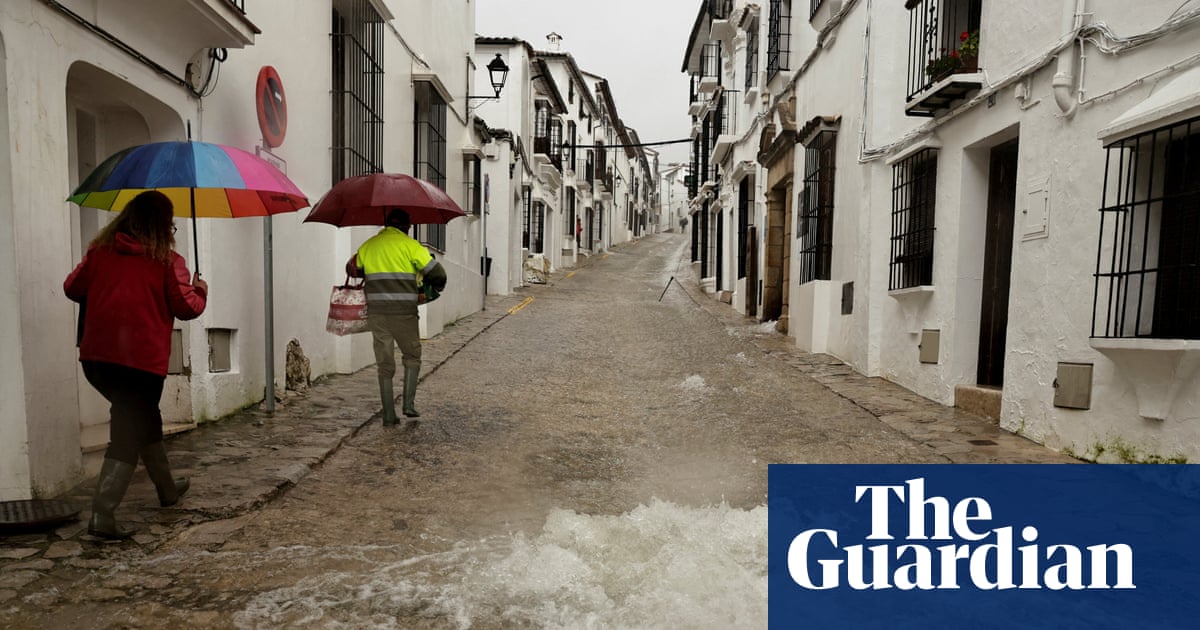
As of 20:00 on Monday mainland Portugal had logged 713 weather-related incidents, concentrated in the North and the Lisbon and Tagus Valley regions. Heavy rain forced road closures in Arcos de Valdevez and Caminha, flooded homes in Ponte de Lima and left one family homeless in Oeiras; emergency services remain active dealing with blockages and property damage. The situation highlights localized flash flooding and transport disruption, with authorities monitoring conditions and clearing affected routes.

Depression Ingrid brought intense rainfall and flooding to parts of Portugal, causing at least one fatality and leaving two people injured when a car was swept away in Cadaval. The floods displaced 14 people in Peniche and prompted roughly 970 emergency incidents over 24 hours, placing substantial strain on local emergency services and raising broader public-safety concerns as authorities continue monitoring flood-prone areas.