Brent crude oil price falls more than 2% following agreement between Kurdistan and Iraq
Despite the drop, the value per barrel remains around 87 euros.

Latest news and stories about economic indicator in environment in Portugal for expats and residents.
Despite the drop, the value per barrel remains around 87 euros.

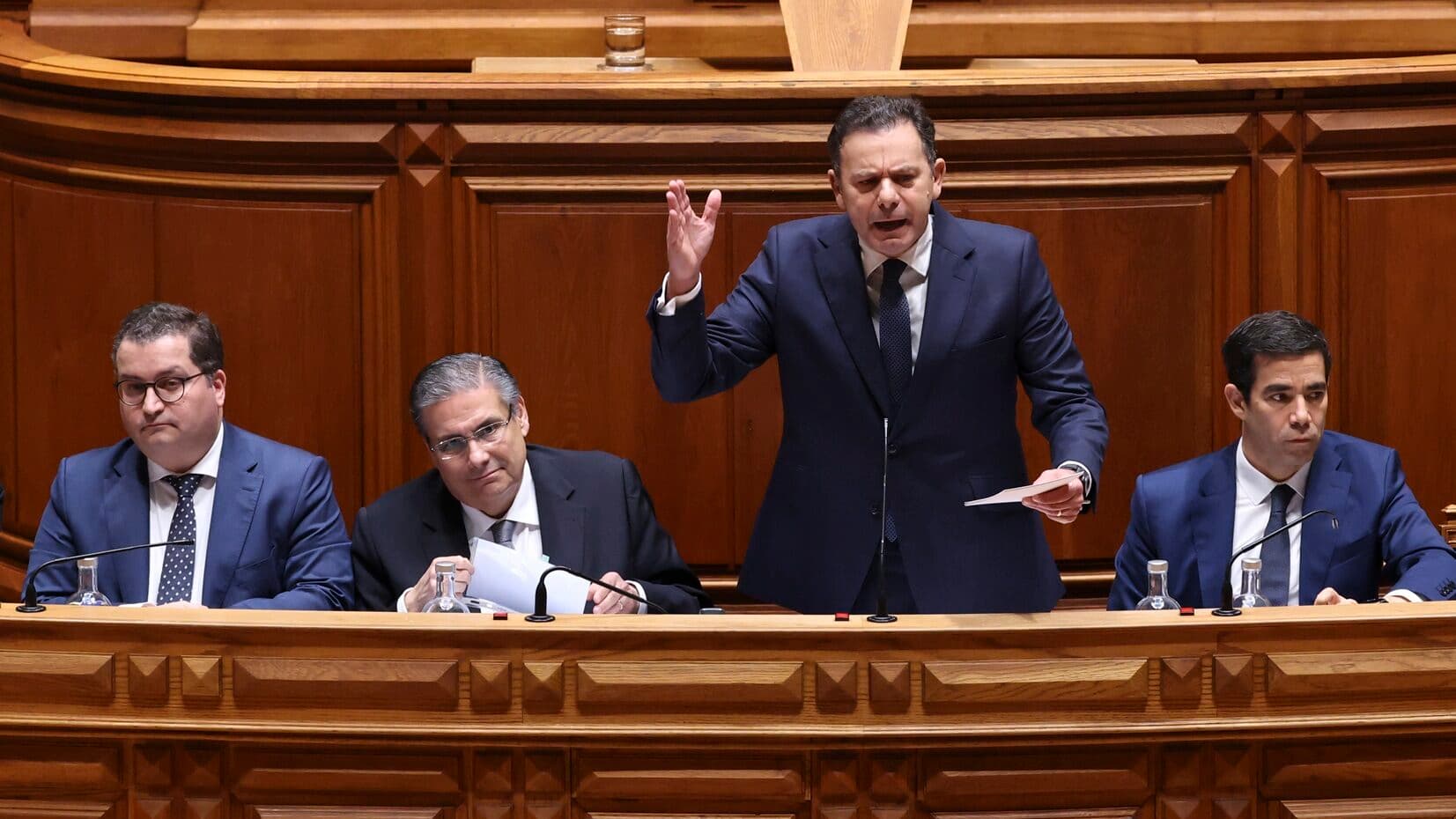
Prime Minister Luís Montenegro faces a heated parliamentary debate as opposition parties criticize the government's response to rising fuel prices triggered by the conflict in Iran.

The specter of a prolonged energy crunch could dash the hopes of consumers, businesses and investors worldwide for rate cuts this year.
In addition to physical oil products, it also holds purchase rights in European countries.

DBRS has revised its oil price estimates upwards for this year to $68 per barrel for Brent and $65 for WTI, citing production disruptions caused by the conflict in the Middle East. The agency noted that the potential for long-term structural impacts remains uncertain, but highlighted that limited pipeline capacity and dwindling stocks in the Persian Gulf have driven prices to their highest levels since 2023, with the barrel currently exceeding $90.

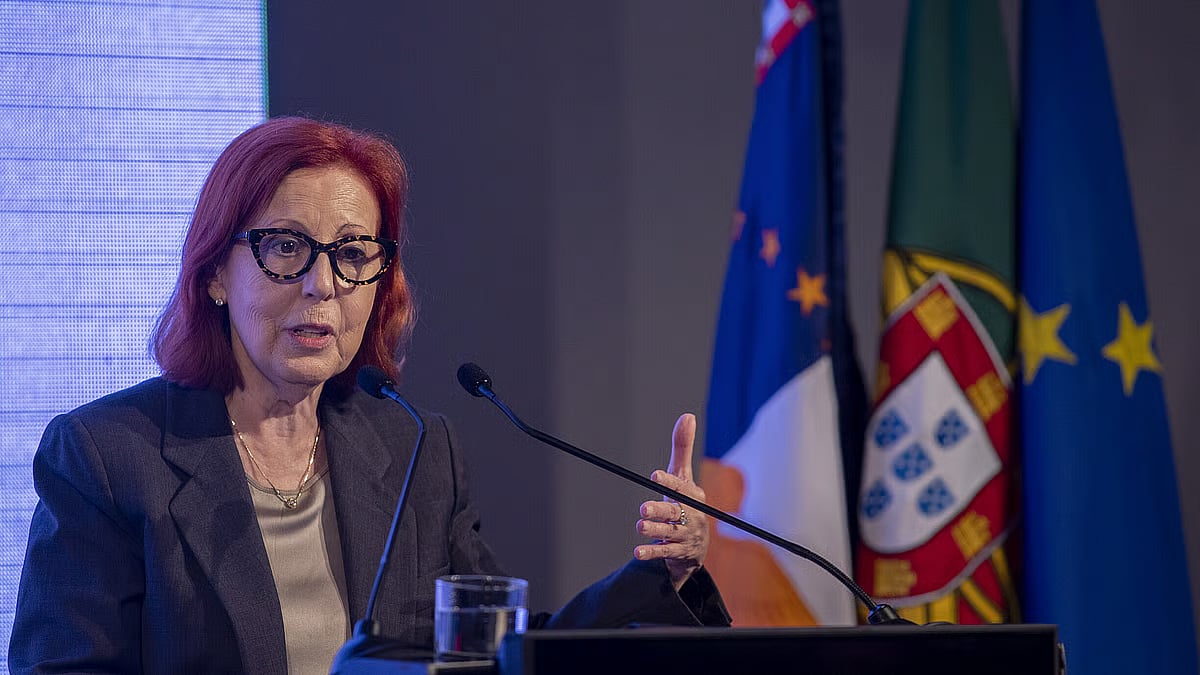
In an interview with CNN Portugal, the Minister of Environment, Maria da Graça Carvalho, expresses concern over the rise in fuel and gas prices.

Damit sollen starke Preisschwankungen bei CO2-Zertifikaten begrenzt werden.
The price of oil continues to trade above the 100-dollar mark as of 9:00 AM.

The closure of the Strait of Hormuz is once again putting pressure on the price of Brent crude, which is the benchmark for Europe. European stock markets are slightly up.

The price of Brent crude for May delivery opened higher today, with a sharp increase of over 4%, nearing 105 dollars per barrel. At 7:00 AM this Tuesday, the 17th, Brent was up 4.53% to 104.95 dollars. Meanwhile, West Texas Intermediate (WTI) crude rose 5.04% to 97.90 dollars. Prices are being driven by tensions following the war in Iran and the blockade of the Strait of Hormuz, with the International Energy Agency stating it is prepared to release further strategic reserves if necessary.

The price of Brent crude oil for May delivery opened higher again today, with a sharp increase of over 4%, approaching 105 dollars per barrel.

The webpage provides a collection of recent news highlights related to Portugal, covering various topics. Key points include: - Transparency authorities are awaiting a court decision to disclose the list of clients associated with Spinumviva. - Portugal faces weather warnings due to a depression named Therese, leading to adverse weather conditions across the country. - Discussions on substance use reveal that alcohol and tobacco have higher addiction profiles compared to psychedelics. - Political tensions are evident, with accusations between parties like Chega and PS over election blocking and representation in the Constitutional Court. - Recent incidents include a Portuguese activist assaulted by Israeli settlers in the West Bank, and a potential tragedy during a procession in Nazaré was averted by police. - International news includes a shooting in Frankfurt resulting in two deaths and ongoing coverage of the Ukraine conflict. - Economic updates report a decrease in Portugal's debt interest rates and rising fuel prices. Overall, the webpage offers a snapshot of current political, social, and economic issues affecting Portugal and its international context.

The energy agency's decision to release 400 million barrels has already had “a calming effect on the markets”.

The statements come at a time when energy prices (gas and electricity) are rising within the European community.

The International Energy Agency (IEA) announced this Sunday, March 15, that it has decided to immediately release surpluses from Asia and Oceania to place 400 million barrels of oil on the market. Meanwhile, shipments from America and Europe will begin arriving from the end of March, the IEA indicated, following a decision made on Wednesday. According to an IEA update, member countries have already presented their implementation plans for the exceptional measure adopted due to the strong impact the war in Iran is having on the oil market, especially with the blockade of the Strait of Hormuz, through which 20% of global oil trade passes. So far, IEA member countries have committed 271.7 million barrels of government reserves, with 116.6 million barrels coming from mandatory industry reserves and 23.6 million from other reserves, according to data updated today and published by the IEA in a statement. The IEA notes that this is the sixth joint emergency action adopted by members since the organization's creation in 1974, following similar interventions in 1991, 2005, 2011, and on two occasions in 2022. The organization also warns that the war in the Middle East is causing the largest disruption in the history of global oil market supply. Although the coordinated release of reserves constitutes the largest emergency mechanism used to date, the IEA emphasized that the resumption of normal ship transit through the Strait of Hormuz will be the decisive factor in restoring stable crude flows.

The US Department of Energy has launched the first auction as part of a gradual release of strategic oil reserves to mitigate the economic consequences of the war in the Middle East. The auction, aimed at oil companies, will cover 86 million barrels out of a total of 172 million to be released progressively. Under the terms of the agreement, companies must return the borrowed oil plus additional barrels. The goal is to strengthen strategic reserves and stabilise markets. US Energy Secretary Chris Wright stated that the delivery of the full 172 million barrels will take approximately 120 days. President Donald Trump, who has previously criticised the Biden administration's use of the reserve, expressed confidence that market fluctuations due to the conflict in Iran will be short-lived. Meanwhile, the International Energy Agency has decided to release 400 million barrels collectively, and Portuguese Prime Minister Luís Montenegro announced that Portugal will make 10% of its strategic reserves available. Despite these measures, Brent crude prices rose on Friday, closing above $103 per barrel amid tensions in the Strait of Hormuz.

With so much renewable energy, there are no reasons for potential increases in the electricity bill.

The article discusses how escalating conflicts in the Middle East threaten to increase oil prices, potentially costing European drivers an additional €150 million daily if oil prices surpass $100 per barrel. Europe's heavy dependence on imported fossil fuels makes it vulnerable to geopolitical tensions, leading to higher fuel costs and economic instability. Despite temporary measures like fuel subsidies, structural dependence remains, with significant financial support allocated to fossil fuel industries. The adoption of electric vehicles (EVs) is gradually reducing oil consumption, with EVs already saving drivers around €39 million daily. The article emphasizes that accelerating the transition to renewable energy and EVs could significantly decrease Europe's reliance on imported oil and mitigate future geopolitical and economic risks.

CMTV commentator discusses the increases that will have a major impact on the country, especially the rise in gas prices.

Although not as high as last week, oil prices are heading for another weekly gain this Friday, even after attempts to ease concerns over global supply, with the largest ever release of crude reserves and the temporary US authorisation to allow the sale of Russian oil...

Portugal held 1.56 million tonnes of petroleum reserves in the final quarter of last year, with the government announcing plans to release 10% of these strategic stocks to help stabilize fuel prices amid global supply concerns.
Environment Minister Maria da Graça Carvalho announced that fuel prices may decrease next week depending on Brent crude fluctuations, while highlighting government readiness to implement tax relief if prices surge significantly.

Eurogroup President Kyriakos Pierrakakis has warned that the eurozone must brace for a prolonged period of economic instability driven by geopolitical conflicts, rising energy costs, and persistent inflationary pressures.

Oil prices experienced a record 28% surge following production warnings in the Gulf, with diesel costs rising significantly more than petrol due to market volatility and geopolitical tensions.