One year later, Ana Paula is in emergency accommodation
One year after reporting her situation, Ana Paula dos Santos, now a mother of four, continues to live in a social emergency accommodation centre while waiting for housing in Loures.

Latest news and stories about social security in daily life in Portugal for expats and residents.
One year after reporting her situation, Ana Paula dos Santos, now a mother of four, continues to live in a social emergency accommodation centre while waiting for housing in Loures.

Ana Paula dos Santos has been living in a room with her four children for a year. The bill paid by the State, which has already exceeded 21,000 euros, would have been enough to rent a house. Does this model make sense?


Over the last decade, 30,000 people have been hosted in shelters for victims of domestic violence in Portugal. For the first time, a team of journalists lived in these spaces.
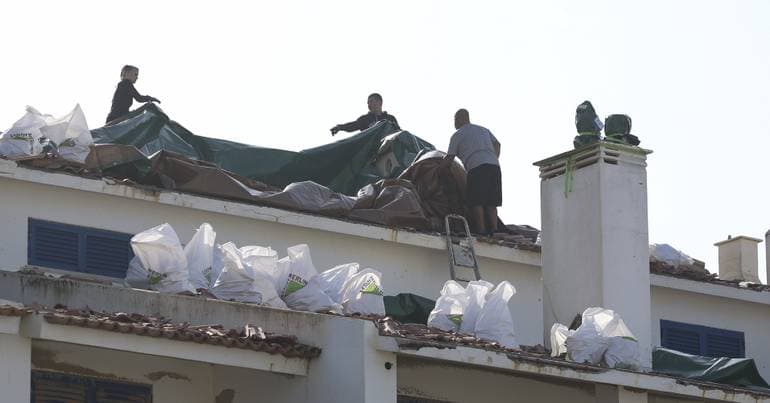
The need to create a network of social shops has been reinforced by the recent severe weather. Cáritas Lisbon believes that this coordination will improve the ability to quickly mobilise resources and essential goods during times of calamity.
The need to create a network of social stores has been reinforced by the recent severe weather. Cáritas Lisbon believes this coordination will improve the ability to quickly mobilise resources and essential goods during times of calamity.
The broad and careful way in which he addressed the issues of housing, health, security, sustainability, water and energy, education, pensions, birth rates, and cohesion painted an accurate, even raw, picture of the reality we are living in.

Currently operating autonomously, Caritas Lisbon proposes coordinating the work carried out by social shops within its diocese.

The article highlights recent developments in Portugal, including ongoing political and social issues. It discusses the government's efforts to address labor disputes, with some employers open to negotiations, while the labor union UGT indicates the situation remains unresolved. Additionally, the Catholic Church is progressing with compensation initiatives for victims of abuse, though acknowledging that such measures do not erase the pain. The article also notes Portugal's weather, with February being the rainiest month in the past 47 years, and mentions cultural events like the Michelin Guide unveiling new restaurant stars. Overall, Portugal faces a mix of political, social, and environmental challenges and initiatives.

Former Prime Minister Passos Coelho expressed skepticism about returning to politics, stating it would only occur if the PSD party fails. He discussed the need for reforms in Social Security and public administration, emphasizing the importance of addressing demographic challenges and inefficiencies in the state and education systems. Coelho remains open to the possibility of a political comeback but insists he is not currently preparing for any candidacy.

Livre proposes an increase in emergency social support, with an allocation of 270 euros per family member.

Among the proposals presented is direct support of up to approximately two and a half IAS, which is about 1,342 euros, per adult, without means testing.

André Ventura considers the support announced by the Government for victims of bad weather insufficient, calling it “a disgrace”. The leader of Chega accuses the Executive of imposing excessive bureaucracy and calls for immediate, direct aid to the affected communities.

The measures, presented by Prime Minister Luís Montenegro, were approved at an extraordinary meeting of the Council of Ministers on Sunday. The state of calamity remains in effect until 8 February.

The couple accuse the local authority of providing no support, a stark contrast to election time when officials even came to pick them up from their home in a van.

This controversy, which is affecting citizens' lives, could act as a catalyst for the longstanding debate around regional autonomy and its repercussions.

In response to the Government's decision to extend until 31 March the suspension of debt checks for beneficiaries of the mobility allowance, Albuquerque hopes the “postponement will be the end” of the matter.

The Government has decided to extend until 31 March the suspension of verification of tax and social security contribution debts for beneficiaries of the social mobility allowance (SSM) in the Azores and Madeira, in order to avoid payment problems. The suspension had initially been set until 31 January 2026, but the Ministry of Infrastructure indicated...

An IGF audit of the Institute of Financial Management’s property portfolio finds that Social Security is holding 854 empty homes while Portugal faces an unprecedented housing crisis. The report criticises inefficient asset management, poor utilisation and weak oversight of the Social Security housing stock, creating lost opportunities to relieve market pressure. The findings point to a need for clearer inventory, faster reallocation or disposal procedures, and greater transparency and coordination between agencies to convert idle public housing into usable supply.

Presidential candidate André Ventura urged rival António José Seguro in Caldas da Rainha to say explicitly whether he supports amending the Constitution to end the duplication of lifelong pensions awarded to former public officeholders (citing examples such as Armando Vara). Speaking at a street rally attended by more than 100 supporters, Ventura framed the issue as a clear policy choice with constitutional and social-security implications and pressed Seguro to clarify his position ahead of the election.

New data from Portugal's Survey on Living Conditions and Income show one region has the country's highest incidence of monetary poverty, with 17.9% of residents living below the poverty threshold. Analysts and local actors attribute the rise to a combination of state neglect, insufficient social-protection measures, the growth of precarious immigration and unstable work, and wider cost-of-living pressures — factors that together depress incomes and worsen social indicators. The figures point to a need for targeted regional policies on social security, employment quality and integration to reverse the trend.

The Socialist Party (PS) will submit a bill titled “Coming Home” to Parliament proposing the creation of transitional residences aimed at reducing social institutionalisation. The policy seeks to shift care from large institutions to local, secure accommodation that supports reintegration, bridging healthcare and housing needs. Analytically, the measure could advance deinstitutionalisation and community-based care, but its success will depend on funding, local delivery capacity, regulatory safeguards and clear pathways to permanent housing.

This analytical piece urges readers to adopt an optimistic stance for the new year and to move past complaints about the recent increase in the retirement age. It explains that demographic shifts and the strain on social security systems underpin the policy change, outlines labour and legal implications for workers — including expatriates — and argues that better communication, phased implementation, retraining and age-friendly workplace measures would protect wellbeing while ensuring fiscal sustainability.

A family providing foster care for two children has been ordered by Social Security to repay more than €5,500 after losing their parental allowance. The parents call the demand an injustice and cite contradictory information and a lack of support from official services. The case highlights administrative confusion around parental-benefit eligibility, potential gaps in guidance for foster and expat families, and wider questions about transparency and appeals in welfare policy.