Smaller energy retailers are increasingly opting for shorter contracts to mitigate risks associated with geopolitical instability, such as the conflict in Iran, according to insights from the comparison service Manie.
The 'Solidarity Gas Cylinder' programme, originally launched in 2022 to offset rising energy costs caused by the war in Ukraine, has been officially relaunched to provide continued financial support for families.
9.8 million fewer barrels per day compared to February. The price of crude oil rose 5.5% in May to 114 dollars per barrel, a direct reflection of the supply collapse.
Energy consumption in Portugal and Europe still features petroleum products as the main source, with road transport being the largest consumer. However, electricity is gaining ground, and in Portugal, clean energy dominates this sector. Looking at energy bills, Portugal compares well with the European Union average.
Manie and Paper are old acquaintances. As soon as André Pedro and Francisco Val Ferreira began taking their first steps to develop Manie, the company and platform they co-founded, Paper already existed with a similar business model. Initial contacts were made immediately to learn and share experiences. The relationship led to...
After Sweden, where households paid the highest price for gas expressed in purchasing power parity (17.16 euros, including fees and taxes), Portugal followed with a value of 17.04 euros.
Eurostat, the European Union's statistical office, revealed this Tuesday, May 5, that in the second half of 2025, Portugal had the second-highest domestic gas price when adjusted for purchasing power parity (PPP), at 17.04 euros per 100 kWh. The EU average in PPP was 12.28 euros per 100 kWh, up from 11.43 euros in the first half of 2025 and close to the 12.44 euros recorded in the same period of 2024. Sweden leads the PPP ranking at 17.16 euros per 100 kWh, followed by Portugal (17.04 euros) and Italy (15.48 euros). At the opposite end are Hungary, Luxembourg, and Slovakia with the lowest prices in terms of purchasing power. Analyzing the figures without the PPP adjustment, in current euros per 100 kWh, Sweden again tops the list at 20.92 euros, followed by the Netherlands and Italy, with Portugal in fifth place at 14.05 euros per 100 kWh. The lowest absolute rates were paid in Hungary, Croatia, and Romania. Eurostat data thus highlight significant differences between member states in both real and relative terms, underscoring the impact of tax structures and national energy markets on household costs. Electricity prices in the EU rose to 28.96 euros/kWh in the second half of 2025.
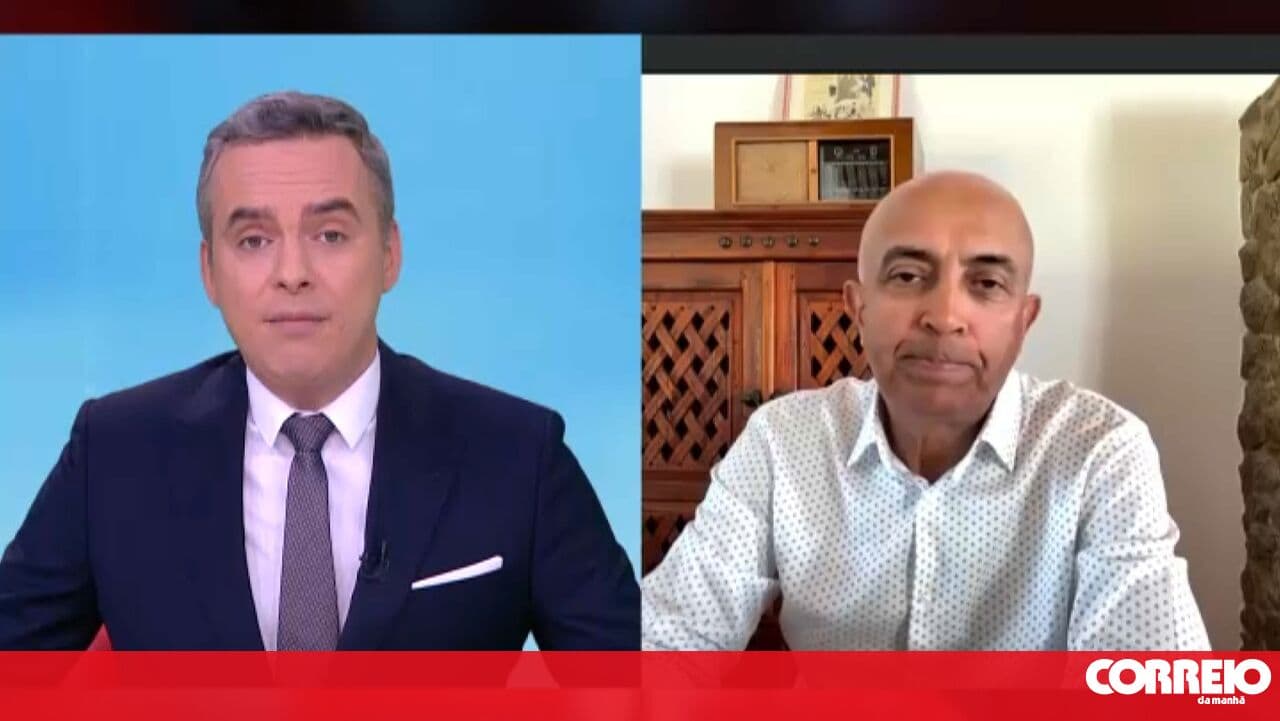
Economist Ricardo Ferraz believes that the most likely scenario, after the US and Iran failed to reach an agreement, “is that we will see the price of Brent crude rising”.
The CMTV commentator believes that the rise in the price of gas cylinders is inevitable and that if the war in the Middle East continues, it will increase further.
The Energy Services Regulatory Authority (ERSE) has proposed an average increase of 6.3% in natural gas tariffs for the upcoming gas year, which will be in effect from October 1, 2026, to September 30, 2027.
ERSE – The Energy Services Regulatory Authority released its proposal for natural gas tariffs and prices to take effect from October this Tuesday. The proposal anticipates a 6.3% increase in prices applied to customers in the regulated market. In the regulated market, sales prices for domestic consumers are expected to rise by 6.3% compared to...
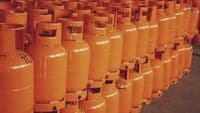
The price of the cylinder is expected to rise by about 20% starting Wednesday, retailers say. The increase will be around three euros per cylinder. Poorer families will see increased support through the solidarity cylinder scheme.
More requests for support to purchase gas cylinders are arriving. The “Solidarity Gas Cylinder” programme resumes this Thursday with an increase in aid from 15 to 25 euros for three months.
The price of natural gas has increased by 22.77 euros since the start of the war in the Middle East, now surpassing 54 euros. The US mentions negotiations with Iran to end the conflict, but Tehran denies this.
Rising energy prices due to the conflict in the Middle East are disrupting global markets. In Portugal, the CAP and APED have issued a joint appeal criticising the Government's delayed response compared to Spain, which has already reduced VAT on fuel, electricity, and gas to 10%. The entities warn that this inaction harms national competitiveness and will weaken consumer purchasing power, urging the implementation of a coherent support package for national production.
The Portuguese will have to start saving and Ricardo Araújo Pereira offers some advice on the 'Isto é Gozar Com Quem Trabalha' podcast: try to sweat as little as possible.
Energy prices are on the agenda at the European Council in Brussels, where Luís Montenegro is attending. Upon entering the meeting, the Prime Minister stated that the Government will approve a measure preventing families from losing power due to non-payment and guaranteed that, even in cases of default, there will be no power cuts.
Two temporary and two permanent measures. There are extraordinary discounts on gas cylinders and professional diesel, a “price cap in an energy crisis situation” and a new “protection for vulnerable consumers with a guaranteed minimum supply”.
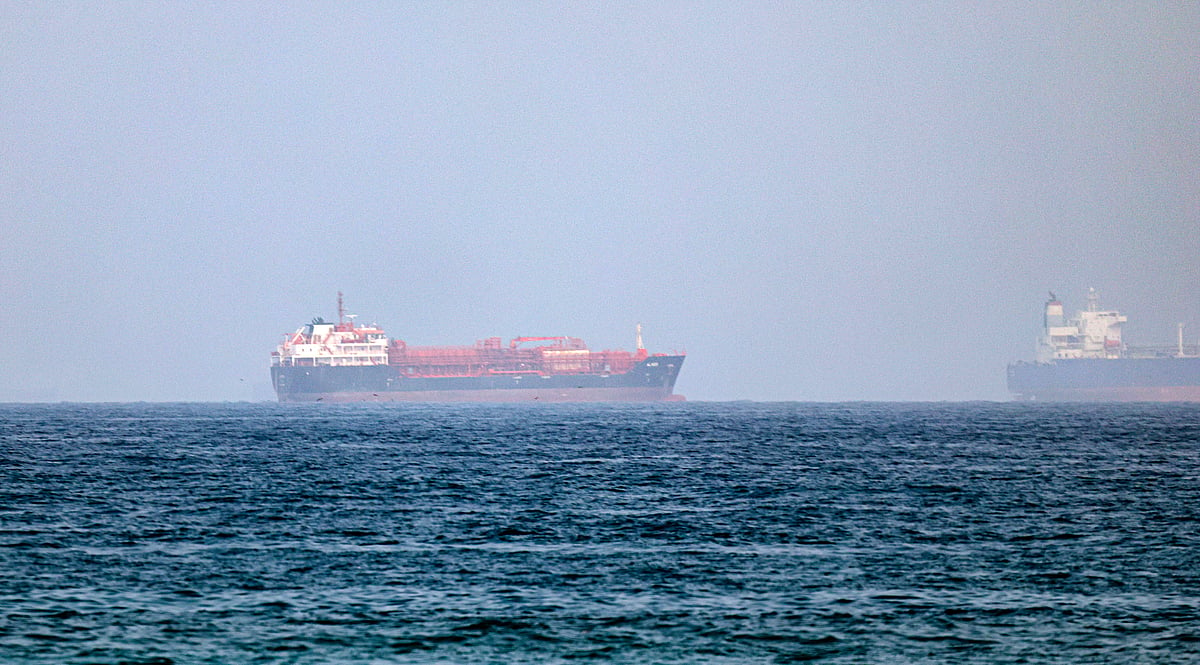
The article discusses how escalating tensions between the U.S.-Israeli forces and Iran over the Strait of Hormuz are impacting Portugal, despite its geographical distance. Portugal, heavily reliant on imported fossil fuels, faces rising energy costs—natural gas prices have surged by up to 30%. This energy shock threatens economic stability, increasing production costs and disrupting supply chains, notably affecting exports and logistics. The government is considering measures like fuel tax discounts to mitigate the impact. Business leaders warn of slowing economic activity and potential recession, with vulnerable companies needing support amid the ongoing crisis. Overall, the distant conflict is significantly affecting Portuguese households and industries through higher living costs and economic uncertainty.
On Monday, the sharp rise in crude oil prices due to tensions in the Middle East eased, and Brent closed down 2.84%, slightly above 100 dollars (100.21 dollars).
Pedro Silva, an energy expert at Deco Proteste, explains why the conflict in the Middle East led to the rise in oil prices and what the impacts of this increase are.
The discount of 3.55 cents per litre of diesel announced by the government, to be applied at fuel pumps from Monday, March 9, should also extend to bottled gas used for cooking and heating at home, argues the Portuguese association representing fuel sellers (ANAREC). According to a study by the Energy Services Regulatory Authority (ERSE), about two-thirds of households in Portugal use bottled gas instead of piped gas. The consumption of bottled LPG (liquefied petroleum gas) is still very common in Portugal, especially in areas without natural gas distribution, more frequently outside major cities and in the interior regions. In a statement, ANAREC calls on the Minister of State and Finance to apply the recently admitted fiscal mitigation mechanism for petrol and diesel, through an extraordinary and temporary discount on the Tax on Petroleum Products (ISP), equivalently to gaseous fuels, particularly bottled LPG. However, there is a condition: the price of fuel must exceed 10 cents for the discount to apply. On Monday, it is estimated that the price of road diesel will rise by an average of 23.4 cents per litre, and unleaded petrol will increase by 7.4 cents per litre. Therefore, petrol will rise significantly but by less than 10 cents, thus not qualifying for the government discount or subsidy. Diesel will qualify, with the average price expected to be around 19.85 euros per litre on Monday, March 9, after the public support of 3.55 cents. ANAREC believes that supporting bottled gas is a matter of “equity”. They consider the government's willingness to act on the fiscal component of liquid fuels in response to significant price increases as positive, aiming to mitigate the impact on consumers and businesses. However, the association emphasizes that this concern should not be limited to liquid fuel users but should also include consumers relying on gaseous fuels, such as bottled gas for domestic and sometimes business use. ANAREC states that bottled LPG remains essential for cooking and heating for a significant portion of the population, especially in areas without viable alternatives, particularly due to the absence of piped natural gas or economic limitations on equipment replacement. This reality particularly impacts economically vulnerable families and populations outside major urban centres, for whom bottled gas remains an indispensable energy solution. As mentioned, an ERSE study indicates that about two-thirds of households in Portugal use LPG, with its strong presence outside natural gas distribution areas, and even in areas served by natural gas networks, its use remains common for domestic heating.