

Making Portuguese an official UN language is a matter of recognition, says Portugal
The Portuguese government argues that elevating the status of the Portuguese language within the United Nations is a necessary step for international recognition.

Latest news and stories about cultural policy in Portugal for expats and residents.
The Portuguese government argues that elevating the status of the Portuguese language within the United Nations is a necessary step for international recognition.
Today is World Book Day, at a time when the mission structure of the National Reading Plan has been abolished. The Portuguese Association of Publishers and Booksellers says it is “awaiting information” regarding the new organisation.

The budget for the initiative is set at one million euros, ensuring continuity until 2029. Portuguese municipalities that have not hosted the event in the last decade are eligible to apply.


President Marcelo Rebelo de Sousa expresses confusion over the decision to remove works by Saramago from the list of mandatory school readings.

The executive has not yet unlocked the funds that would allow for the payment of the architectural project. The location and opening date of the museum are still to be defined. Seguro was called in to help expedite the process.
The party that was part of the coalition that elected the mayor condemns the public accusations made against a journalist and requests deadlines and guarantees for the cultural space, which is at risk of losing its licence.
Home News Portugal to create cinema pass Portugal to create cinema pass A working group on film exhibition has presented recommendations to revitalise the sector.

A working group on cinema exhibition has presented recommendations to revitalise the sector, including changes to the regime for the repurposing of cinema halls, incentives for equipment modernisation, the creation of an independent cinema pass, and quotas for Portuguese films.
António Pinto Ribeiro, a distinguished cultural programmer and former director of institutions like Culturgest and the Calouste Gulbenkian Foundation, discusses his new book, 'Poder da Cultura - Questões Permanentes'. In this interview, he critiques the current state of Portuguese cultural policy, argues for a more complex understanding of the 'cultural system' beyond mere administration, and highlights the need for greater public debate and international engagement in the arts.
A country that distances its young people from the most demanding literature is not protecting them. It is impoverishing them. It is telling them that complexity is dispensable and that intellectual effort is optional.

The writer and former Secretary of State for Culture succeeds Pedro Mexia in the Civil House. The choice introduces a more political profile to the cultural area of Belém.
A state that does not invest in theatre, fails to educate, and promotes 'brain rot'.

Representatives from the PCP and Livre parties alleged a lack of transparency in the City Council's decisions regarding the management of public facilities. Sofia Lisboa referred to an “alleged right-wing culture” of the Chega party within EGEAC.
With votes against from PSD, IL, CDS-PP, and Chega, recommendations from Livre and the PCP regarding the city of Lisbon's cultural policy were rejected.

Left-wing parties in the Lisbon Municipal Assembly accuse Carlos Moedas' administration of yielding to the “pressure of the radical far-right” to change the city's cultural policy.

Margarida Bentes Penedo, a municipal deputy for Chega, argued that a right-wing government should not fund a “culture that operates against the government itself.” The vice-president of the Lisbon City Council called for “de-dramatisation” regarding the TBA and the Aljube Museum. On the left, the absence of Carlos Moedas was lamented.

A section of a newspaper or publication where readers' letters are published.
But there is an original sin in these novels, which is the true problem of the sector: the consecration of the programmer figure as the top of the food chain in Portuguese artistic life.

An open letter from international cultural agents asks Carlos Moedas to reconsider the removal of Francisco Frazão from the TBA. The organiser of the letter says the decision is “self-mutilation of the city's culture.”

An open letter with nearly 70 signatures also criticises the solution found for the TBA, involving the accumulation of roles by Miguel Loureiro, the current artistic director of São Luiz. 'The TBA is a flexible, contemporary, international space. Turning it into a sort of annex of another theatre seems completely wrong to us,' the organiser of the letter told Expresso.

Pedro Duarte's Porto will continue to be an attractive and creative city for all those who accept the rules, respect the city's political curation, and have their work approved by the services. Opinion by Hélder Sousa.

Around 50 artists from various countries have signed a petition against the EGEAC's decision to remove the artistic director of the Teatro do Bairro Alto in order to appoint Miguel Loureiro without holding a public tender.
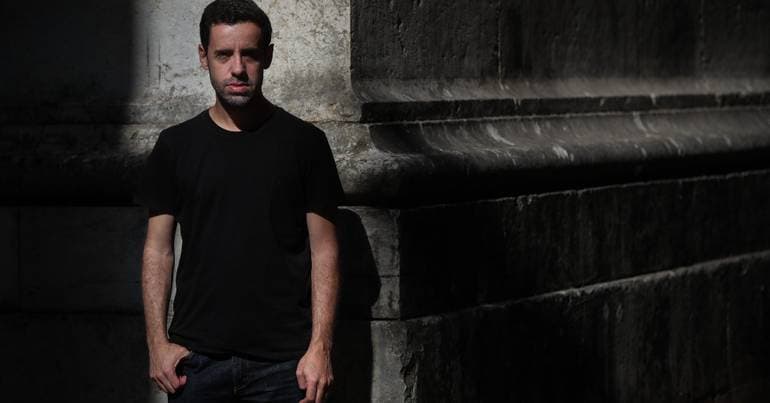
Irish programmer Willie White, former director of the Dublin Theatre Festival, is the promoter of the initiative which already brings together 50 artists, programmers, and cultural figures from various countries.

The non-renewal of Francisco Frazão at the TBA and Rita Rato at the Aljube Museum is causing outrage in the sector. Frazão reveals to Expresso that he was only told the TBA would be occupied by São Luiz programming because the latter requires renovations. Creators and cultural officials admit to political motivations, following criticism from Chega-Lisbon regarding the TBA's programming. 'Our time has come,' says a municipal deputy from the party.
Political alternation implies an alternation of priorities – there are no immune directorates, nor untouchable funding. Governing is more than just changing those in power.

Yes, culture can be political. Cultural policies are politics. Yes, culture is power. 'Soft power', they say. Yes, culture can be one of the most effective ways of affirming common roots and national projection, without racist or xenophobic tics. But if culture is directed by petty politicians, it becomes something else. And it is worth little.
Rita Rato's departure from the Aljube Museum reveals a management model that views Lisbon as a product. When culture is organised to sell the city, those who live in it are no longer the intended audience. A column by Filipa da Rocha Nunes.

They consider the removal to be “an aggressive political act”
This is the umpteenth proof of the political convergence between the right-wing PSD/CDS/IL and the far-right Chega, adopting the 'culture wars' of this nebula of 21st-century neo-fascism. Opinion by Manuel Loff
