Portugal warned it could veto the proposed 2028–2034 European Union budget following a €400 million reduction in funding for outermost regions. European Council President António Costa submitted a draft reducing overall EU spending by 10% to €1.78 trillion to broker an agreement among the 27 member states. Portugal demands €900 million in dedicated financing for the Azores and Madeira, while governments in France, Germany, and Sweden also voiced dissatisfaction with Costa's spending compromise.
Portugal Threatens EU Budget Veto Over Regional Funding Cuts
Saturday, 21 November 2026AI summary

Context & Explainers
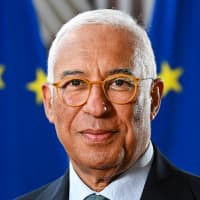
- President of the European Council (since Dec 2024)
- Former Prime Minister of Portugal (November 2015 – April 2024)
- Party: Socialist Party (PS) Partido Socialista
- He is of Portuguese and Indian (Goan) descent
António Luís Santos da Costa (born July 17, 1961, in Lisbon) is a Portuguese lawyer and Socialist politician who served as Prime Minister of Portugal from 2015-2024 and currently serves as President of the European Council since December 1, 2024. After leading the Lisbon Municipal Assembly and practicing law, he was elected MEP (2004-2005) and entered parliament in 2002. He led the Socialist Party from 2014-2024, building unprecedented parliamentary coalitions with the Communist Party and Left Bloc (2015-2019) before winning an absolute majority in 2022. He resigned as PM in November 2023 following a corruption investigation, though subsequently cleared. The 27 EU member states elected him Council President in June 2024, making him the fourth full-time President and the first southern European socialist in that role.
Political Philosophy:
Costa represents moderate European social democracy, combining orthodox fiscal responsibility with progressive social investment. He prioritizes European integration, consensus-building, and pragmatic compromise over ideological confrontation. As Council President, he champions mediation between member states, improved EU inter-institutional relations, shorter decision-making processes, and regular visits to every EU capital to reconnect citizens with European institutions. His approach emphasizes "creative bridges" reconciling divergent interests while maintaining firmness on European values, particularly regarding Ukraine.

The European Council (Conselho Europeu) brings together EU heads of state or government to set the bloc’s overall political direction and priorities; it does not adopt ordinary legislation. Its president, Charles Michel, has chaired meetings since December 2019, and the Council’s political endorsement is important for major trade and investment deals, so those following EU policy should note its stance on agreements like the EU–Mercosur deal.
7 sources
- Association demands the Government explain what measures it will adopt for menopausecmjornal.pt ·
- France, Germany and Sweden criticise EU budget proposaleco.sapo.pt ·
- France, Germany and Sweden criticise António Costa's budget proposal for the EUdn.pt ·
- Association wants the Government to explain measures for menopauseobservador.pt ·
- Portugal admits it may veto the EU budget (audio)RTP Madeira ·
- Portuguese Menopause Association demands that the Government explains what measures it will adoptexpresso.pt ·
- Costa subtracts 200 billion euros from the EU budget, but the frugals still demand more cutspublico.pt ·