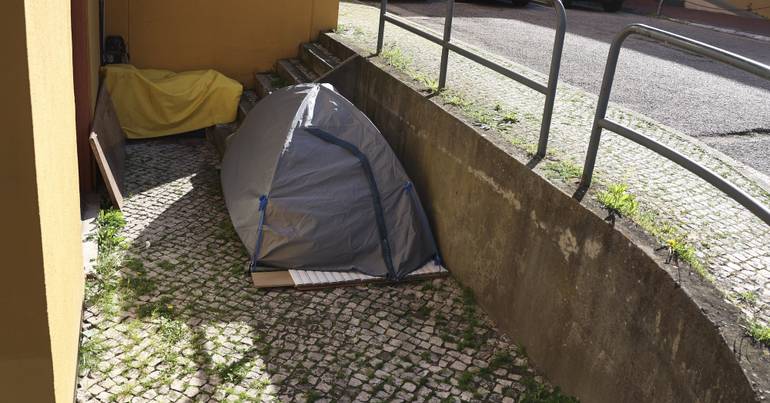
The number of homeless people sleeping rough in Lisbon increased by 5% between 2024 and 2025, rising from 439 to 462 people. Presenting municipal data, Lisbon Mayor Carlos Moedas reported that total homelessness in the city actually fell from 3,122 to 2,822 individuals when including those staying in emergency and temporary accommodation. Opposition representatives from the Socialist Party (Partido Socialista or PS) and the Left Bloc (Bloco de Esquerda or BE) criticized the municipal response as inadequate.
Lisbon Street Homelessness Rises 5% Despite Overall Decline
Tuesday, 17 November 2026AI summary
Context & Explainers
Socialist Party (PS)
- Leader: José Luís Carneiro (since June 2025)
- Ideology: Center-left, Social democracy, pro-Europeanism
Portugal's other traditional major party suffered a historic collapse in the 2025 election, dropping from 78 to 58 seats and falling to third place for the first time in democratic history. The party was led by Pedro Nuno Santos from January 2024 until his resignation following the May 2025 defeat. José Luís Carneiro, a 53-year-old former Minister of Internal Administration known for his moderate positioning within the party, was elected unopposed as the new Secretary-General with 95% of votes in June 2025. The Socialist Party governed Portugal from 2015 to 2024, including an absolute majority from 2022 to 2024 under António Costa, who resigned in November 2023 amid a corruption investigation. The PS previously led the innovative "Geringonça" (contraption) coalition government from 2015-2019, a minority government supported by the Left Bloc and Portuguese Communist Party that reversed austerity measures and presided over economic recovery.

- Leader: Currently vacant (Mariana Mortágua resigned October 2025)
- Ideology: Democratic socialism, eco-socialism, feminism
- Founded: 1999
The Left Bloc (Bloco de Esquerda, BE) is a Portuguese left-wing party founded in 1999 as a coalition of far-left movements (UDP, PSR, and Política XXI). It positioned itself as a modern, progressive alternative to the traditional left, attracting younger urban voters with campaigns on social justice, LGBTQ+ rights, drug policy reform, housing, and labor protections.
The party's peak influence came during the 2015–2019 Geringonça ("contraption") government, when it supported António Costa's PS minority administration alongside the PCP. This arrangement reversed austerity measures and presided over economic recovery, giving BE significant policy leverage.
Since then, the party has suffered a sharp electoral decline — from 19 seats in 2015 to just 1 seat in the May 2025 election, its worst result in history. Leader Mariana Mortágua resigned in October 2025 after failing to reverse the slide. The party is currently undergoing a leadership contest and internal debate about its future direction, squeezed between the PS on one side and Livre on the other.
4 sources
- Number of homeless people on the streets in Lisbon increases by 5% in 2025observador.pt ·
- Lisbon recorded a 5% increase in homeless people sleeping on the streets between 2024 and 2025rtp.pt ·
- Number of homeless people in Lisbon grows by 5% between 2024 and 2025expresso.pt ·
- Lisbon recorded a 5% increase in people sleeping rough between 2024 and 2025dn.pt ·