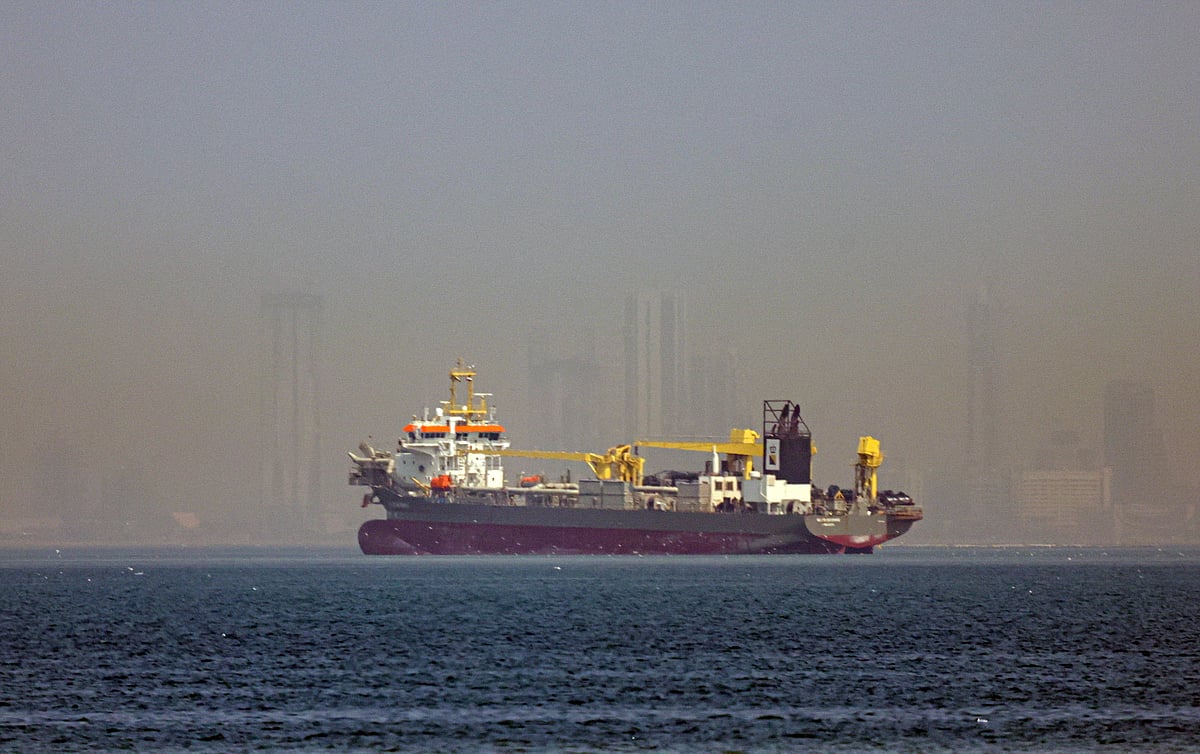
The price of Brent crude for May delivery, the European benchmark, opened this Friday, the 13th, with a slight drop of 0.33%, remaining around 100 dollars per barrel. At 7:00 AM today (6:00 AM in mainland Portugal), the price of Brent crude fell to 100.13 dollars after the US Treasury Department announced it would temporarily authorize countries to purchase Russian oil in transit to curb the rise in crude oil prices caused by the war in Iran. Meanwhile, West Texas Intermediate (WTI) crude also fell 0.66% to 95.10 dollars in pre-market trading before the official opening of the US market. On Thursday, the barrel of Brent crude for May delivery rose more than 9% and closed above 100 dollars on the London futures market, following statements from Iran regarding the closure of the Strait of Hormuz. North Sea oil, the European benchmark, closed the day on the Intercontinental Exchange (ICE) in London at 100.46 dollars, its highest price since 2022. The new Iranian supreme leader, Mojtaba Khamenei, said on Thursday that the closure of the Strait of Hormuz, through which about 20% of maritime hydrocarbon trade passes, should be extended. Iran closed the Strait of Hormuz and launched retaliatory attacks against targets in Israel, US bases, and other infrastructure in countries in the region such as Saudi Arabia, Bahrain, the United Arab Emirates, Qatar, Kuwait, Lebanon, Jordan, Oman, and Iraq. The 32 member countries of the International Energy Agency (IEA) decided “unanimously” to release 400 million barrels of oil from strategic reserves into the markets. With the release of the 400 million barrels of oil, more than double the agency's previous record intervention at the start of the war in Ukraine, when it released 182 million barrels of crude oil, the aim is to compensate for the supply lost due to the effective closure of the Strait of Hormuz. Iran: IEA predicts oil supply will fall by eight million barrels per day.
Brent crude oil price falls slightly but remains around 100 dollars per barrel
Friday, 13 March 2026RSS
Context & Explainers
Inflation measures how much general prices rise over time, usually reported year‑on‑year to compare a month with the same month a year earlier. Portugal’s National Institute of Statistics (INE) estimated January inflation at 1.9% year‑on‑year, down 0.3 percentage points from December, which affects rents, wages and everyday purchasing power for residents.