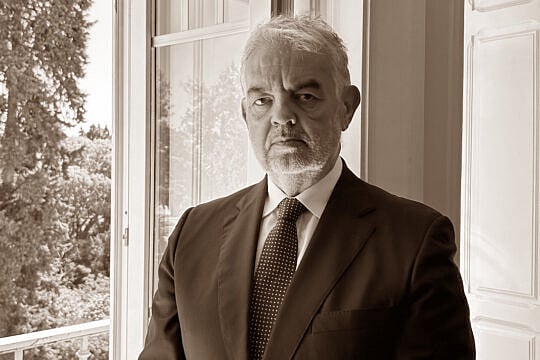
I take the liberty of reproducing here (plagiarising myself) the preface I had the pleasure and honour of writing for a recent book of poems by José Luís Tinoco, published by the Leiria City Council. Beyond the beautiful song lyrics he composed, José Luís Tinoco also carried within him a demanding and powerful poet, perhaps more nocturnal than the rest of his work, but also closer to the authenticity of someone who considers, with dry eyes, the balance of a life. His poetry, with its firm formal refinement and wise development, free from any weaknesses or easy paths, presents us with a dystopian world laden with its own emptiness, a grey world where we pursue in vain the shimmering embers of memories. They fade, the embers, as soon as we reach them, but we can glimpse, behind the ash, the intense lost world to which this poetry calls us. And there are many memories to be glimpsed. Even in the midst of the greyest landscape, it is impossible to lose the call of life. Because writing is to triumph over the void and to affirm the colours that resist beyond the grey and the loss. And so the poet promises us: 'tomorrow I will find you among the roots / and what remains of the night's breath / by the springs / where the survivors of the sun and the storms drink / to discover you in that vague rumour of glass and stars / that moves over the stones / and only now do I begin to understand / the clear blue that will cover the rest of your days.' And poetry becomes that intense and concentrated search for blue, which allows us to continue believing in life. Thus, the poetry of José Luís Tinoco will only seem grey and dysphoric to a first and less attentive reading. His entire poetic work, although a child of melancholy and the black bile that, according to Aristotle, characterises genius, constitutes a strong appeal to life, which makes colours return to the dullest and driest landscape the poet can evoke. And this alternation of the melancholy of loss with the wonder of creation is the engine that fuels the poetry, and that is why we can say here, with the poet Manuel Gusmão: 'Against all evidence to the contrary, joy.' For if there is no vertigo for those who know the abysses, as our poet teaches us, he also keeps in mind Nietzsche's warning: 'Whoever loves the abyss must have wings.' And José Luís Tinoco did not lack the wings of poetry, as he well knows. That is why this book of mature and polished poetry, in which we see a new and original poetic voice emerge in its full capacity, takes us by surprise and never lets us go. In this painful farewell, these are the words I leave to the memory of the architect, musician, poet, and great man of our culture, José Luís Tinoco.