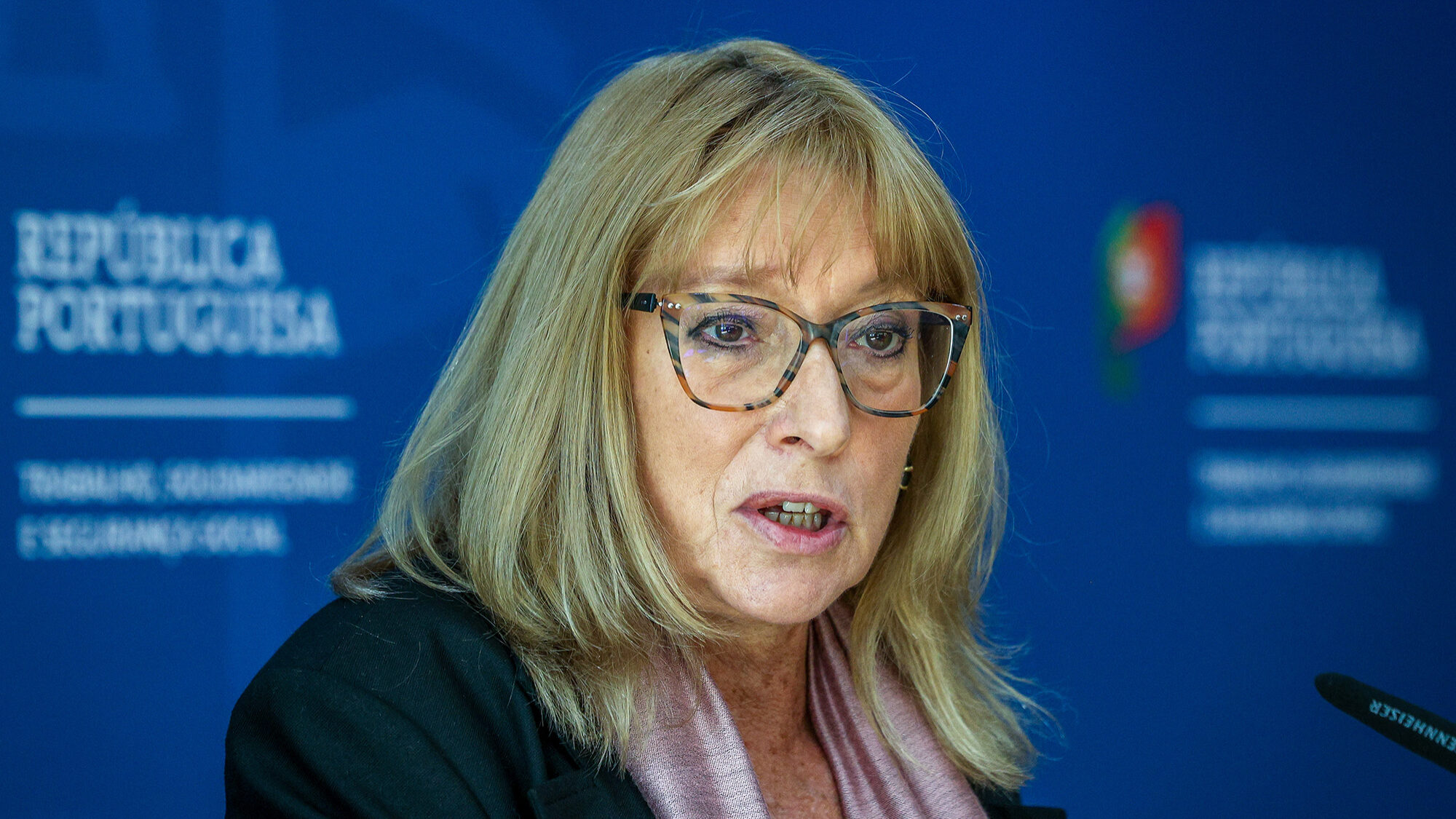
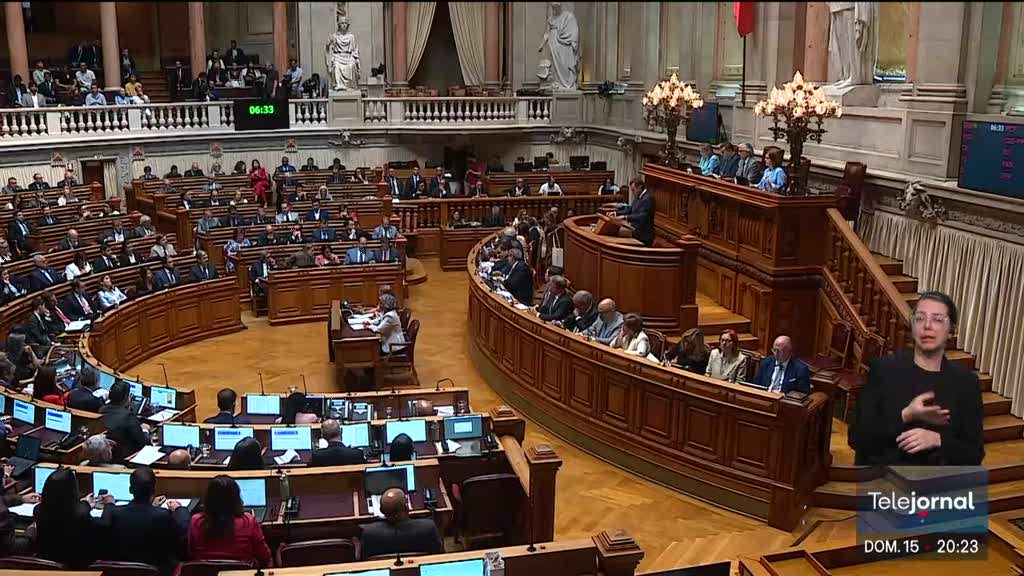
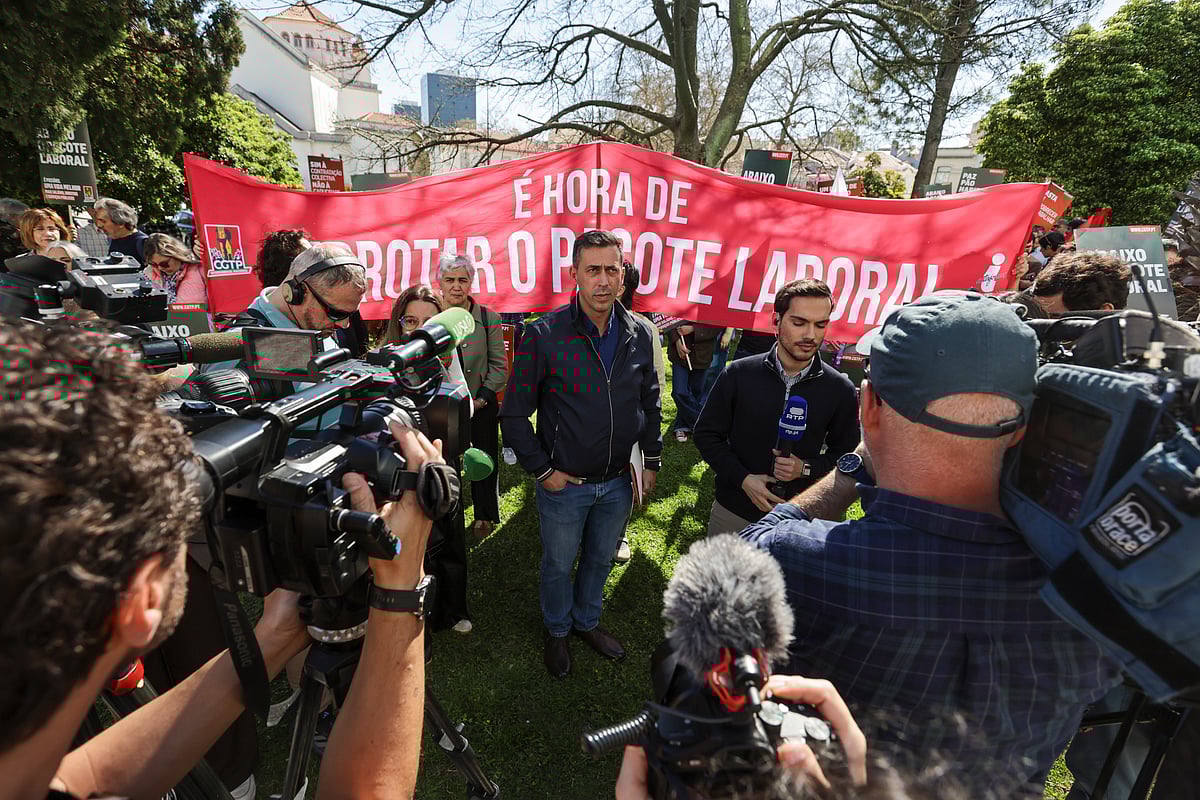
Dramatisation and negotiation efforts defined the day as the Government, employers, and the UGT returned to the table in a final attempt to reach a labour reform agreement. Following a four-hour meeting, partners reported greater flexibility and significant progress. While a tripartite deal remains uncertain, it would be a major breakthrough for a project once considered dead, with António José Seguro credited for the mediation. While the President of the Republic encouraged the UGT to remain in negotiations, the CGTP staged a protest outside the Ministry of Labour, claiming their exclusion violates the Constitution. The Minister of Labour argued that the CGTP sidelined itself by refusing to negotiate unless the draft was scrapped. Meanwhile, progress was made on key issues, including potential improvements to overtime pay, extending the minimum duration of fixed-term contracts to one year, and clarifying rules on outsourcing following collective redundancies.
Partners' willingness to negotiate labour agreement overcomes CGTP's dramatisation
Context & Explainers
CIP is the Confederation of Portuguese Business (Confederação Empresarial de Portugal), the main employers’ association that represents companies and sector groups in Portugal. It lobbies government on economic and labour policy and its statements are watched by investors, employers and workers when debates arise over funding rules and labour reforms.

The General Union of Workers (UGT – União Geral de Trabalhadores) is one of Portugal’s two main national trade union confederations. Founded in Lisbon on 28 October 1978, it was created as a social‑democratic alternative to the more communist‑aligned CGTP after the 1974 Revolution, grouping unions close to the Socialist Party and moderate centre‑right currents.
UGT represents around 400,000 workers and is affiliated to the European Trade Union Confederation and International Trade Union Confederation, giving Portuguese labour a voice at EU and global level. Its principles stress union independence from the state, employers, churches and parties, internal democracy and active worker participation.
Historically, UGT’s hallmark has been “propositive” social dialogue: it is usually more willing than CGTP to sign tripartite agreements on wages, labour law and social policy with governments and employers, shaping minimum wage increases, working‑time rules and social protection reforms. This makes UGT a key centrist actor in Portugal’s industrial relations, often mediating between left and right while defending collective bargaining and incremental improvements to labour rights.
CGTP (Confederação Geral dos Trabalhadores Portugueses – Intersindical Nacional) regularly publishes studies and proposals on labor market conditions, wages, working time, and employment rights. These reports are used to support the union confederation's negotiating positions with the government and employers.
CGTP studies typically cover topics such as minimum wage adequacy, working hours reform, collective bargaining trends, social security sustainability, and the impact of proposed labor law changes on workers. The confederation uses this research to advocate for positions in tripartite social dialogue (Concertação Social) alongside the UGT union confederation and employer groups.
These publications are significant because they often shape public debate ahead of labor reforms and can influence the pace and direction of legislative changes.
RSS source
Other news coverage of this topic
- Nothing new: changes to the Labour Code remain stalled • Público
- Labour reform remains on hold awaiting agreement • Correio da Manhã
- The negotiation simulation • Correio da Manhã
- Who is afraid of the Labour Reform? • Observador
- Between the country's gridlock and the courage to change • Diário de Notícias
- Government: Agreement to 'generalise contracts' for research fellows • Observador
- Minister "went in studs-up without knowing the political art of negotiation" • CNN Portugal
- The "different attitude" in negotiating what separates UGT and the Government • Observador
- Employers and UGT see 'greater willingness' and a 'different attitude' to negotiate changes to labour law • Correio da Manhã
- Minister says there are convergences on labour law and the proposal under discussion "is very different" • Correio da Manhã
- Government meeting with employers and UGT ends on a positive note, but with a warning: “There is no agreement on anything until there is an agreement on everything” • Expresso
- Government guarantees that current labour law is already "quite different from the initial proposal" • CNN Portugal
- Government wants labour reform to "favour, above all, large companies because it will allow for more precariousness and worse wages" • CNN Portugal
- "The proposal we currently have on the table is already quite different from the initial one," says minister regarding changes to labour law • CNN Portugal
- It was a very intelligent strategy by the Government to stay out of the labour law negotiations and not fully open dialogue to the unions • CNN Portugal
- For there to be an agreement, it means the Government will have to give up its main reformist measures - and it will pay a very high price for that • CNN Portugal
- Positive signs in the negotiation of the new labour law. "There is more that brings us together than separates us," says minister • ECO
- Labour package: Employers and UGT report progress but do not guarantee an agreement • RTP Notícias
- Progress made on labour package but employers want "people to understand that working more pays off" • CNN Portugal