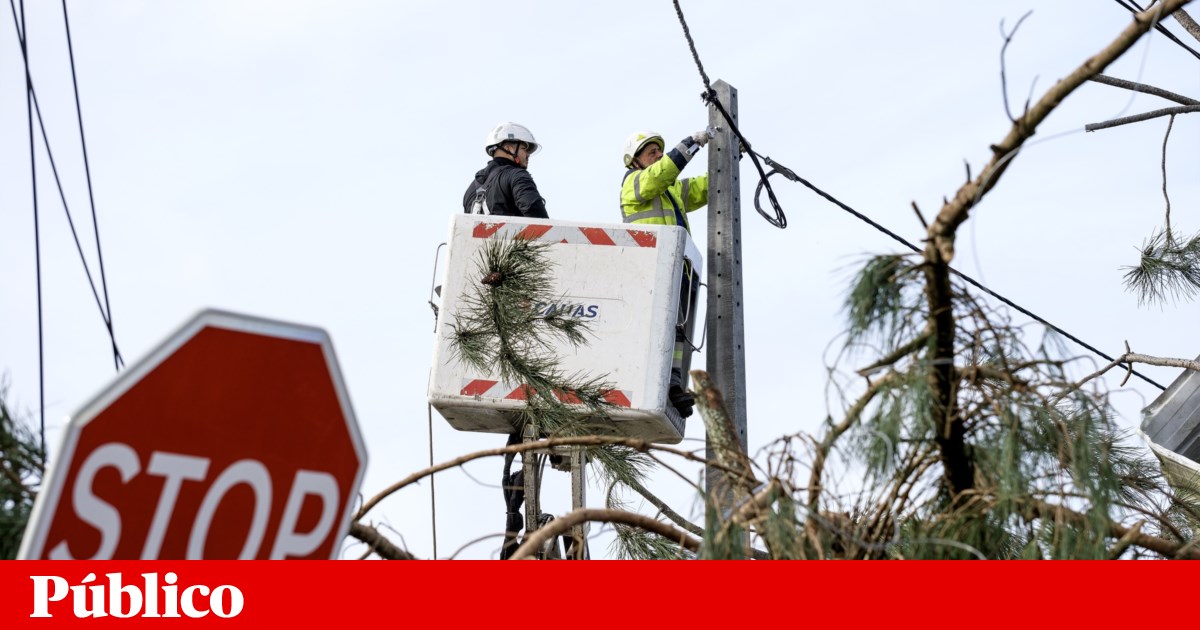
In the early afternoon, the National Emergency and Civil Protection Authority reiterated the possibility of an evacuation in Coimbra city centre, despite the situation being “a little more stable”. We are providing live updates on the evolving weather situation here.
Civil Protection renews warning. Possibility of evacuation in Coimbra city centre "remains until the end of the day"
Friday, 13 February 2026RSS

Context & Explainers
The Recovery and Resilience Plan (Plano de Recuperação e Resiliência) is Portugal's national programme under the EU's NextGenerationEU to fund reforms and investments after COVID‑19; the plan includes roughly €16.6 billion in grants plus about €2.7 billion in loans approved in 2021. Payments are tied to specific milestones and targets — which the government said it is politically committed to meet — so missed milestones can delay projects and funding that affect public works, contractors and local services.
The Mondego River is the longest river entirely within Portugal, about 234 km long, rising in the Serra da Estrela and flowing west through Coimbra to the Atlantic at Figueira da Foz. Rising Mondego levels often cause floods in Coimbra and downstream towns, so people in the river basin should monitor alerts and avoid riverside areas during heavy rain.
The National Authority for Emergency and Civil Protection (Autoridade Nacional de Emergência e Proteção Civil) is Portugal's national agency that plans for, coordinates and leads responses to disasters, including floods, storms and forest fires. It issues weather warnings (for example, orange alerts) and mobilises resources across districts during emergencies.
The Directorate-General for Health (Direção-Geral da Saúde) is Portugal’s national public health authority that issues guidance on disease control, health alerts and safety of food and water. After Storm Kristin it advised boiling or using bottled water if contamination is suspected, discarding food exposed to floodwater and keeping good hygiene when cleaning affected areas, guidance that residents and recovery workers should follow.

TAP Air Portugal is Portugal’s flag-carrier airline, founded on 14 March 1945 as Transportes Aéreos Portugueses. It began operations in 1946 with Lisbon–Madrid and quickly opened the long “Linha Aérea Imperial” to Angola and Mozambique, symbolically linking mainland Portugal to its overseas territories. TAP entered the jet age in the 1960s, became Europe’s first all‑jet airline in 1967, and rebranded as TAP Air Portugal in 1979. Nationalised after the 1974 Carnation Revolution, it went through cycles of partial privatisation and renationalisation, remaining a strategic state‑controlled company due to its role in connectivity, tourism, exports, and the Portuguese diaspora, especially to Brazil, Africa, and North America. Today TAP operates an all‑Airbus fleet from its Lisbon hub, marketing itself as a bridge between Europe, Africa, and the Americas and as a key economic and symbolic asset for Portugal.
AI Summary AvailableCentenary flood: Water may inundate downtown CoimbraRead the synthesized summary with context and explainers
View full article on RTP Notícias