Government wants to create a programme to bring young Portuguese descendants closer to Portugal
The government aims to launch an initiative to strengthen ties between young people of Portuguese descent living abroad and their ancestral home.

Latest news and stories about youth in Portugal for expats and residents.
The government aims to launch an initiative to strengthen ties between young people of Portuguese descent living abroad and their ancestral home.

17 young students from Colégio das Caldinhas, in Santo Tirso, travelled to Spain to see Leo XIV.

In this second part of the conversation, young people Alice Durnholz and Simão Pinto Soares talk about the future they imagine for themselves, what changes they would like to see for the country and the world, and reveal the difficulties young people currently face, as well as where their desires and indecisions lie.

Manosphere, incels, red pill, and blue pill are concepts that have recently entered our vocabulary, with more and more teenagers immersing themselves in this world. But what leads young people to fall into this “trap”?
The PSD and CDS want to attract young people to military life: six weeks of experience in the armed forces entitles them to €439 and a free driving licence. The number of vacancies and the mobilisation of resources will depend on the branches of the Armed Forces. The estimated costs are 4.5 million euros for every two thousand young people. The Government is not commenting on the initiative of the parties that support it.

Socialist MEP launches a debate project in schools this Monday, from Braga to Seixal, to be broadcast on social media. The goal is to change the digital discourse and promote healthy debate.

Generative AI tools like ChatGPT and Character.AI have become a daily routine for many teenagers, serving as companions for advice and venting. While these tools can offer support for those who fear judgment, they lack true empathy and can provide inaccurate or dangerous information. The article argues that instead of banning these technologies, parents should focus on digital literacy, teaching children to distinguish between algorithmic responses and genuine human relationships.

The DiscoverEU programme is reopening applications for 18-year-olds in Europe. If selected, you will be able to travel between 1 July 2026 and 30 September 2027.

Generative AI tools like ChatGPT and Character.AI have become a routine part of life for many teenagers, serving as companions for venting and seeking advice. While these tools can offer immediate support and reduce feelings of loneliness, they lack true empathy and understanding. Experts warn that relying on AI for social interaction poses risks, including the erosion of critical thinking and social skills. Rather than banning these tools, parents are encouraged to guide their children in navigating this digital landscape, emphasizing the importance of maintaining real-world human relationships.

Nuno Mateus Coelho, a cybersecurity expert, analyses the findings of a recent study showing that four out of every ten children and young people face a high risk of problematic internet use.

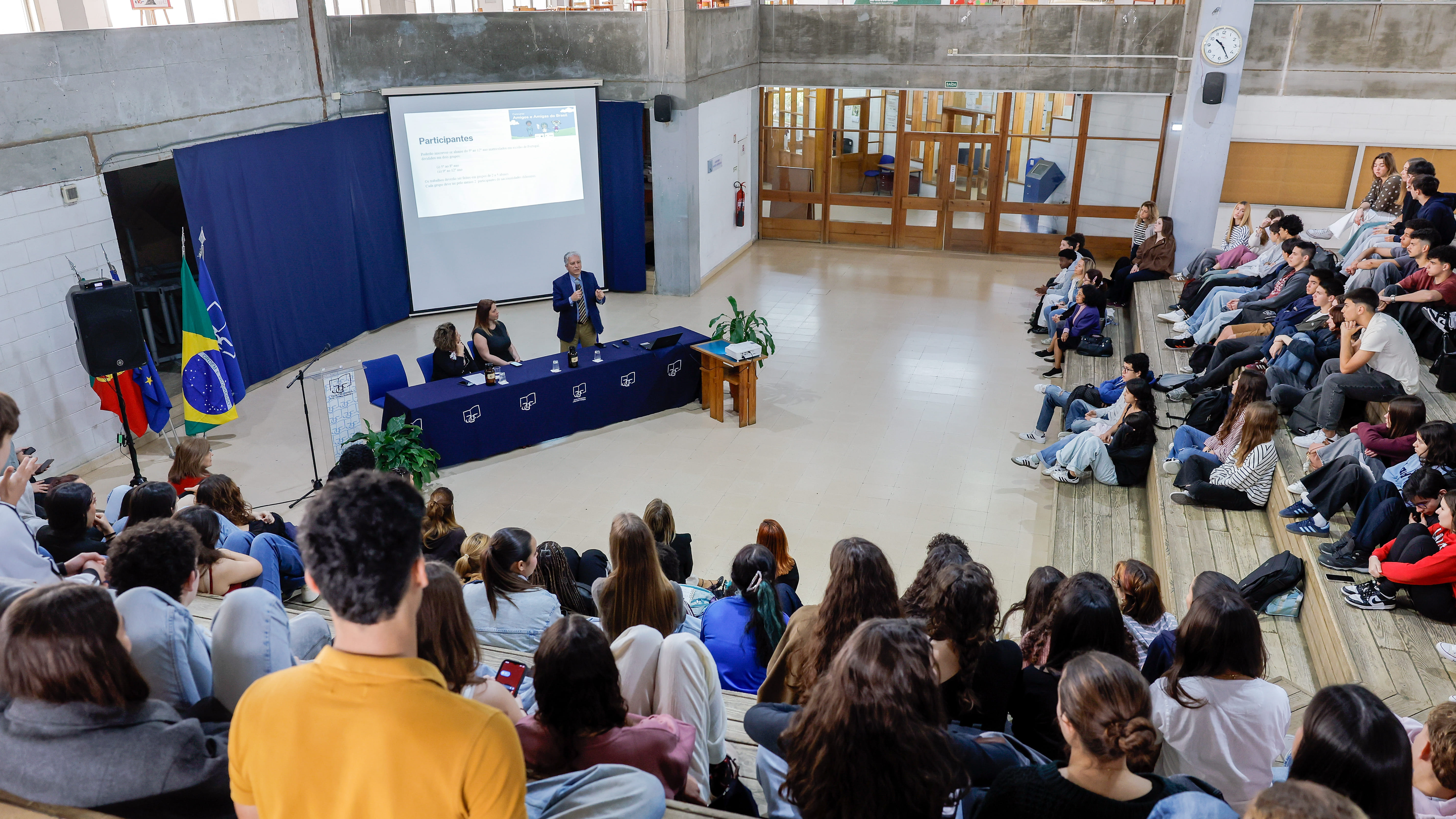
The “Friends of Brazil” competition has been launched to reward students in Portuguese schools. Organized by the Consulate General of Brazil in Lisbon, the initiative aims to foster integration within the school environment. Groups of two to five students from across the country can participate, provided each group includes at least two different nationalities. The competition, which features cash prizes for students and trips to Brazil for teachers with the highest number of registered groups, focuses on themes of interculturality, friendship between Brazil and Portugal, and combating xenophobia. The deadline for submissions is April 30th.