TVDE drivers to strike over 'lack of regulation'
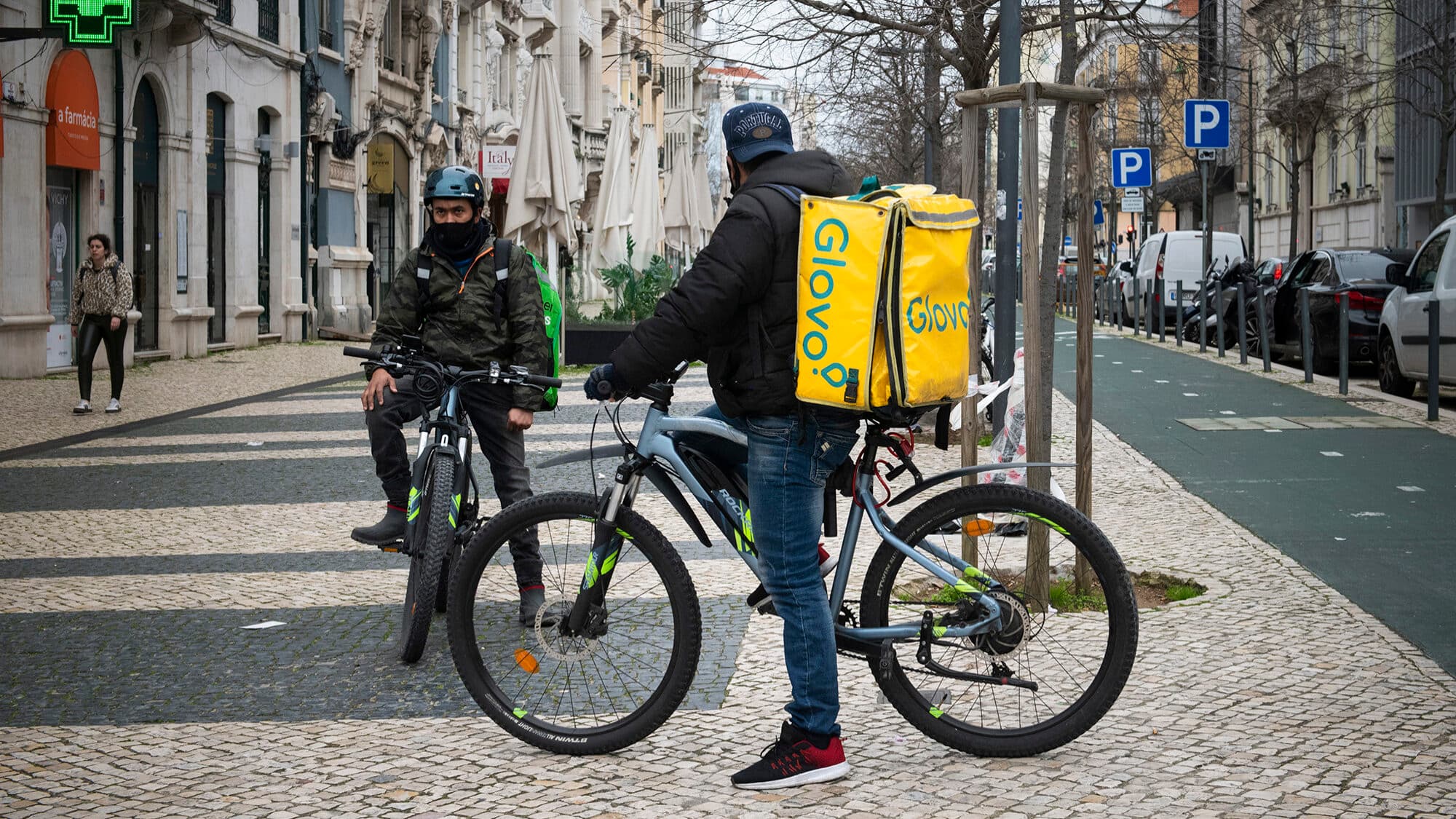
Across the country, drivers for the Uber and Bolt platforms will take turns switching off their apps between 19 and 24 January. Self-employed workers are calling for the sector's legislation to be reviewed.

TVDE drivers plan app‑switch action during morning peaks
Private‑hire drivers plan to alternate switching off Uber and Bolt apps during morning peak hours between 19 and 24 January in a protest organised by the Somos TVDE civic movement. Organisers say drivers will still be free to work but will turn off one platform at a time to disrupt supply and press for clearer regulation; they accuse the platforms of operating like sector employers. Commuters and those booking rides in peak mornings next week should expect possible delays or reduced availability.
TVDE refers to app‑based private‑hire ride services; the acronym stands for Transporte em Veículos Descaracterizados a partir de Plataforma Eletrónica and covers drivers working for platforms like Uber and Bolt. Drivers are using temporary app shutdowns as a protest over what they say is inadequate regulation and working conditions, so commuters who rely on ride‑hailing during peak hours should expect possible service disruptions next week.
Somos TVDE (We Are TVDE) is a civic movement and drivers’ organisation representing TVDE drivers that organises collective actions and campaigns for stronger regulation, better pay and working conditions. It is coordinating the alternating shutdowns of Uber and Bolt apps in morning peak hours, so those using app‑based taxis should be aware of potential reduced availability and plan alternatives.

The Government wants to 'rebalance' the rules for platform work. This is what could change
Portugal's government plans to revise regulations governing platform-based work (delivery, ride-hailing and other gig-economy jobs). Potential changes include clarifying worker status (employee vs contractor), strengthening social protections and labour rights, introducing minimum standards and transparency obligations for platforms, and tougher enforcement — measures that would affect platforms, workers and consumers.
Government says it is 'monitoring' the merger of Galp and Moeve
The deal between Galp and Moeve could lead to a redistribution of the two companies' workers. The Workers' Committee of the Portuguese oil company has already voiced concern about the merger, and the Government says it is monitoring the situation.

SAFE. Without industry involvement, Portugal risks 'not creating the Autoeuropa of Defence'
If the national industry is not involved, Portugal runs the 'risk of not creating the Autoeuropa of Defence at a time when we are investing €5.8 billion' with the European SAFE loan programme, warned the president of the AED Cluster during a parliamentary hearing on the eve of the EU approving the programme on Wednesday...

Virtual Influence: Legal and Strategic Challenges for Brands and Creators
The rise of virtual influencers — characters generated by artificial intelligence — is redefining how brands communicate and interact with consumers. These 'synthetic creators' offer clear advantages: they do not fall ill, do not take holidays and can produce content around the clock. Yet behind this technological efficiency, complex legal questions arise that ...

CGTP to hand over thousands of signatures against the labour package and does not rule out another general strike
Tiago Oliveira says Luís Montenegro is 'lying' when he claims the labour law reform paves the way for a €1,600 minimum wage, and he hopes the prime minister will clarify this statement at this week's meeting, where CGTP intends to deliver thousands of signatures against the proposed changes to labour legislation.
Do teachers not want to record class summaries?
The Ministry of Education wants the statute governing the teaching career to make recording class summaries mandatory, and teachers claim the authorities only want to control their absences.

Galp prepares to change, but the process will be lengthy and will put Brussels' new approach to the test
Galp and Moeve have entered detailed talks to combine their refining operations and filling-station networks, a complex transaction that is likely to be lengthy and closely scrutinised. The Portuguese Communist Party has already criticised the proposed deal and the government will have a role in the approval process, raising political as well as regulatory stakes. The transaction will test Brussels’ evolving approach to competition and regulation in the energy sector, with implications for pricing, investment and market structure in Portugal.

Education Minister warns teachers that without lesson summaries there will be no pay
A document sent to schools warns that the monthly recording of lesson summaries on the platforms and their submission to the ministry is “indispensable” to validate salaries.

Explainer: What is an intermittent contract?
The scheme applies to workers who do not perform their work on a continuous basis.

Government strengthens AI support scheme for small and medium-sized enterprises
The Government's measure aims to 'accelerate the adoption of Artificial Intelligence, increase productivity and ensure that the benefits of the technology spread throughout the economy.'
Social Concertation meeting on the labour law scheduled for the 14th postponed
The postponement was requested by “several social partners”.

Government to speed up visas to attract artificial intelligence specialists
The launch of a jobs platform in the field of artificial intelligence (AI), and the creation of an accelerated visa scheme for researchers and highly qualified professionals in the area. These are two of the 32 measures set out in the National AI Agenda, published this Thursday in the Diário da República. According to the Government, the programme represents ...

Teachers criticise education authority for seeking to force staff to record lesson summaries
The National Education Federation regards the measure as “an instrument of control” by the Government.

António Filipe calls for "adequate regulation" of labour relations
The presidential candidate supports limiting night-time work to activities where it is justified.

New labour law 'is not a magic wand' for wage increases
Maria de Fátima Carioca argues that Portugal needs a substantial overhaul of its labour legislation, saying flexibilisation of labour relations is unavoidable but must not undermine social protections. She warns the proposed new law is not a magic wand for boosting wages — structural reform is required alongside measures to safeguard workers. Her remarks come as the Government prepares a wide-ranging review of labour rules and the social safety net.

IL leader wants a parallel path of labour market flexibility and worker protection
Mariana Leitão says it is urgent to ensure greater competitiveness in the country and pursue “a path of greater productivity, to bring more wealth to the country, to bring more economic growth”.

IL leader wants a parallel approach to labour flexibility and protection of workers
Mariana Mortágua said it is possible to build a parallel path between a more flexible labour market and “guaranteeing the protection of people”.

New Year — Luís Montenegro again calls for labour reform
Prime Minister Luís Montenegro uses his customary 1 January Jornal de Notícias article to renew a call for labour reform, urging a ‘winning mentality’ and changes to employment law and regulation. Framed as necessary for competitiveness and job creation, the piece signals his policy priorities and aims to steer public and political debate toward deregulation and legal adjustments. It functions both as a policy pitch and as political positioning ahead of upcoming labour‑market discussions.

Government changes rule on airport security payments
The ministerial order coming into force on 31 December aims to prevent delays in payments made by ANAC at the end of the year to workers from security forces such as the PSP and GNR.

Europe’s simplification mess frustrates businesses
Some companies say the simplification agenda is turning Europe into an unpredictable business partner.
Deadline for companies to submit December invoices extended until 9 January
Under normal circumstances, the deadline for sending invoicing data would be 5 January.

Deadline for companies to submit December invoices extended until 9 January
The deadline for businesses to send invoices issued in December has been extended to 9 January.
