Google officially launched its new transatlantic submarine cable, Nuvem, which connects Myrtle Beach in the United States to Sines. The infrastructure aims to increase the resilience of digital communications across the North Atlantic and is expected to be fully operational by 2027.
Portugal and Spain formalised a joint, equal application to build a European artificial‑intelligence 'gigafactory', pitching an estimated €8 billion of investment and planning infrastructure on both sides of the border — with the Portuguese site expected in Sines. The proposal aims to compete for EU support in a spring selection process that will choose several projects under a public‑private framework. Regional businesses, universities and local planners should monitor the bid for procurement and employment opportunities.
The Portuguese government has confirmed it will not maintain a direct financial stake in the development of the upcoming artificial intelligence Gigafactory.
The Government will move forward with a special plan to respond to the pressure of industrial investments in the municipality of Sines, in the Setúbal district, with responses in the areas of housing, education, and health, it was announced today.
The Government will move forward with a special plan to respond to the pressure of industrial investments in the municipality of Sines, in the Setúbal district, with responses in the areas of housing, education, and health. “We are going to create a special plan for Sines, which is experiencing a huge concentration of investment,” assured the Minister of Economy and...
Faced with the threat of social suffocation and rents soaring to a minimum of 2,000 euros per month, the Government will launch an exceptional public investment plan for Sines. The guarantee was given this Wednesday, September 2, by the Minister of Economy and Territorial Cohesion, Manuel Castro Almeida, following an alarm raised by the local municipality: without urgent responses in housing, childcare, and healthcare to match the over 20 billion euros of private investment in the region, the local population is turning against the industrial boom. The Mayor of Sines, Álvaro Beijinha, warned that the local housing market has collapsed, with no rentals available under 2,000 euros, and demanded a revision of local finance laws to ensure the municipality benefits from the massive industrial projects.
Manuel Castro Almeida stressed that this measure is “not standard for the country as a whole,” but acknowledged the “specificity” of this territory due to private investments.
The Minister of Economy and Territorial Cohesion, Manuel Castro Almeida, argued that Portugal must strive for a GDP per capita matching the European average. Speaking at the licensing ceremony for two new Repsol factories in Sines, an 820-million-euro investment, the minister highlighted Portugal's current economic growth, record employment, and fiscal stability. However, he acknowledged that Portugal's GDP per capita remains at 80% of the EU average, stressing that reaching 100% must be the national ambition. He also noted a significant increase in foreign direct investment, citing data from the Bank of Portugal, and praised the Repsol project as a key example of the country's ability to attract high-tech industrial investment.
The government official indicated that the survey of projects to be financed through the State Budget will only be completed during the month of September.
The company will receive the Digital Industrial Operation Title, allowing for the operation of the new polymer factories. The construction of the factories involved an investment of 830 million euros.
The Administration of the Ports of Sines and the Algarve (APS) expects to receive information by the end of this month regarding the market study that will dictate the terms for the concession of the future Vasco da Gama Terminal. As ECO/Local Online has learned, the Government already has the document in hand. After a first attempt, ...
With Spain holding nine refineries, Sedes warns that the merger with Moeve places Sines under an Iberian group logic — without guarantees of future investment.
Galp anticipates that negotiations with Moeve shareholders to combine their refining and marketing businesses will conclude in the fourth quarter, though it aims to finalise the deal as soon as possible. Co-CEO Maria João Carioca stated that while the fourth quarter is more likely than the third, the delay is due to the scale and complexity of the transaction rather than any specific disagreements or asset valuation issues. The deal involves integrating refining, petrochemical, and fuel marketing portfolios across the Iberian Peninsula, including Galp's Sines refinery and Moeve's Spanish facilities. Meanwhile, the Portuguese government is exploring legal instruments to ensure the Sines refinery remains in Portugal and maintains its capacity to supply the country during crises, given that Moeve's shareholders are based outside the European Union.
Exactly one week ago, Morocco's Minister of Energy, Leila Benali, visited Lisbon to discuss with her Portuguese counterpart, Maria da Graça Carvalho, the possibility of establishing an electrical connection between Tavira and Tangier. The conviction that this will move forward is based on the agreement to jointly seek EU funds and private investment for a project that replicates the existing link between Spain and Morocco. France is also on this priority agenda as a new direct connection, independent of the one linking Morocco to Spain. Energy, solutions, and autonomy summarize the vision. Also a week ago, the Moroccans celebrated from Freetown, Liberia, where the 69th ECOWAS Summit took place, the Moroccan victory in the energy sector, as the 12 ECOWAS members joined the Moroccan initiative to channel natural gas from Nigeria to Tangier. This 6,800km pipeline is important for Sines, now with the express support of an important regional bloc, West Africa. Furthermore, in this non-traditional Africa for Portugal, Mali's Foreign Minister, Abdoulaye Diop, expressed support for Morocco's initiative to make the port of Dakhla the 'Atlantic gateway to the Sahel'. These are the new opportunities for political, business, and leisure Portugal. From Sines to Lagos, Nigeria, there are roads, bridges, and ports to be designed and built, especially with the World Cup approaching in four years. Recent changes in international politics point towards the South rather than the North. Morocco is today, more than ever, an Atlantic front that should not be neglected. We have much to learn from them on land, and by working together with Moroccans, universities, and companies, there is a vast library of invisible and incalculable profits to be discovered.
Spanish renewable chemicals company Catalyxx is to invest €120 million in its first commercial-scale renewable chemicals plant, choosing Sines for the project as Portugal continues to attract major international industrial The post Spanish firm to invest €120 million in renewable chemicals plant at Sines appeared first on Portugal Resident.
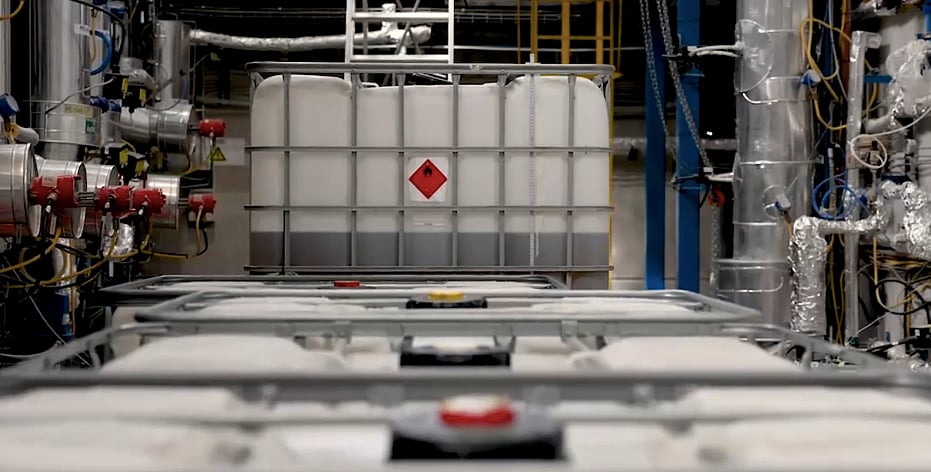
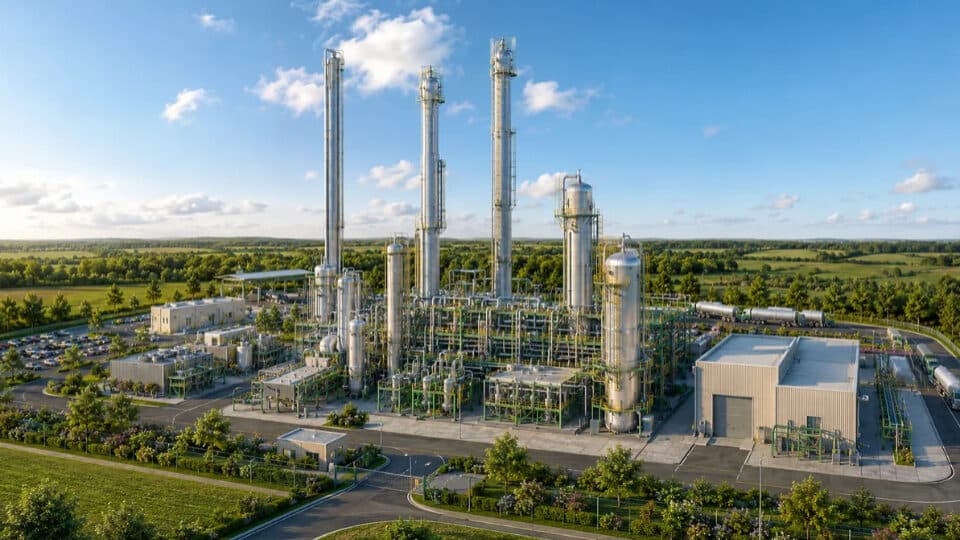
Spanish firm Catalyxx is set to invest 120 million euros in building its first commercial renewable chemicals plant in Sines, a project classified by the Portuguese government as a Project of National Interest (PIN). The facility will produce butanol, hexanol, and octanol from bioethanol, offering a low-carbon alternative to petrochemical processes. Construction is scheduled to begin in the fourth quarter of 2026, following the success of a demonstration unit in Seville.
There is another foreign – and multi-million – investment on its way to Sines. The Spanish company Catalyxx announced this Wednesday that it will build its first commercial-scale renewable chemical plant in Portugal, valued at 120 million euros. The choice for the industrial project – which was recognised as a Project of...