Morning discos, no alcohol, endless selfies, running, music, and large groups of friends gathering in a single morning. This is the 'new trend' that has arrived in Portugal, particularly in Lisbon and Porto. Over the last two weeks, social media feeds have been 'invaded' by viral movements known as Run Clubs. In practice, these are spontaneous 5km runs that bring hundreds of people together to have fun while exercising. Participants meet at a set time and run through city streets, ending at a café, club, or bakery where a DJ, protein shakes, matcha, and healthy snacks await. What starts as a workout turns into an unexpected party. While it may seem like just another fitness fad, it reflects a shift in how the new generation socialises—prioritising health, energy, and connection over the traditional nightlife of bars and alcohol. Notable clubs include the Lisbon Running Community, Limitless Club in Lisbon, and the Founders Running Club in Porto.
I am one of those people who tries every sport, regardless of difficulty or affinity. But today I want to go further and write about what seems to me to be the most impactful discipline from a personal, but above all, social point of view. I am talking about running. It is a challenge, a beginning, an overcoming, a socialisation. It is a versatile discipline on all levels. There is something especially curious about running: it brings together people who would probably never meet anywhere else. A CEO who runs before work, a student who needs to switch off from university, someone who decided to change their life after the age of forty. On the road or in the park, for a few kilometres, everyone has exactly the same goal: to enjoy themselves and feel that they are doing something that adds value on a personal level. And few sports say so much about a society. Running is ease. It does not require a stadium, a team, or even great technique; it only requires willpower. Perhaps that is why it has ceased to be just physical exercise to become a social phenomenon that grows year after year. Just look at the number of people who signed up for the last Lisbon Marathon, for example. More specifically, there is something deeply democratic about this sport. At the starting line, different goals, stories, and ages mix. There are those who want to break a personal record, those who just want to prove to themselves that they can reach the end, and those who want to go with friends and toast with a beer at the finish line. But running is also a personal space. It is not just physical exercise, but a rare moment of the day when the pace slows down and thoughts are organised. Let no one doubt that this is why running easily transcends the logic of performance. It is this mixture of arguments and benefits that makes running, in my view, the most complete sport in the world. That is why you see so many people running. Because it is simple, because it is accessible, and because, in a way, it gives people back something rare: the feeling of personal progress and socialisation. Ultimately, when thousands of people occupy the streets to run, as happens in the big races across our country, we are not just seeing a sporting event. We are seeing a society in motion. And that, in itself, says a lot. Race suggestions: In the coming months, there are some interesting events, if you feel prepared, of course: April 12 - Lisbon Eco Marathon; May 24 - Douro Vinhateiro Half-Marathon.
“Lisbon is the most beautiful race in the world” and you don't need to do international events to know it. The difficulty in keeping up with Marcelo during a report. And Ronaldo's house that remained only a project.
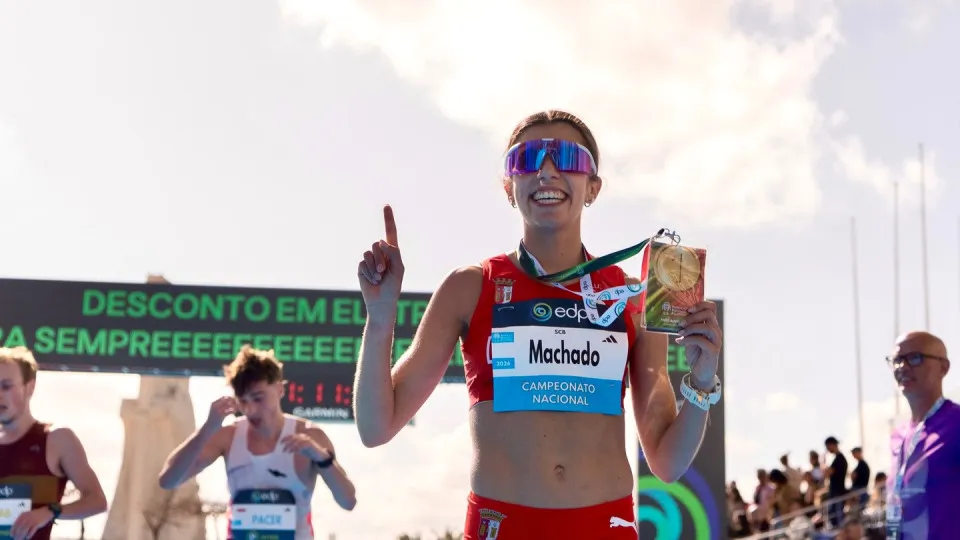
The article highlights the 2026 EDP Meia Maratona de Lisboa, which set a new world record with Ugandan athlete Jacob Kiplimo finishing in 57:20. The event also marked a record number of female participants, totaling 16,128. Portuguese Olympic runner Mariana Machado shared advice for beginners, emphasizing enjoyment and proper rest. The race attracted international participants from 127 countries, showcasing Lisbon's growing global appeal. Notable figures like actor Ricardo Pereira participated, and the event featured a mix of seasoned and first-time runners, with ages ranging up to 89. Additionally, the article mentions the upcoming arrival of Hyrox, a popular fitness competition, to Portugal.