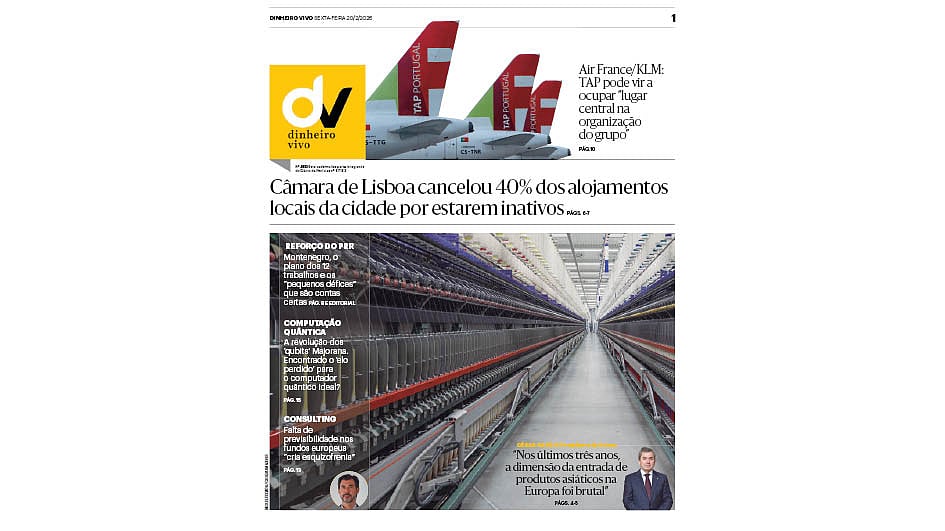
This Wednesday features the ECO Festival's 10th-anniversary celebration, a parliamentary debate with the Prime Minister, the release of INE's April housing evaluation survey, and the publication of the financial stability report.
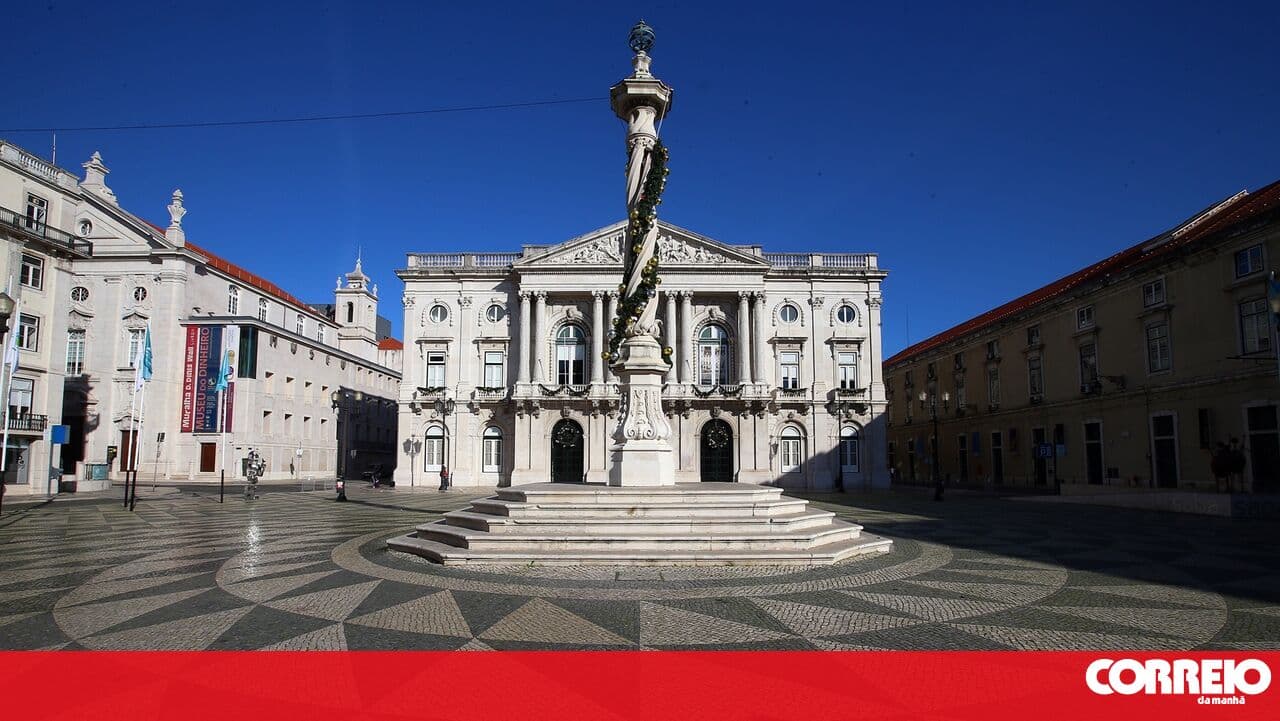
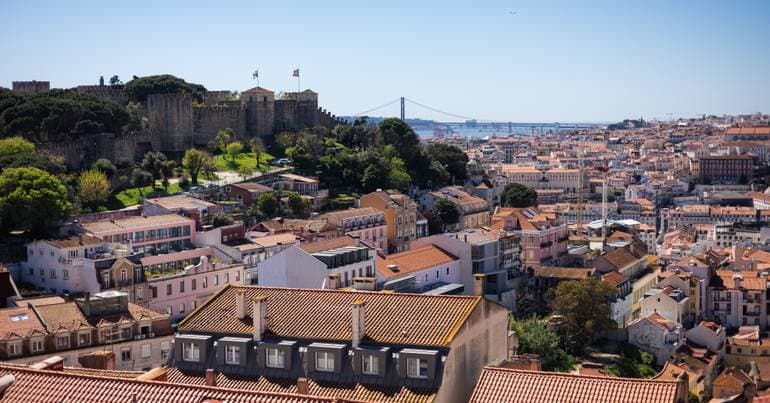
The Lisbon City Council has cancelled 40% of local accommodations due to inactivity, marking a significant move in the city's management of 'ghost' AL licenses. This week's highlights also include insights from César Araújo on the influx of Asian products into Europe, discussions on the PRR, and advancements in Quantum Computing. Other topics cover the unpredictability of European funds and TAP's potential role within the Air France/KLM group.
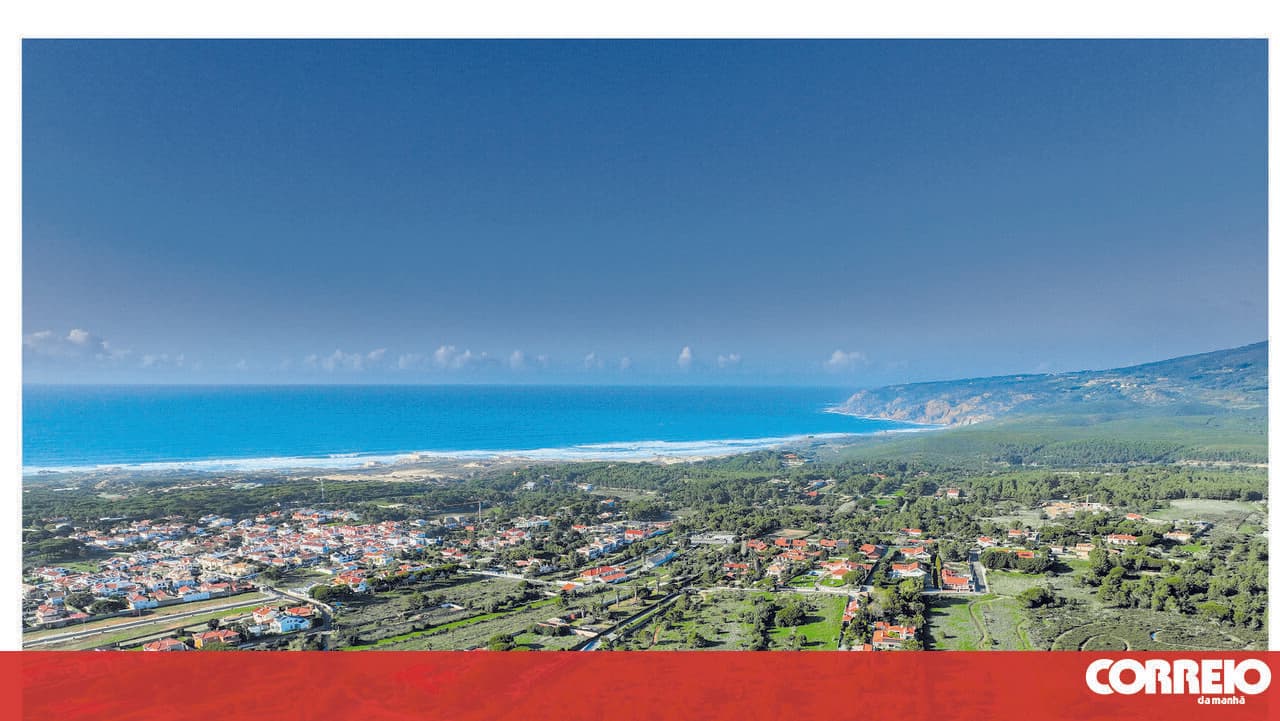
Cascais City Council has exercised its right of first refusal to buy 32 plots near Quinta da Marinha for €30 million, blocking a sale the owner had negotiated with two private firms. The council approved a loan to finance the acquisition, raising issues about use of public funds to secure strategic, high-value land in one of the municipality’s most expensive areas and the implications for local planning and market dynamics.
The 'Construir Portugal' (Build Portugal) strategy was presented as a structural response to the housing crisis. However, an economic and financial analysis of the approved incentives suggests a different conclusion: the programme is designed primarily to make medium-to-high-end real estate projects more profitable, particularly in the Lisbon Metropolitan Area. The main incentive provided is the application...
The Bank of Portugal has hired Sérvulo via direct award for specialised real estate services for a two-year period. The bank has properties in Lisbon to sell, and the audit board has already exerted pressure.
The government is selling old buildings that could provide 450 public housing units at nearly half the market price. It claims it will use the proceeds to buy properties, but at prices much higher than those it received from the sales. It would be a crime if the goal were to solve housing problems in the only European city where the average salary is not enough to rent a one-bedroom apartment. It is not, as the government's political track record on housing shows. But some private entities got a lucky break, while the rest of us are left holding the bag.
“I was completely caught by surprise by this news,” replied Moedas, indicating that the Lisbon City Council received a communication from the CCDR “for the first time” last week, on the 20th.
The PS accused the Government of behaving like an 'inverted real estate agent' and wants to hear from minister Pinto Luz. The Ministry of Finance denies sales below market price.
PSD, IL, CDS-PP, and Chega voted against the exercise of the legal right of first refusal in Lisbon advocated by the Socialists, asking 'where was the PS' during their 14 years of governing the municipality.
The Left Bloc (BE), through Fabian Figueiredo, has questioned the government regarding the status of the Graça Barracks contract under the Revive programme. The party is seeking clarification from Finance Minister Miranda Sarmento on whether the government intends to revoke the concession due to alleged contractual breaches, specifically the failure to complete renovation works within the four-year deadline and the non-payment of minimum annual financial compensation. The site, currently slated for a hotel development approved by Carlos Moedas' administration, has become a point of contention, with local residents and opposition parties advocating for its conversion into affordable housing.
During the 2024 election campaign, the AD coalition promised an emergency health plan to be executed by the end of 2025. However, a report from the Health Regulatory Authority (ERS) shows that all National Health Service indicators have worsened. By the end of 2025, over one million patients were waiting for their first specialist consultation, a 17% increase from 2024, with 43.7% exceeding the guaranteed maximum response time. The OncoStop program also failed, with oncology surgeries decreasing by 3% and waiting lists growing by 9%. Additionally, the number of patients without a family doctor exceeded 1.6 million in early 2026. In education, the government has failed to provide accurate data on teacher shortages, while secondary school completion and higher education enrollment have dropped by 10%. In housing, prices rose by nearly 19% in 2025, reaching a record high in April 2026. In Lisbon, residents spent an average of 116% of their salary on housing, making home ownership increasingly unattainable. These failures in health, education, and housing demonstrate a significant decline in the quality of life for citizens.
The ordeal experienced by citizens and companies regarding project licensing at municipal councils is set to end, with decisions moving to “days or weeks,” promised the Minister Assistant and of State Reform this Tuesday. Speaking at the opening session of the Portugal Smart Cities Summit, taking place at FIL in Lisbon, Gonçalo Matias returned to...
The Minister of Economy, Castro Almeida, announced in Lisbon that the government will provide financial support to vulnerable households for the new mandatory catastrophe insurance on homes and factories, part of the Portugal Transformation, Recovery and Resilience (PTRR) programme. While specific amounts remain to be defined by decree, the minister highlighted the creation of a catastrophe fund financed by these mandatory premiums. The PTRR, with a total budget of 22.6 billion euros over nine years, aims to address recovery needs following recent storms.
Imagine a diabetic. You don't need to imagine much, just take a peek at the Sunday lunch table. The diabetic knows they cannot eat everything. They can eat a bit of bread. They can also, very sparingly, take a look at dessert. They cannot, under any circumstances, bury their face in the Abade de Priscos pudding as if...
The government exchanges the former Ministry of Education headquarters with the Open University and uses 5.3 million euros from the operation to build university residences.
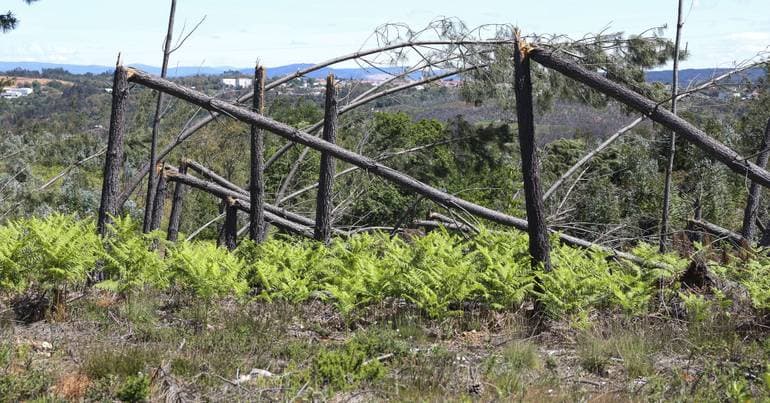
Dozens of houses destroyed by the February storms in Arruda dos Vinhos will begin to be assessed by technicians from the National Laboratory for Civil Engineering (LNEC). The City Council intends to consult with banking institutions to secure funds for necessary repairs.
The Casa Para Viver platform, which unites dozens of collectives advocating for housing rights, is organizing a protest in Lisbon this Saturday to oppose recent government measures. Critics argue that policies such as facilitating the sale of undivided inheritances and easing eviction processes for non-payment will exacerbate the housing crisis rather than solve it. Representative Rita Silva warns that these initiatives treat housing as a financial asset, worsening access for those in need and contributing to a rise in homelessness and precarious living conditions. The platform is calling for emergency measures, including a suspension of evictions and the implementation of rent regulations to curb speculative practices.
Increasing housing supply and facilitating access through direct support or tax incentives were the goals set by the AD government when it presented its 'Construir Portugal' strategy in May 2024. Nearly two years later, the measures have not been able to stem the continuous rise in house prices, which climbed nearly 18% in the third quarter of 2025 year-on-year. The average price per square metre nationwide reached 3,000 euros, rising to 4,500 euros in Lisbon, which is a major source of dissatisfaction for the Portuguese people. Repeatedly breaking records, real estate inflation has been the combined effect of a deficit in new construction and available properties, a very rapid and constant increase in demand—driven by tourism, immigration, digital nomads, and golden visas—and a lack of units on the market at controlled prices. To address the supply shortage, the government aims to accelerate the Recovery and Resilience Plan (PRR) to build 25,000 homes and finally release public buildings for affordable housing. Another change involves revising the Land Law to allow rustic land to be used for sustainable housing, such as affordable rentals or controlled-cost housing. More disruptive measures include support for young people and the middle class to buy homes, such as IMT and Stamp Duty exemptions for those under 35 buying their first home up to 316,000 euros, alongside a public guarantee for 100% bank financing. Regarding foreign investment, the government introduced 'cooling measures' by increasing IMT to 7.5% for non-residents to curb speculative demand, while offering exemptions for those who become tax residents and commit to moderate-rent leases. In the rental sector, the government led by Luís Montenegro revoked forced leasing of vacant homes, reduced construction VAT to 6%, and lowered the IRS tax rate on rental income to 10% for landlords offering moderate rents. However, the 'moderate rent' cap was set at 2,300 euros per month, a figure considered high for the middle class. Additionally, restrictions on local accommodation licensing were revoked, and new measures were announced to facilitate the market entry of properties in undivided inheritance processes.
First meeting between the new head of state and Montenegro following Seguro's inauguration. Also in the news, the government approved housing measures during the Council of Ministers meeting.
The webpage provides a variety of recent news updates related to Portugal, including political, economic, and social issues. Key highlights include a meeting between Portugal's President Montenegro and Prime Minister Seguro in Belém, emphasizing cordial relations. The government announced it will maintain fuel discounts if price increases exceed 10 cents. Additionally, there are legislative updates, such as amendments to rental laws. Investigations are ongoing into corruption at the Santa Maria hospital, where a long-standing scheme involving morgue staff was uncovered. Other notable stories involve allegations of mistreatment in a childcare center in Alfragide and political tensions with the ERC opening a process against TVI. The site also covers international news relevant to Portugal, such as the Ukraine conflict and global events.
The webpage provides a variety of recent news updates related to Portugal. Key highlights include a meeting between Portugal's President Montenegro and Prime Minister Seguro in Belém, characterized by cordiality. The government announced it will maintain fuel discounts if price increases exceed 10 cents. Additionally, the Council of Ministers approved amendments to rental laws and other legislation. Investigations are ongoing into alleged corruption at the Santa Maria morgue, where a scheme lasting over 20 years was uncovered, involving employees receiving up to 500 euros monthly. Other notable stories include a police search at Santa Maria, a scandal involving the TVI channel, and reports of abuse in a creche in Alfragide. The webpage also features sports updates, such as a live report from a Europa League match and a suggestion by Rooney for a new Tottenham coach. Overall, the site offers a broad overview of current political, economic, and social issues in Portugal.
The webpage provides a variety of recent news updates related to Portugal. Key highlights include a meeting between Portugal's President Montenegro and Prime Minister Seguro in Belém, characterized by cordiality. The government announced it will maintain fuel discounts if price increases exceed 10 cents. Additionally, there are legislative updates, such as approved changes to rental laws. Investigations are underway at the Santa Maria morgue concerning a long-standing scheme involving employees receiving bribes. Other notable stories include a corruption investigation at Santa Maria, a crackdown on suspected maus-tratos (abuse) at a creche in Alfragide, and ongoing coverage of the Ukraine conflict. The site also features sports updates, including a live report on a Europa League match between Estugarda and FC Porto, and commentary on potential new coaching strategies for Tottenham.
António José Seguro visited the Institute of Social and Political Sciences (ISCSP), where he previously taught, and was greeted by hundreds of students. During a 40-minute Q&A session, he addressed concerns ranging from the return of mandatory military service and the housing crisis to the importance of public education and the need for youth representation in the Council of State. Seguro emphasized his commitment to gathering input from young people to help shape strategic policies, including the integration of artificial intelligence in political discourse, before heading to the Palácio da Ajuda.