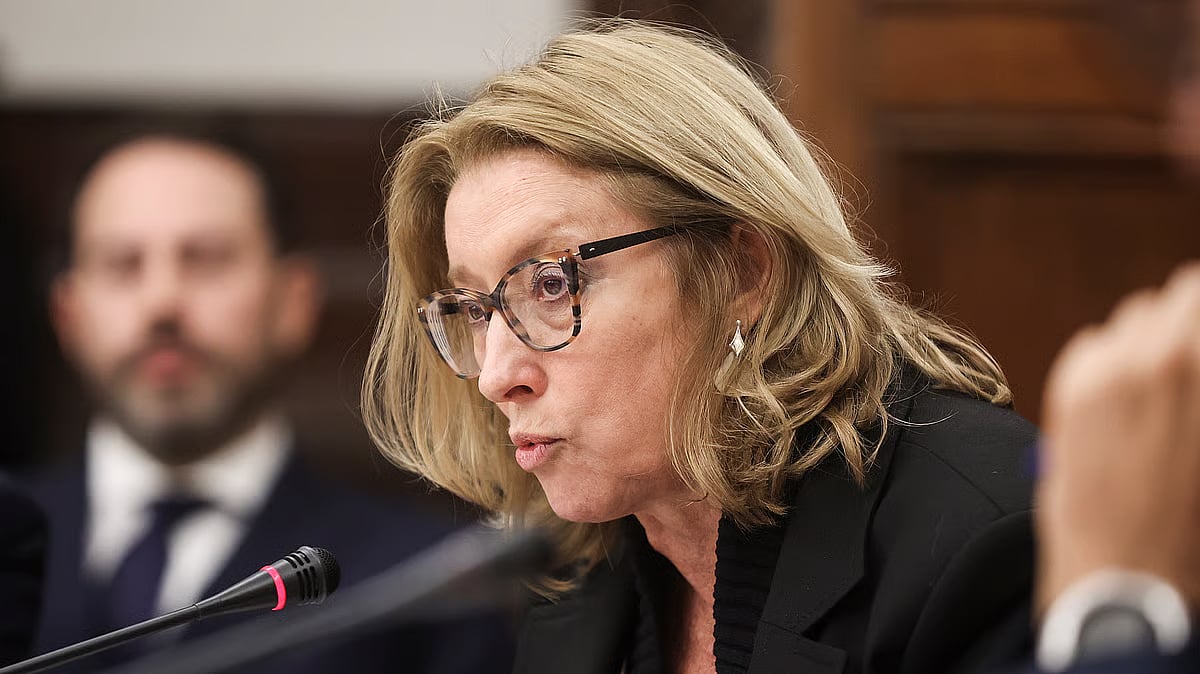
Chega party member accused of renting houses to immigrants in exclusive interview with CMTV
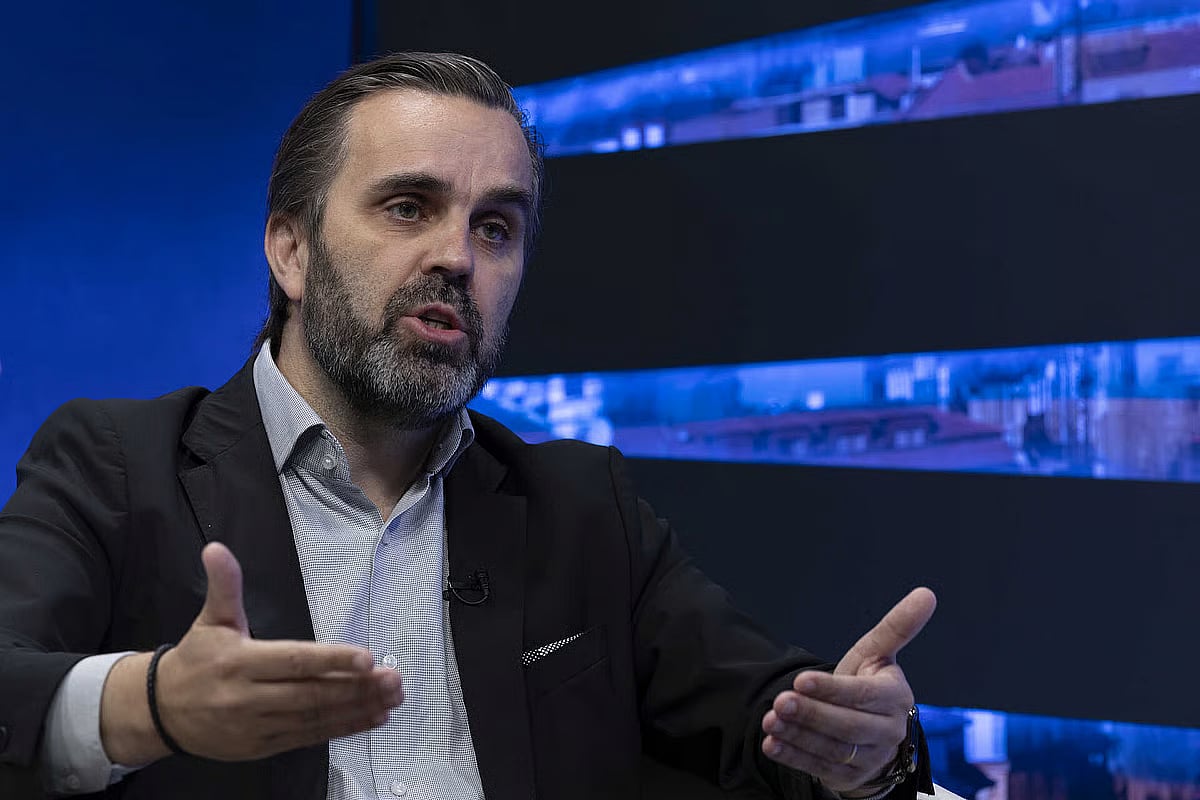
Mafalda Livermore, who was dismissed from the Lisbon City Council, responds for the first time on the Grande Jornal da Noite.

Latest news and stories about expat rights in government in Lisbon, Lisboa, Portugal for expats and residents.
Mafalda Livermore, who was dismissed from the Lisbon City Council, responds for the first time on the Grande Jornal da Noite.

The SOS Racismo movement has condemned the Chega party for displaying “anti-immigration propaganda” at the Futurália education fair in Lisbon. The party's stand, visited by leader André Ventura, featured posters comparing Portugal to Bangladesh and referencing the “Great Replacement” theory. Those attending the fair should note that the movement has called on the Ministry of Education to clarify the rules for political participation in events aimed at young people.

Chega ("Enough") is a Portuguese far-right populist party founded in 2019 by André Ventura. It positions itself as an anti-establishment movement against what it calls a "rotten and corrupt system" of PS-PSD dominance. The party surged from 1.3% in 2019 to 22.8% in May 2025, becoming parliament's second-largest force with 60 seats. Chega's core platform emphasizes strict immigration control—ending automatic CPLP residency, deporting non-independent immigrants, implementing job-market quotas, and requiring five-year social security contributions before benefit access. It advocates radical constitutional reform, including reducing parliament to 100 members, abolishing the prime minister position for a presidential system, and dismantling public healthcare. Law-and-order policies include life imprisonment and chemical castration proposals.
The party is defined by inflammatory anti-Romani rhetoric, with Ventura convicted multiple times for discrimination. Chega maintains international alignments with European far-right figures including Marine Le Pen, Santiago Abascal, and Matteo Salvini. Mainstream Portuguese parties, including Prime Minister Luís Montenegro's government, have imposed a cordon sanitaire, refusing coalition with Chega despite its parliamentary strength.

André Ventura, born January 15, 1983, is a lawyer, academic, and Portugal's most prominent far-right leader. He founded Chega ("Enough") in 2019 after his PSD mayoral campaign attacked the Romani community. Chega surged from 1.3% in 2019 to 22.8% in May 2025, becoming parliament's second-largest party and making Ventura Leader of the Opposition.
His platform emphasizes immigration restrictions, law-and-order policies, constitutional reform, and contains inflammatory anti-Romani rhetoric that has triggered multiple discrimination convictions and investigations. Politically classified as far-right by international media, Ventura cultivates alliances with European far-right figures including Marine Le Pen and Santiago Abascal.
He announced his 2026 presidential candidacy, polling at 18% alongside independent Admiral Gouveia e Melo. His rise ended Portugal's 50-year resistance to far-right parties.
The Agency for Integration, Migration and Asylum (AIMA) has begun accelerating the dispatch of residence permits renewed by the Mission Structure in the second half of 2025. An agency source told DN Brasil that approximately 20,000 documents have been sent to the Mint for issuance in recent weeks. This effort aims to clear the backlog, with at least 50% of all cards already dispatched. AIMA is prioritising this process ahead of April 15, when most renewal receipts expire. Additionally, the agency is addressing rejected applications and managing the collection of returned residence permits, with extended opening hours at the Anjos office to assist immigrants.
The Inspectorate-General also recommended that officials at the Bairro Alto police station verify detainee records. It conducted surprise inspections following allegations of torture against vulnerable citizens.

“By summer” is the new deadline for completing the hearing room where judges will be able to interview foreign nationals barred at Lisbon Airport. ANA - Aeroportos de Portugal states that the project is in the contracting phase and expects the renovation to be finished by summer. The room, proposed by the High Council of the Judiciary (CSM), is at least a year behind schedule due to bureaucratic delays and disputes over responsibilities between the police, the Ministry of Justice, and airport management. Currently, 1,867 passengers were denied entry in 2025, and the new facility aims to ensure that the legal right of these individuals to be heard by a judge is upheld more efficiently, preventing cases where people are deported before their legal proceedings can be completed.
Turn on your television right now and you will see scenes as Lisbon prepares for the swearing in of its new president, António José Seguro. The split-screen effect on some The post António José Seguro becomes Portugal’s new president appeared first on Portugal Resident.

Mafalda Guerra, a Chega activist, was dismissed following an RTP investigation that uncovered her properties being utilized as illegal housing for immigrants in Lisbon. The report raised significant concerns regarding the legality of the rentals and the implications for immigrant communities.

Carlos Moedas' executive considered that there had been “a breach of institutional trust.”

Appointed by Moedas to the City Hall's Social Services, she rents out houses in disgraceful conditions to illegal immigrants. She is the girlfriend of the Chega councillor.

The Brazilian consulate in Lisbon promotes actions in partnership with the Portuguese state against prejudice. The consulate offers psychological support and legal guidance to Brazilians in Portugal.

Appointed by Moedas to the City Hall's Social Services, she rents out houses in disgraceful conditions to illegal immigrants. She is the girlfriend of the Chega councillor.

More than a hundred people demonstrated in downtown Lisbon, organized by CGTP, to demand gender equality and oppose a labor package perceived to worsen women's working conditions. The protest featured slogans advocating for equal pay and rights, with participants highlighting ongoing disparities in the workplace. CGTP leaders emphasized the need for legislative changes to uphold constitutional rights for women, especially in light of the upcoming International Women's Day.
A military flight carrying 39 passengers, including 24 Portuguese nationals, has successfully arrived in Lisbon as part of efforts to evacuate citizens amid the ongoing conflict in Iran. In response to the situation, Portugal is contemplating a new repatriation flight from Saudi Arabia to ensure the safety of its citizens abroad.

This webpage provides a brief overview of recent news related to Portugal. Notably, a Portuguese tribunal cleared police officers of wrongdoing due to lack of evidence in a case involving Odair Moniz. Additionally, a case involving a couple filing a complaint against TAP airlines over their dog's travel restrictions is highlighted. The page also mentions the detention of a human trafficker in Lisbon, who is wanted in Hungary, and a statement from President Marcelo Rebelo de Sousa reflecting on years of cooperation with the government before a political transition. Overall, the content covers judicial, social, and political developments within Portugal.

The article reports that Portugal's national police director, Luís Carrilho, affirmed a zero-tolerance policy for police misconduct, emphasizing that no one is above the law, including police officers. He addressed recent allegations of severe abuse and violence at the Rato police station in Lisbon, which led to the detention of seven officers involved in serious crimes such as torture, assault, and abuse of power, primarily targeting vulnerable individuals like drug addicts, foreigners, and homeless persons. These incidents, some of which involved filming and sharing abuses via WhatsApp, are being thoroughly investigated by judicial authorities. The police leadership acknowledges these cases as exceptions and reaffirms their commitment to maintaining public trust and safety in Portugal.

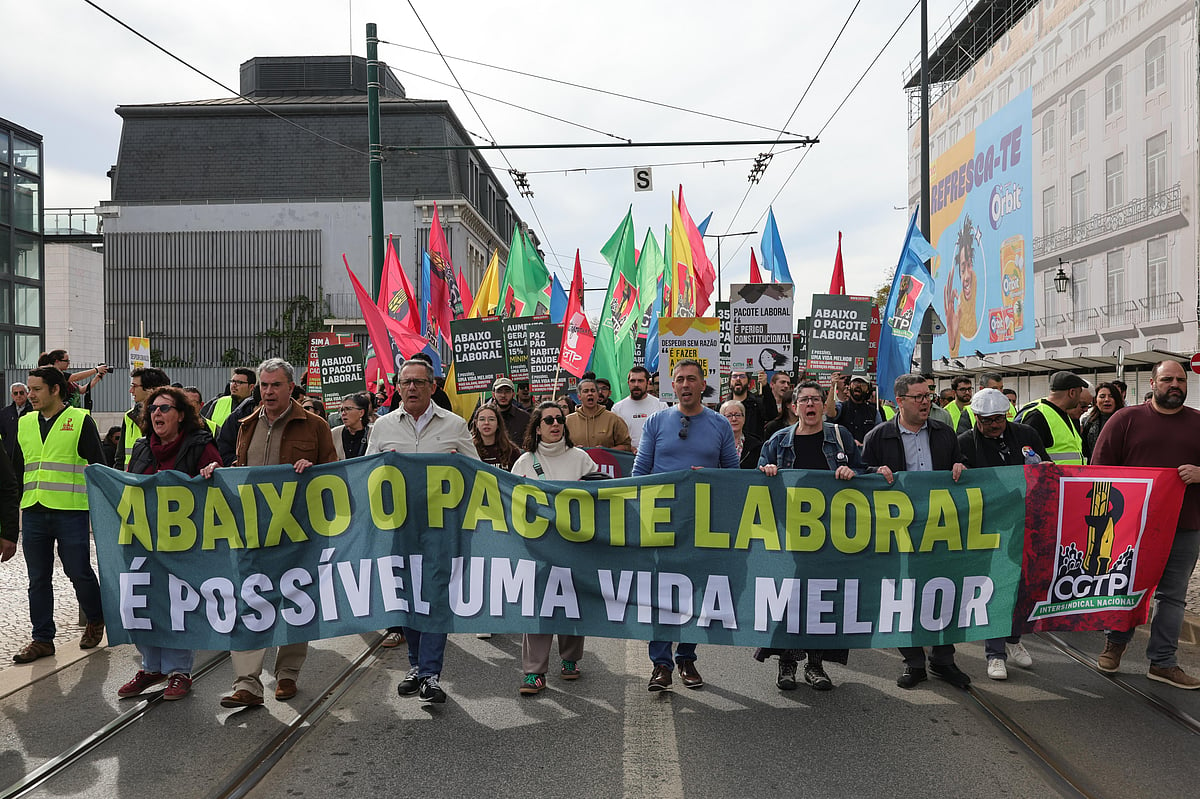
Thousands of demonstrators took to the streets in Lisbon and Porto to protest against the government's proposed changes to the labour law, known as the 'Work XXI' reform. Led by the CGTP union, the protests highlighted concerns that the reforms would negatively impact workers' rights. CGTP's Secretary-General, Tiago Oliveira, called for the government to withdraw the labour package, emphasizing its detrimental effects on the workforce.

Between Cais do Sodré and Rossio, thousands of demonstrators shouted against the changes to the labour law.

The Secretary-General of CGTP, Tiago Oliveira, emphasised that “this labour package is negative for the world of work and is negative for workers” and demanded that the Government withdraw it.

Thousands of workers protested in Lisbon against a new labor package, expressing their discontent with proposed changes to labor laws. The demonstration highlights significant opposition to the government's labor policies, reflecting broader concerns about workers' rights and conditions in Portugal.
The Lisbon City Council cancelled 6,765 local accommodation registrations, “equivalent to about 40%”, out of nearly 20,000.

The Minister of Labour will meet on Monday, 23rd, with UGT and four employer confederations to discuss changes to the labour law, in a meeting without the participation of CGTP. The meeting is scheduled for 9:30 AM at the Ministry of Labour, Solidarity and Social Security (MTSSS) in Lisbon. This gathering aims to assess the technical meetings that have taken place between the government, employer confederations, and UGT regarding the labour law changes being discussed in the Social Concertation framework, where CGTP is also represented. Last week, the Minister had called UGT and employer confederations for a meeting, but it was held without union representatives as CGTP was not invited and UGT announced it would not participate, deeming the meeting 'untimely'. An official source from the ministry indicated that 'UGT was invited and did not show availability at any time this week', but the government remains open to discussions with the union. In UGT's absence, employer confederations expressed their 'interest' in reaching an agreement on the labour law, stating that without the union's presence, 'in practice, there was no meeting' and they are willing to negotiate with the union starting this week. This was noted by Francisco Calheiros, president of the Tourism Confederation of Portugal (CTP), who spoke on behalf of the other three employer confederations. When asked about CGTP's absence, Calheiros declined to comment. The Secretary-General of CGTP accused the government of trying to exclude the inter-union from discussions on labour law changes and using methods of discussion 'completely outside' the usual negotiation processes. The draft reform, called 'Trabalho XXI', was presented by the government of Luís Montenegro (PSD and CDS-PP) on July 24, 2025, and the Minister has indicated the intention to submit the bill to parliament, although no date has been committed to. The changes proposed by the government in July were rejected by the unions, who view the changes as an attack on workers' rights. The opposition led CGTP and UGT to jointly call for a general strike on December 11, 2025. Employer confederations welcomed the reform but stated there is room for improvement. In response to criticisms from CGTP and UGT, the government presented a new proposal to UGT with some concessions but reiterated that it is not willing to withdraw the entire initiative or abandon the core elements of the announced changes. UGT submitted a counterproposal to the government on February 4 and indicated it has red lines on issues such as fixed-term contracts and outsourcing, which it considers 'unacceptable'.

Changes to the Municipal Regulation of Local Accommodation reduced the ratios from 20% to 10% in areas of absolute containment.

Moedas has secured an absolute majority with former Chega members, raising questions about the implications for Lisbon's political landscape and whether this shift marks the end of certain political red lines.

The Brazilian Consulate in Lisbon has initiated a campaign aimed at raising awareness and providing guidance on women's rights and combating gender-based violence. This initiative involves posting videos on social media twice a week, focusing on outreach and public safety for women.