Democracy with class
It was a very dignified ceremony, without incidents or lack of respect. Nowadays, this is not common.

Latest news and stories about government policy in culture in Lisboa, Portugal for expats and residents.
It was a very dignified ceremony, without incidents or lack of respect. Nowadays, this is not common.

The new era in Belém, with President António José Seguro, and the impact of Passos Coelho's interventions in the PSD were the topics of Vichyssoise. The guest was the former PS leader, Ascenso Simões.

António José Seguro has officially taken office as the 21st President of the Portuguese Republic, succeeding Marcelo Rebelo de Sousa, who was honored with the Grand Collar of the Order of Liberty on his final day.

The new President of the Republic entered Belém holding hands with his wife, son, and daughter. In his first hours as the new tenant of the official residence, he was decorated, hosted his first official lunch, and opened the gardens to the public who queued to enter.
The new President of the Republic, António José Seguro, today awarded his predecessor, Marcelo Rebelo de Sousa, with the Grand Collar of the Order of Liberty, following a tradition started by Jorge Sampaio.
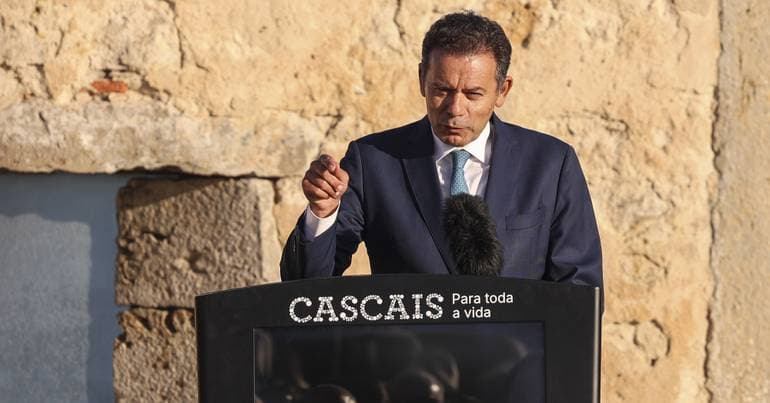
The Cascais PSD has officially handed over municipal portfolios to Chega, following a governance agreement approved by Chega's national leadership. The party, led by Ventura, will now oversee the portfolios for transparency and sports. In response, the Socialist Party (PS) has decided to return their portfolios in protest, marking a significant shift in the local political landscape.

The article critiques Carlos Moedas for his political maneuvers, particularly his secretive agreement with the far-right party Chega, which contradicts his public image as a reformist. It highlights the lack of transparency in his dealings and the implications for his governance in Lisbon, emphasizing that he can no longer blame external factors for inaction. The piece calls for Moedas to focus on effective governance rather than personal political ambitions, as he now holds a majority that was not directly granted by the electorate.

Portugal is seeking to enhance its appeal to Middle Eastern investors, particularly from Qatar, by shifting its marketing strategy beyond just its favorable climate. In Doha, representatives from Startup Portugal are engaging with local entrepreneurs to promote investment opportunities in the country.

REPORT || Before the speeches there was already politics — it was unfolding in the buffet queue. A veteran editor spoke of 'democrats and non-democrats', a writer reminded people that culture exists to avoid demonising the other, and a still-hoarse candidate moved from table to table as if gauging the country by the firmness of each handshake. In Beato, Lisbon, amid chilli with no heat, Dão wine with no bite and a mousse that was far too sweet and crying out for kiwi, António José Seguro's campaign spent the day rehearsing an old question, with Natália Correia in the background: when democracy tightens, who stays seated at the table?

On the first day of the campaign, António José Seguro will be in Lisbon with figures from the cultural sector. The two candidates begin the election campaign after the sole televised face-to-face debate.

Carlos Carreiras, former mayor, and Pedro Adão e Silva, former Minister of Culture, began negotiations for a project with a different profile for the CACE Centre.

Signatories respond to Margarida Bentes Penedo, who criticised the programming of the Teatro do Bairro Alto and called for a 'right-wing cultural policy' at the Lisbon Municipal Assembly on 13 January.

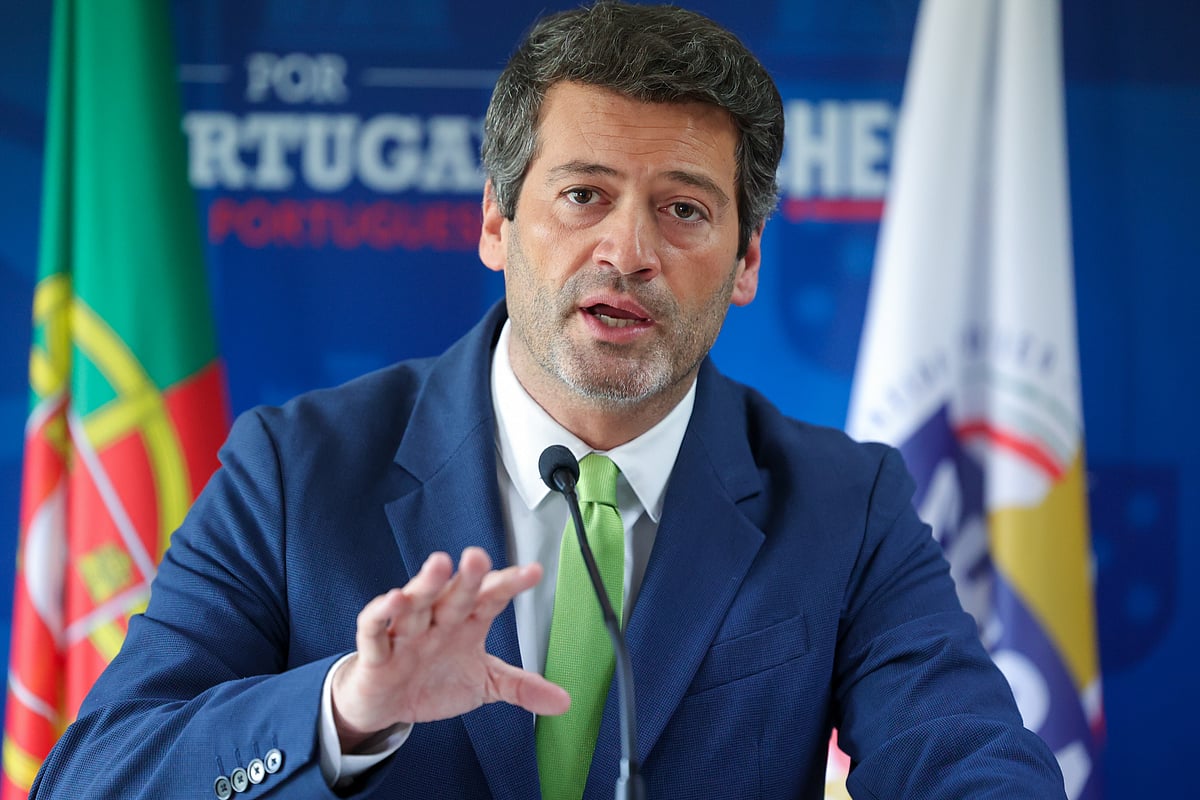
André Ventura returned to the campaign trail in Sacavém after advancing to the second round, challenging António José Seguro to more debates and accusing him of preparing to avoid direct confrontations. Ventura said he was astonished that several right‑wing and establishment figures were endorsing Seguro — whom he claims is ‘running into the arms of the Socialist Party’ — but stressed that such endorsements do not matter to him and that only popular support counts.
André Ventura kept one of the campaign traditions and made the customary walk down Chiado on the last day before the election. Confident of victory on Sunday, the Chega candidate already issued challenges ahead of the second round, urging the PSD and the Liberal Initiative not to stand in the way of a final showdown with António José Seguro.

Foreign Minister Paulo Rangel visited the headquarters of the Community of Portuguese Language Countries (CPLP) in Lisbon.

The União dos Blocos has highlighted delays, breakdowns in dialogue and a lack of guarantees from the Lisbon City Council regarding the parades scheduled for February 2026.

The Foreign Minister of Timor-Leste travels to Lisbon today on a working visit to discuss Timor-Leste's presidency of the Community of Portuguese Language Countries (CPLP) and the situation in Guinea-Bissau.
The President of Estonia postponed his visit to Portugal until the end of the electoral period and, therefore, the President of the Republic voted this morning at the Faculty of Letters of the University of Lisbon. Speaking to journalists, Marcelo Rebelo de Sousa emphasised the importance of mobile voting, a “very significant advance for democracy”.

A glass of gin in hand, beach-bar music on the speakers and a thousand people registered, according to the organisers. At Cotrim de Figueiredo's rally in Lisbon, the candidate offered a 'rather scant' assessment of the country and presented himself as the President of optimism and hope. Júdice added that Cotrim would be an 'accelerator of reforms' from Belém. And they're already talking about a second round.

Municipal councillors from the Socialist Party denounce the “erosion of the rule of law” in the United States of America and the “escalation of repression” under the administration of Donald Trump.
A collection of highlights from the sixth day of the campaign as it moves towards Belém, shown in short moments (photos or video clips).

One morning, a raid by a special force of the imperialist power cut the electricity in Lisbon, isolated the São Bento Palace and removed the Portuguese dictator, who was caught in his bedroom with the housekeeper. Opinion by Pedro Adão e Silva