State pays €150,000 to family of Oleiros worker who died fighting fire
The case dates back to 2017. The driver of a tracked vehicle died after the vehicle he was operating rolled over while combating a forest fire that had broken out near Cardal.

State pays €150,000 to family of Oleiros worker who died fighting a fire
The case dates back to 2017. The operator of a tracked vehicle died after the vehicle he was operating overturned while fighting a wildfire that had broken out near Cardal.
Left Bloc questions Government over support for Savannah
The company expects to begin construction this year. The Left Bloc says it views the Government's support with 'deep concern' and challenges the Executive to produce the contractual documentation.

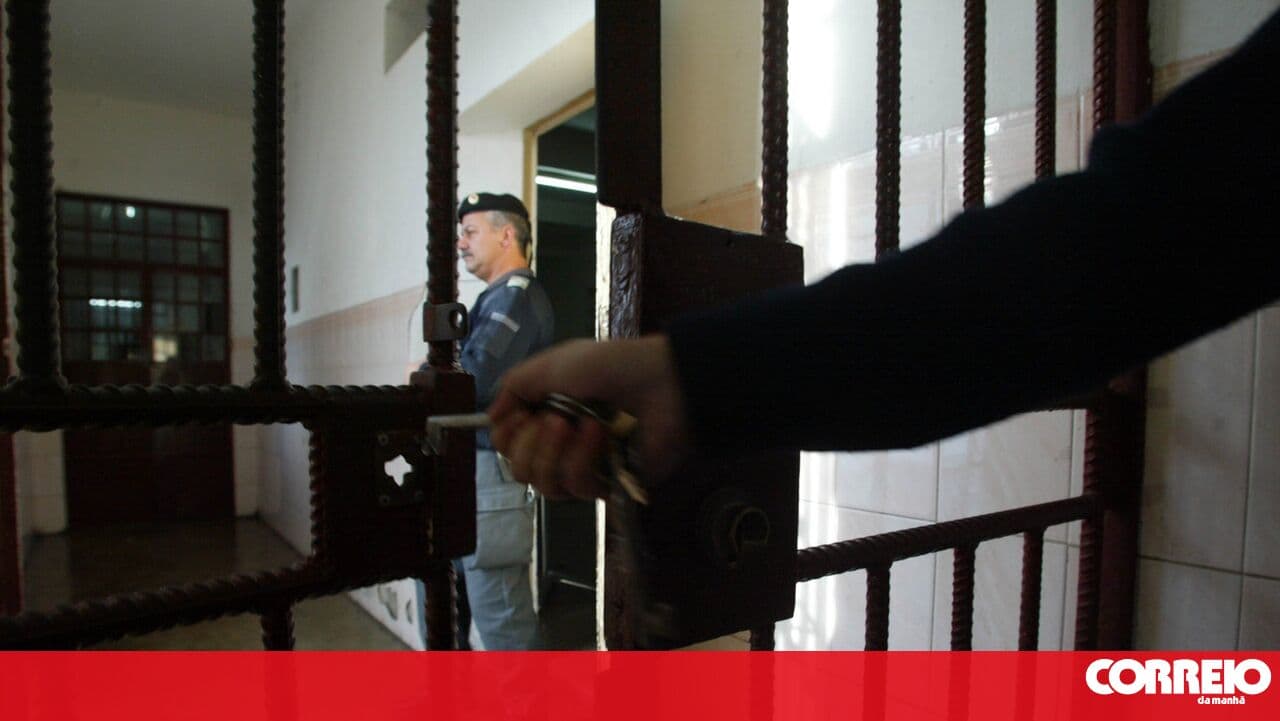
State paid around €1.5 million in compensation to prisoners
In recent years, the State has upheld several prisoners' complaints about conditions in Portuguese prisons. Some of the compensation payments under review range from €12,000 to €144,000.

Portuguese state paid around €1.5 million in compensation to prisoners since 2016
Lawyers for the inmates are demanding that the State compensate prisoners €1,000 for each month spent in inappropriate detention conditions until a comprehensive intervention in the prisons is carried out.
Manuel Serrão declared insolvent with millions in debts and no assets or money
The former sports commentator was accused of being the mastermind behind a scheme to fraudulently use EU/community funds that cost the State €42 million.

Refund of tuition fees remains uncertain. Listen to the 'Ao trabalho!' podcast
The latest episode of the weekly podcast 'Ao trabalho!' examines lingering uncertainty over tuition fee refunds and the implications for pay awards that recognise qualifications. Finance Minister Joaquim Miranda Sarmento’s response on the pay-award question is discussed alongside fast-moving items on labour policy, employment law and the state budget, with analysis of what these developments mean for workers and expats. The short, under-five-minute episode aims to distil key takeaways and policy consequences for those following workplace rights and public spending.

Will 'letting things slide' be the main idea for the reform of the State?
By Carlos Rodrigues

New ANMP leadership raises concerns with the Government over the law on local finances and decentralisation
The leadership formally presented to the Government the main resolutions that municipal leaders approved at a congress.

South Korea managed to prevent Lone Star from applying the strategy used at Novo Banco
Thirteen years after the US fund Lone Star used a strategy to monetise a state-backed bank stake in Portugal (Novo Banco) — reportedly pocketing about €5bn while exiting without major penalties — South Korea intervened to stop the same playbook from succeeding at a Korean bank backed by public support. The episode highlights divergent regulatory outcomes across jurisdictions: stronger Korean safeguards and political scrutiny protected the public interest and state budget, while Portuguese arrangements enabled a lucrative, low-accountability exit for a private investor. The contrast underscores how supervision, takeover rules and fiscal exposure shape investor returns and public risk in cross-border bank restructurings.

2026, the year of (un)expected political stability
São José Almeida argues that political stability in Portugal in 2026 is not guaranteed: the next occupant of Belém Palace may refuse to follow Marcelo Rebelo de Sousa’s de facto rule that a rejected State Budget should automatically lead to elections. That shift in presidential interpretation would alter the incentives around budget votes, policy-making and election timing, introducing renewed uncertainty into the political landscape.

Radio debate: the first of the year and the only one with eight candidates
The President's action if the state budget is rejected, Belém's intervention in the judiciary and the presence of Portuguese troops in Ukraine were among the topics in the only debate between the eight main candidates.

Ten visions for 2026: from the global context to internal reforms

What can we expect for 2026? — Debate
2026 is just around the corner and questions are starting to emerge about what to expect. Will the State Budget be approved? Who will succeed Marcelo? Will the Public Prosecutor's Office remain at the centre of controversy?

2026: The dice have been cast
2026 is just around the corner. Will the State Budget (OE) be approved at the end of 2026? Will Chega appeal to the Constitutional Court (TC)? Will the Public Prosecutor's Office (MP) continue to be at the centre of controversies? And who will succeed Marcelo, and how could that choice shape the future?
Campaign budget: candidates expect to spend close to €5.5 million
Presidential candidates expect to spend nearly €6 million in this electoral campaign. The Constitutional Court has already published the budgets submitted.

2026 Seen from the Parliamentary Benches

André Ventura demands that Gouveia e Melo provide explanations about his investigation
The leader of Chega stressed that “if there is a judicial investigation that involves public money and involves adjustments, it must be explained by the candidate himself.”

Marcelo promulgates decree on budgetary simplification
The President of the Republic, Marcelo Rebelo de Sousa, promulgated on Tuesday the decree that sets out a series of rules relating to the financial, asset and human resources management of the public administration, with the aim of budgetary simplification. "The step taken by the State Budget towards simplification and the removal of provisions that, traditionally, ...
TAP directors risk personal assets and prison sentence if the SGPS is culpably insolvent
TAP’s directors could be held personally liable — risking their own assets and potential imprisonment — if the airline’s holding company (SGPS) is found to have become insolvent through culpable conduct.

Former aide to an ex-minister accused of paedophilia defended company that owes €765,000 to the State
A company that intended to produce oil from the cannabis plant did not return the incentives after abandoning the project. Paulo Abreu dos Santos justified the non-payment of the debt by citing “the Covid-19 pandemic and the outbreak of the war in Ukraine.”

The liquidation of Banif was virtually at a standstill and is still expected to take years
Banif has €50 million to distribute to creditors, but the State is expected to take it all. Oitante pays more dividends to the Resolution Fund. Santander reports a positive assessment of the bank's integration.

The "hunt" for presidential candidates' incomes
It is Marques Mendes' turn to be questioned about amounts he must justify. And also: Lisbon's budget has been approved — but will anything change?

18h Rules rejected by the Constitutional Court. Law returns to Parliament
The Constitutional Court has rejected certain rules, prompting the law to be sent back to Parliament for further consideration.
