New immigration and asylum law officially promulgated
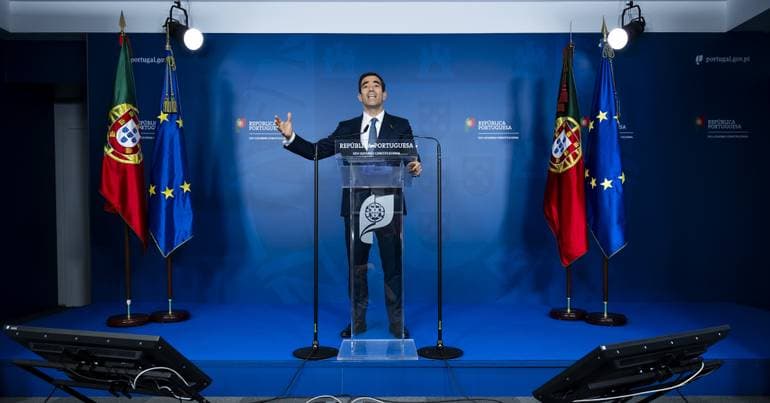
President of Portugal António José Seguro has officially promulgated the country's new immigration and asylum legislation. The law, which aligns with the European Union's Migration and Asylum Pact, introduces stricter rules for entry, residence, and detention. Prime Minister Luís Montenegro also confirmed that the government is closing loopholes that previously allowed tourists to regularise their status through vocational training or school enrolment.

- President of Portugal (since March 9, 2026)
- Party: Independent. Former leader of the Socialist Party (PS), Partido Socialista
- Center-left
António José Martins Seguro (born March 11, 1962, in Penamacor) is a lawyer, political scientist, and the current President of the Portuguese Republic, inaugurated on March 9, 2026 after winning the two-round presidential election in January–February 2026.
Career: He led Socialist Youth (1990–1994), served as MEP (1999–2001), was Minister Adjunct to PM António Guterres (2001–2002), and led the PS parliamentary group (2004–2005). Elected PS Secretary-General in 2011 with 68%, he led the opposition during Portugal's bailout era. In 2014, António Costa defeated him in party primaries by a landslide, prompting Seguro's resignation and a decade-long retreat from politics. He returned in 2025, launching the movement UPortugal and announcing his presidential candidacy in June. He received official PS backing in October 2025 and won the presidency in February 2026.
Political philosophy: Seguro positions himself as representing a "modern and moderate" left, advocating financial responsibility while opposing austerity. As President, he has emphasized institutional trust, efficient governance, and a collaborative relationship with the government while maintaining rigorous constitutional oversight.

- Prime Minister, Portugal: 2024 - Present
- Party: Social Democratic Party (PSD)
Luís Filipe Montenegro Cardoso de Morais Esteves (born February 16, 1973, in Porto) is a Portuguese lawyer and center‑right politician who has served as Prime Minister of Portugal since April 2, 2024. A long‑time member of the Social Democratic Party (PSD), he is the leading figure of the post‑Troika generation of Portuguese conservatives. Montenegro was elected to the Assembly of the Republic in 2002 for the Aveiro district and remained an MP for 16 years, becoming PSD parliamentary leader from 2011 to 2017 during the bailout and austerity period under Prime Minister Pedro Passos Coelho. He was a prominent defender of strict austerity measures, arguing in 2014 that “the life of the people is no better, but the life of the country is a lot better,” a phrase that has followed his public image since. After an unsuccessful leadership bid against Rui Rio in 2020, Montenegro won the PSD leadership in 2022. He then forged the centre‑right Democratic Alliance (PSD–CDS‑PP and allies), which won a plurality of seats in the 2024 legislative election. Refusing to partner with the far‑right Chega, which he has called “often xenophobic, racist, populist and excessively demagogic,” he formed a minority government as head of the XXIV Constitutional Government on April 2, 2024. His first government fell in March 2025 after a no‑confidence vote linked to a conflict‑of‑interest affair, but fresh elections saw the Democratic Alliance increase its seat share, allowing Montenegro to return as prime minister leading the XXV Constitutional Government. His importance to Portugal lies in attempting to re‑center the traditional centre‑right after the crisis years, defending liberal‑conservative economics and EU alignment while drawing a sharp line against formal cooperation with the radical right, thus shaping how Portuguese democracy manages its new multi‑party era.