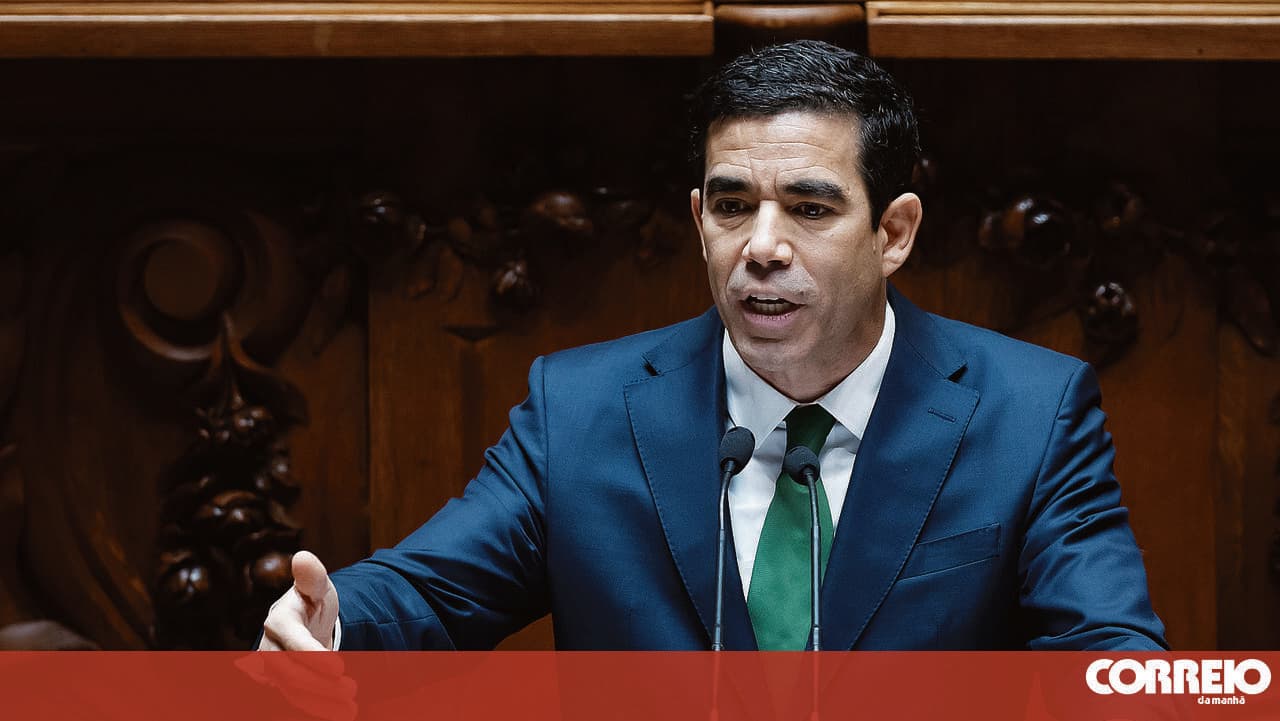
The author reflects on the dangers of complicit silence, referencing Martin Niemöller's famous warning to highlight how far-right rhetoric and divisive politics erode rights. The text criticises the Portuguese centre-right for adopting extremist agendas, starting with restrictive immigration policies that harm the economy, and moving on to proposed legislation that targets the rights of trans youth. It warns that this pattern of creating enemies and stripping away rights will inevitably lead to further attacks on workers, women, and reproductive rights, urging society to reject the politics of hate and division.
Unlike Portugal, Italy and Spain are opening their doors to the legalisation of immigrants. In Portuguese lands, those who could be working for the benefit of everyone and the economy are being expelled. Opinion by Carlos Vianna.
CHEGA is back in the ‘headlines’ this week after its youth arm (Juventude CHEGA) took part in “the nation’s largest educational fair” with a stand that pushed the party’s vehement The post “Smile we are being substituted” – outrage as CHEGA embarks on new initiative appeared first on Portugal Resident.
The rejection of the Chega proposal was (almost) consensual across the left and right, with all parties pointing out constitutional issues and accusing the far-right of resuming its “usual obsession” with immigrants to advance a “culture war”. Only the CDS defended the merit of the discussion.
Starting April 17, 2026, Portuguese authorities will require Brazilian visa applicants to submit their applications in person at designated Visa Application Centres or Portuguese embassies, ending the previous postal submission option. This change aims to enhance security, streamline processing, and incorporate digital tools like biometric verification and real-time tracking. Applicants may face challenges such as increased travel for in-person submissions and potential appointment backlogs, especially during peak periods. Overall, the new process seeks to improve efficiency and security in visa handling for Brazilian nationals traveling to Portugal.
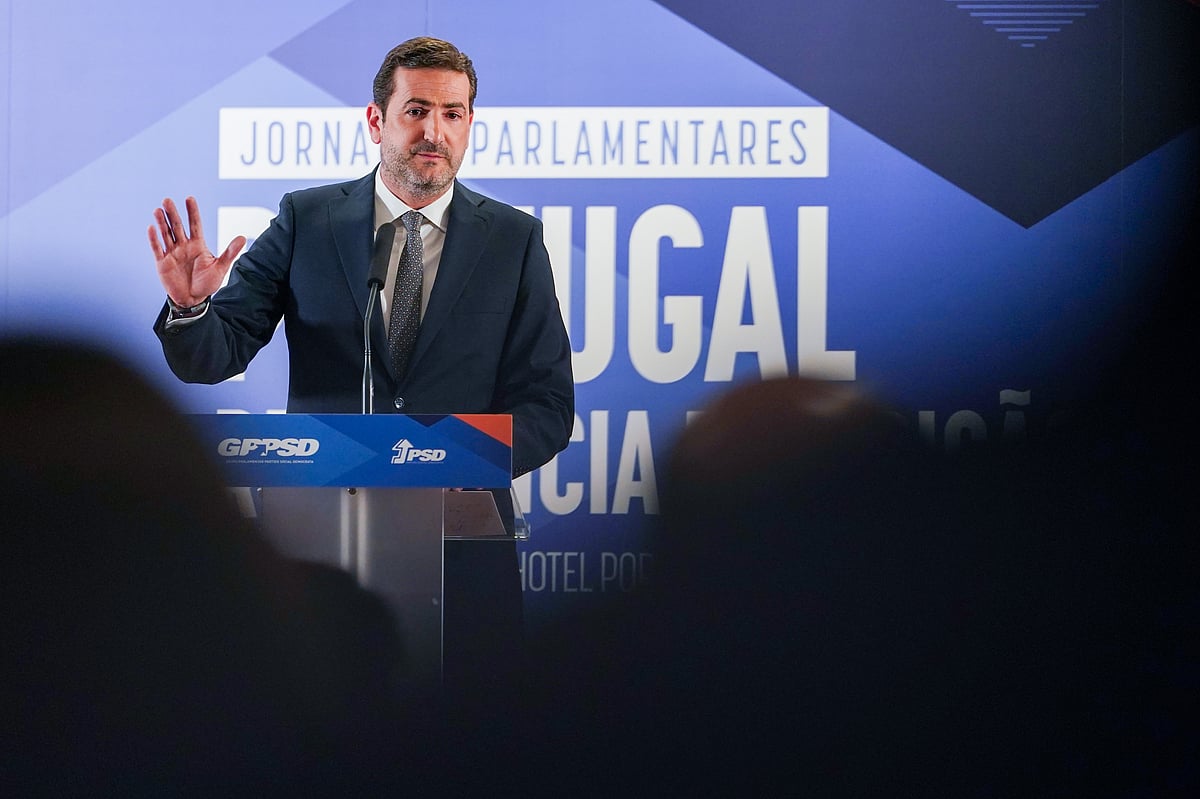
The PSD parliamentary leader argued that the Government has been carrying out a “quiet change” for two years, with the “support of the Portuguese people,” which he described as “devoid of ideology,” neither left nor right. Hugo Soares was speaking at the opening of the PSD parliamentary sessions in Caminha, attended by the Minister of Parliamentary Affairs, Carlos Abreu Amorim. The PSD official noted that today marks two years since the victory that returned the party to government, highlighting progress in health, education, and housing. Addressing recent criticisms from former Prime Minister Pedro Passos Coelho, Soares maintained that the current executive's reforms have public backing. He stated that if he is called a “dangerous leftist” for increasing social support for the elderly or a “right-wing populist” for regulating immigration, he does not mind. The government is also shifting its migration strategy by increasing visas issued at consulates while reducing applications made within the country.
Portugal's immigration authority is investing €800,000 to expand housing for irregular migrants due to a European Union requirement. The plan involves adding 80 beds at the Porto facility, which currently has 29 beds. This expansion is a stopgap measure, as Portugal lost funding for the construction of two new facilities and will not meet the EU's deadline to have dedicated accommodation centers with at least 300 beds by June 12th. The government is preparing a public tender to address the shortage of accommodation. The new centers are intended to provide temporary housing and detention facilities for migrants.
The article discusses the use of the term 'humanism' in government immigration policies, highlighting the contrast between benevolent rhetoric and restrictive practices. It emphasizes the need for genuine humanist approaches in immigration, particularly in light of contributions immigrants make to society. The appointment of Luís Neves to the Ministry of Internal Administration is seen as a potential turning point in addressing anti-immigration sentiments, particularly those rooted in economic and crime-related fears. The article calls for a more comprehensive and courageous political approach to combat identity fears associated with immigration.
The appointment of Luís Neves to the Ministry of Internal Administration is primarily a gesture of political intelligence by Prime Minister Luís Montenegro. Not only does the former National Director of the Judicial Police (PJ) have a deep understanding of the state's most sensitive dossiers, but his nomination also breaks a trend followed by the government over the past two years: the temptation to adopt the security rhetoric that has characterised Chega's discourse, particularly regarding immigration. Luís Neves' entry into the government signifies a change in direction and a renewed focus on effectiveness and implementation. It is worth recalling a moment from 2025 when Neves, then the National Director of the PJ, asserted that there is no causal relationship between increased immigration and rising crime, a statement that contradicted the prevailing narrative in public debate. Today, this same stance is expected to take centre stage in internal security policy. Although Neves has never been a formal politician, he has demonstrated qualities of a competent politician, such as clarity, sobriety, and a remarkable ability to build bridges between people and entities that do not always understand each other. This ability will be tested in his greatest challenge: reforming Civil Protection. It is not enough to revise laws; it is essential to ensure that the system operates effectively on the ground and that entities like firefighters, security forces, the Agency for the Integrated Management of Rural Fires, the Portuguese Environment Agency, and the Armed Forces communicate and act with a common purpose. Additionally, he faces critical tasks such as managing the fight against wildfires and replacing the controversial SIRESP communication system, which has proven to work only when it is not needed. What is expected of Luís Neves is to replicate in the Ministry of Internal Administration what he accomplished in the PJ over two decades: to build coherent strategies, unite teams that were not initially inclined to cooperate, and instil public confidence that the state can handle the crises it faces. In a ministry where public perception is as important as operational effectiveness, the ability to communicate calmness and precision may prove as decisive as any structural reform. The only potential issue with this choice is that Luís Neves arrives at the Ministry of Internal Administration with exceptionally high expectations, which could be counterproductive. The future will reveal whether he can meet these expectations in a role that has been particularly challenging in recent years.
Home News AIMA delays harm the Portuguese economy AIMA delays harm the Portuguese economy Speaking to Público, economist José Roberto Afonso warned that delays in regularising immigrants and measures taken by other countries to attract them could reduce the rate of social security tax collection
Marcelo Rebelo de Sousa has called for the establishment of an 'entry channel' for immigrants to provide the necessary workforce for rebuilding homes and businesses in the country. This proposal aims to address labor shortages and facilitate the integration of immigrants into the job market, raising questions about government policy and its willingness to adapt to these needs.
I am proud to have campaigned for motions adopted at the convention that reaffirmed the liberals' humanist stance on immigration, nationality, equality and the fight against hate and discrimination. Opinion by Sandra Pimentel
PS leader José Luís Carneiro condemned Government claims that Portugal has 'open borders' as a 'lie told a thousand times', arguing the country never had open borders, rejecting any link between immigration and insecurity, and challenging the Government to a serious debate on immigration policy.
Washington recently suspended the issuing of visas for immigrants from the island. Vanusa Barbosa, Secretary of State for Cape Verdean Communities, says the population is “apprehensive”.
Prominent European far-right figures — including Marine Le Pen, Matteo Salvini, Geert Wilders and Viktor Orbán — have publicly congratulated Portuguese politician André Ventura on his electoral performance.
Home News Portugal pays for not accepting migrants Portugal pays for not accepting migrants The Government has decided to pay €8. 4 million to the European Commission for its refusal to accept 420 asylum seekers from other member states.
A team from the European Commission is in Lisbon from Monday to Wednesday to carry out an “unannounced” assessment of security conditions at Portugal's air and maritime borders, as reported by the Internal Security System (SSI). According to the SSI, this “unannounced” assessment by the European Commission particularly focuses on the posts of ...