The committee's objective is to track, monitor, and evaluate the response being provided on the ground and to allow for an acceleration of the public response, according to the Social Democrats.
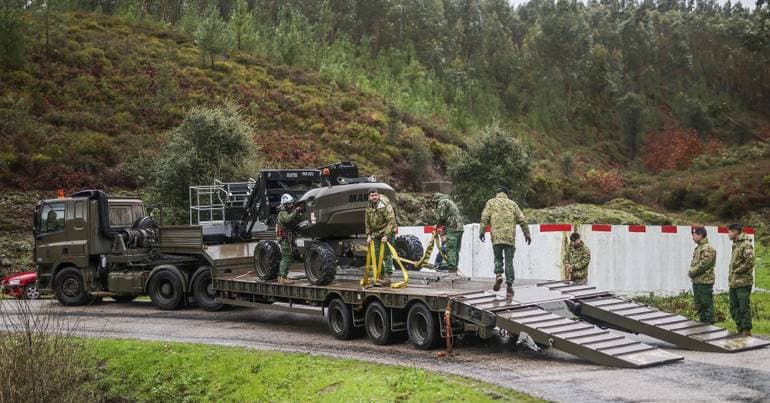
The mayor did not respond to Nuno Melo's phone call or message, but the minister guaranteed that military aid went ahead regardless. Gonçalo Lopes refused to get involved in controversies over phone calls and thanked the Armed Forces for their work.
This is the estimate from the Secretary of State for Portuguese Communities. Emídio de Sousa added that another hundred are arriving this Tuesday on an Emirates flight.
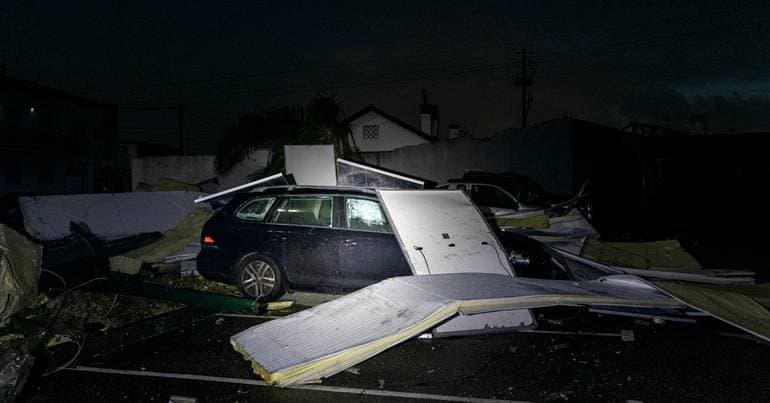
Storm Kristin and the extremely rainy days that followed devastated the country, particularly affecting the districts of Coimbra and Leiria. In this context, when asked, a representative from Civil Defence and Protection denied any failures in their service. Days later, the Minister of Internal Administration, who has since resigned, stated that the situation was extremely complex and that there was much to learn. Any attentive reader knows this. What they may not know is that studies have been conducted on the relationship between the quality of management processes and such attitudes. When comparing countries, there is a strong negative correlation between the self-sufficiency of those who believe they have nothing to correct or learn and good management practices. Conversely, in countries where managers are more (self)critical and believe there is room for improvement, we find exemplary management processes and continuous improvement, thus perpetuating international leadership. These results apply to private companies as well as public entities. Cultural differences reflect in productivity and GDP per capita: as you might have guessed, generally, the wealthier countries are those where managers are less complacent, more committed to self-improvement, and do not seek systematic excuses outside the business context. Complacent stagnation tends to be associated with protectionist institutional frameworks that limit competition, with the State acting as a zealous defender, ready to support so-called struggling sectors, with no other criterion than trying to maintain the status quo. What is, is good! Evidently, it can always get worse when responsibilities in Public Administration are assigned not based on merit, but on party affiliation. This is not the path to State reform. If all this sounds familiar, it is because it is... A good sign came from Graça Carvalho, who, upon learning of an extravagant appointment, took a shortcut. The exception that proves the rule?
Portugal faced severe challenges from January 28 to February 15, 2026, due to successive storms that revealed the country's vulnerabilities and lack of preparedness for such crises. The government introduced the Portugal Transformation, Recovery and Resilience Programme (PTRR) as a response, but questions arose about the state's absence during critical moments. Despite past crises, including wildfires and floods, lasting solutions were not implemented. Immediate and concrete measures are needed, including support for farmers, toll exemptions, and property tax relief in affected areas. The government’s reluctance to adopt a Rectifying Budget is criticized, as billions in losses threaten businesses and families. The PTRR must translate into real action, and a permanent disaster response fund is essential to avoid starting from scratch after each storm. The article emphasizes the need for political courage and a commitment to support those affected, arguing that the state must not fail its citizens during crises.
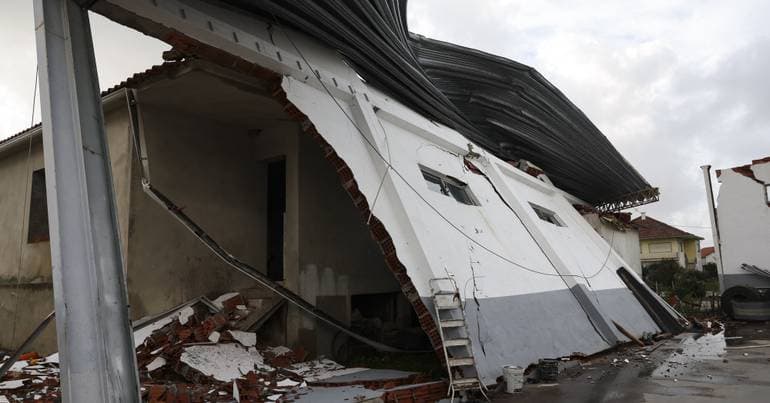
After the most distressing days following the series of storms that hit Portugal starting January 28, with the depression Kristin followed by Leonardo, Marta, and Nils, and as the most affected areas begin to recover—a process that will take months to complete—it is time to highlight some of the personalities who were on the front lines during the most problematic days, rather than retreating into 'learning moments' and desk work. While it is impossible to mention everyone who helped the communities from the outset and raised awareness of the difficulties they faced, there are a few commendations to make. The mayor of Coimbra, Ana Abrunhosa, has been a prominent figure in her region, demonstrating great communication skills and explaining her decisions clearly. This attitude earned her praise from the President of the Republic, Marcelo Rebelo de Sousa, who remarked, 'She was always tense.' Another mayor who gained media exposure was the president of Leiria, Gonçalo Lopes, whose region suffered the most from the depression Kristin, causing millions in damages and leaving thousands without electricity and many homes and businesses without roofs. He was also present from the start, addressing the issues faced by his constituents, and had to listen to former Minister of Internal Administration, Maria Lúcia Amaral, state that she did not know 'what went wrong' in the prevention and subsequent support for affected populations, adding that this situation was a 'collective learning experience.' Those who saw the television images also noted the mayor's surprised expression. His commitment to the population was expressed in an interview published in Diário de Notícias on the 12th, where he emphasized, 'I will leave this fire station when everyone in Leiria has electricity.' This has not yet happened. Lastly, attention goes to the Minister of Environment and Energy, Maria da Graça Carvalho, who, alongside the Prime Minister, was the most visible government official on the ground. While the management of dams and water flows is the responsibility of the Portuguese Environment Agency, she was present in the affected areas, spoke with people, and made decisions. Although she did her job, compared to other government members, she ends up receiving praise.
The storms that hit the country are yet another example of extreme climate phenomena that will become part of the new normal. We will increasingly have to deal with these realities, preparing better, reacting effectively, and adopting almost permanent reconstruction habits. This requires national management complemented by local authorities, public institution leadership with civil society involvement, emergency actions combined with medium-term interventions. In Lisbon, we first offered solidarity to severely affected regions, then alerted the population, limited risks, and protected critical areas. Immediate restoration interventions were launched, and we will recalibrate multi-year investments to adjust plans to new realities. The ongoing structural investments, such as the General Drainage Plan, have already shown containment effects during this crisis. However, this context should prompt the Portuguese to reflect on fundamental issues, including the effectiveness of our economic model and the quality of our institutions. We need robust infrastructures, installed capacities, and efficient response mechanisms, as well as ambitious, sustainable, and financeable investment plans. We must integrate the best contributions from academia, the private sector, and civil society to effectively address the structural challenges posed by new realities, ensuring that strategic planning is not merely an accessory but a necessity for good governance.
The article discusses the systemic failures of Portugal's infrastructure, particularly highlighted by recent storms that exposed coordination failures and decades of under-investment. It argues that the lack of redundancy in critical infrastructure leads to simultaneous failures in essential services, undermining the state's ability to protect its citizens. The author emphasizes the need for structural change in political decision-making and investment strategies to ensure resilience against future disasters, warning that the current approach prioritizes short-term savings over long-term security.
The European Commissioner for Agriculture and Food, Christophe Hansen, visited flood-affected areas in Portugal and confirmed that the European Commission will provide urgent support this year. However, he acknowledged that the 450 million euros from the agricultural reserve are insufficient to cover the extensive damages caused by the floods. Hansen indicated that alternative funding mechanisms may need to be considered, as other European regions are also facing severe weather challenges. He reassured farmers that they will continue to receive subsidies from the Common Agricultural Policy despite production losses and emphasized the importance of protecting Portugal's agricultural output for European food security.
The Navy has 47 boats “ready and positioned” to provide immediate support to the population in riverside areas at risk of flooding, announced this branch of the Armed Forces today.
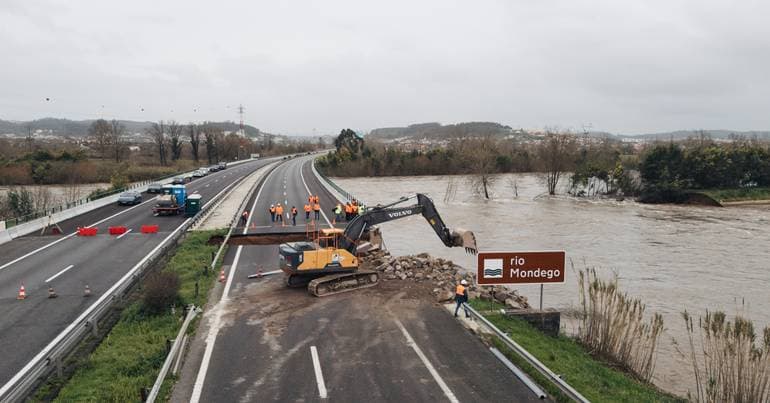
After visits to Coimbra and Montemor-o-Velho, the Prime Minister warns of the need to “maintain total and absolute vigilance” in the coming hours following the breach of a dyke.
The President of the Republic considers it premature to assess the damage while the water has not fully receded. Marcelo Rebelo de Sousa argues that the priority is to normalise the situation and support the recovery of homes, businesses, and lives affected.
The mayor of Alvaiázere says the Government's support measures for areas affected by the bad weather are “a good start”, but does not know whether they will be sufficient. Around 60% of the municipality's population already has electricity.
Around 1,200 Army personnel and 222 vehicles are on the ground conducting operations to support the population of the Centro region. For the municipality of Leiria alone, three platoons have been deployed.
Chega today requested an urgent parliamentary hearing of the Minister of National Defence regarding the deployment of Armed Forces personnel to support the population after Storm Kristin, deeming the response “manifestly insufficient” and criticising the Government.
The removal of the large crane that fell in the early hours of Monday in Figueira da Foz, on the coast of the Coimbra district, is expected to be completed by Wednesday, a municipal source told the Lusa news agency.
The local authority explains that the scale of the damage makes immediate restoration across the whole municipality impossible, but assures that every effort is being made to fully restore power.
Luís Montenegro will meet with the head of the task force for the reconstruction of the central region in Pombal. Also in this bulletin, the death toll following Storm Kristin rose to 10.
The platform allows users to submit photographs of damage, particularly to private homes, the municipality says. Reconnaissance flights also help Leiria to document the incidents.
The PS secretary-general today proposed creating a national programme for recovery, stabilisation and climate resilience to respond to the impact of Storm Kristin, and asked for the state of calamity to be extended by between three and six months.
Bruno Batista highlights the extensive destruction in Leiria, with thousands of homes damaged and hundreds of factories affected, describing the scene as “dantesque.” The CNN Portugal commentator criticises the lack of leadership and logistics, saying there are still areas without electricity and communications and that communities need a “voice of command” and an effective presence of the central government on the ground.