3.1 magnitude earthquake on the Richter scale felt on Terceira Island
A 3.1 magnitude earthquake was recorded on Terceira Island, marking continued seismic activity at the Santa Bárbara Volcano that has remained above normal levels since June 2022.

Latest news and stories about azores in environment in Portugal for expats and residents.
A 3.1 magnitude earthquake was recorded on Terceira Island, marking continued seismic activity at the Santa Bárbara Volcano that has remained above normal levels since June 2022.

The Azores Meteorological Forecast and Surveillance Centre has issued a red alert for the western Azores islands due to the expected impact of a cold front. This front, linked to a frontal system to the northwest, is anticipated to bring moderate to strong winds and increased sea agitation, raising safety concerns for the region.

The tremor was recorded at 14:23 local time (15:23 in Lisbon).

The situation will occur from Tuesday afternoon onwards.

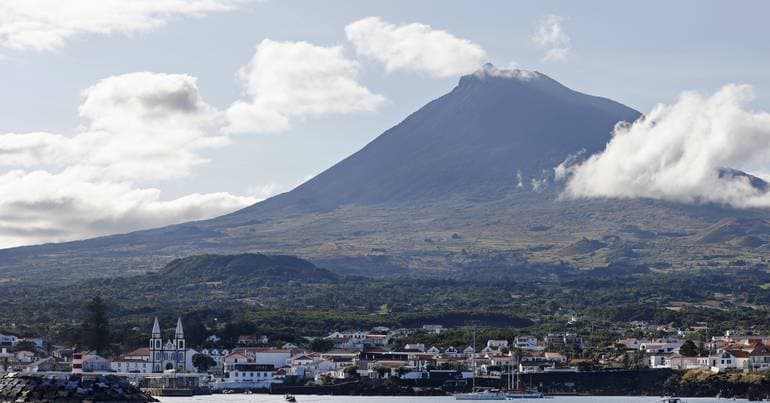
The tremor was recorded at 2:13 am local time and had its epicentre about seven kilometres from Bandeiras, on the island of Pico. It was felt with a maximum intensity of III in Pico and intensity II/III in Faial.

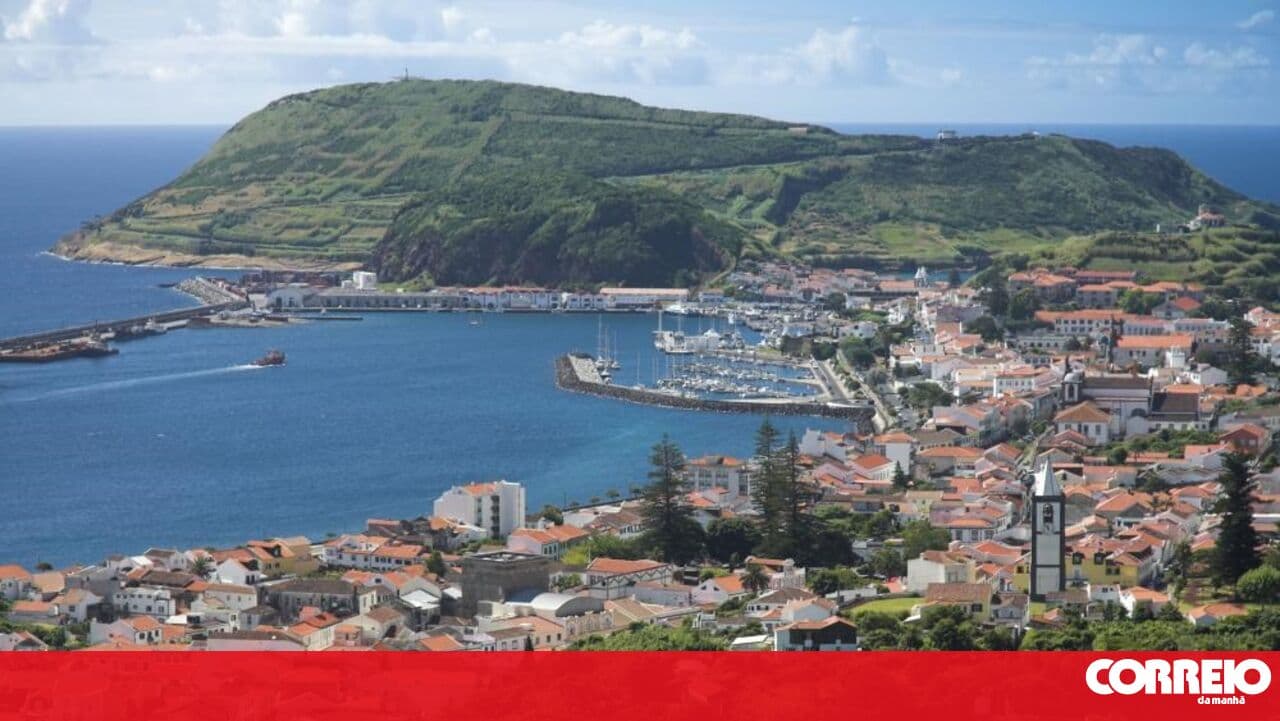
The epicentre was located about seven kilometres northwest of Bandeiras, in the municipality of Madalena, on the island of Pico.

The earthquake was recorded shortly before noon (local time), with the epicentre located four kilometres north of Madalena, on the neighbouring island of Pico. It was considered a weak tremor.

The Portuguese Institute for Sea and Atmosphere (IPMA) has issued orange and yellow warnings for the nine islands of the Azores, starting Sunday, due to rough seas and wind, following a cold front.
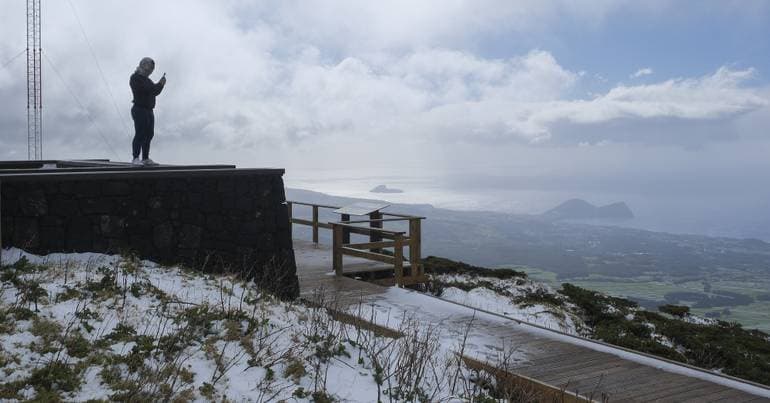
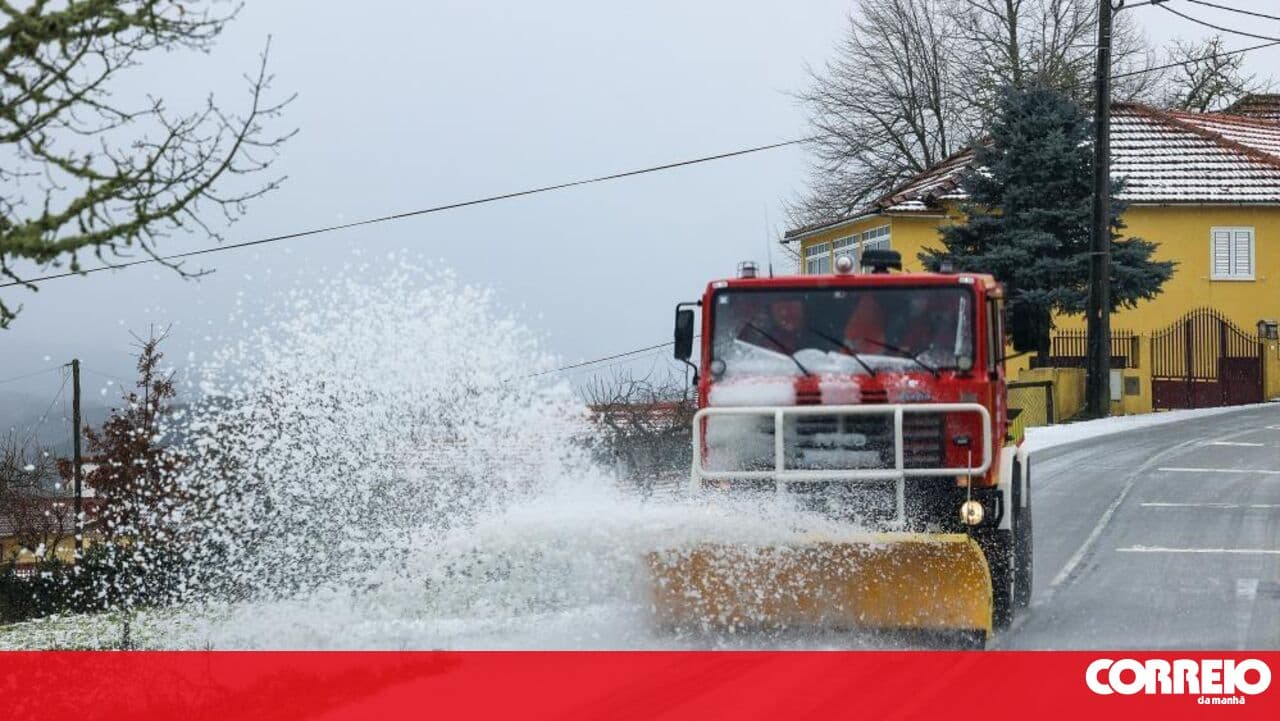
The IPMA has indicated the possibility of snow showers in higher areas of the Central and Eastern groups, where it is uncommon to snow. The last time it snowed across the entire archipelago was in 2009.

In 2009, snow hit the high-altitude areas of several islands and fell across almost the entire Azorean archipelago, according to the IPMA.

The situation is associated with the low-pressure system Therese, which is expected to cause a significant increase in wind intensity.

The IPMA states that the drop in maximum and minimum temperatures is due to a 'northern current' and the 'joint action between the anticyclone centred west of the archipelago and a low-pressure system' currently forming.

The island's seismic activity, although low, “remained clearly above reference levels,” clarified the Institute of Volcanology Research at the University of the Azores.

The situation results from a northern current over the region, according to the IPMA.

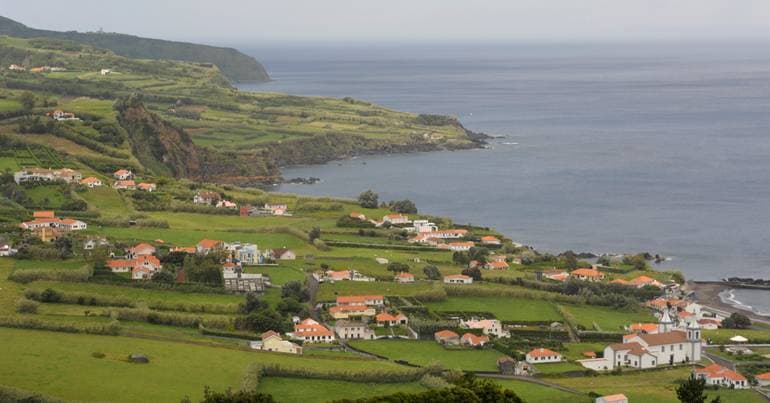
The tremor had its epicentre about three kilometres south of Água Retorta.

The tremor was recorded at 21:53 (22:53 in Lisbon) on Saturday and had its epicentre about three kilometres south of Água Retorta, on the island of São Miguel.

Bad weather also affects Madeira and the Azores