Zurita Oliveira: the almost unknown rock pioneer
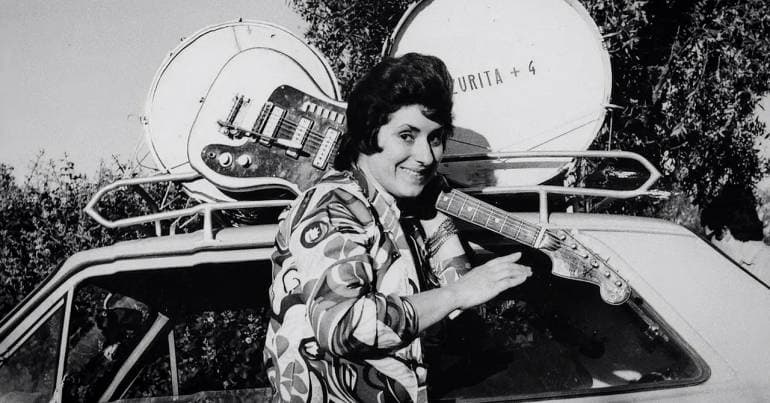
The first Portuguese woman to write, sing, and record a rock song is the central figure of Francisca Marvão's documentary. It premieres this Friday, the 1st, at IndieLisboa.

Latest news and stories about documentary in Portugal for expats and residents.
The first Portuguese woman to write, sing, and record a rock song is the central figure of Francisca Marvão's documentary. It premieres this Friday, the 1st, at IndieLisboa.


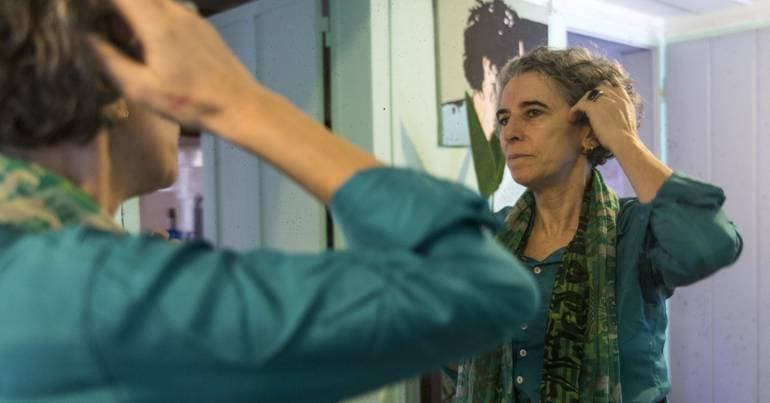
A single edition was enough for Zurita de Oliveira to write her name into history, even if that history relegated her to an obscure background. “Who’s Afraid of Zurita de Oliveira?”, a documentary by Francisca Marvão premiering this Friday, May 1st, at IndieLisboa, promises to shed light on one of the great enigmas in the history of rock in Portugal.

This marks 40 years since the explosion of Chernobyl's reactor 4, the most serious nuclear accident in history. In the documentary 'Chernobyl: Minute by Minute', we revisit April 26, 1986, the fire in the reactor, and the radioactive cloud that spread across Europe.

From GNR to Telectu, from silence to noise, from rock to opera: the extraordinary life of Vítor Rua, an exemplary case in Portuguese music due to the diverse worlds he has embraced, is now the subject of a documentary premiering at the IndieLisboa festival in May. The episodes of Portuguese rock, which he abandoned early on, the wonders of music that challenges itself, and something more. Always something more.

Director Raquel Freire intertwines the lives and stories of resistance of 10 Portuguese and African women who fought against fascism and colonialism. Preview at IndieLisboa on Friday.

The personal history of Luandino Vieira involves a complex web of facts, including the Salazar dictatorship, Angolan literature, and his eight years in the Tarrafal prison in Cape Verde. 'Chão Verde de Pássaros Escritos', directed by Sandra Inês Cruz, is a documentary that attempts to inventory these personal and political memories, specifically through Luandino's return to the prison camp. The review questions whether the film's reliance on a systematic voice-over narration and standard television documentary tropes—such as the overuse of drone footage—fails to achieve a truly cinematic quality, ultimately turning the historical site into an abstract monument rather than a deeply engaging experience for the cinema audience.

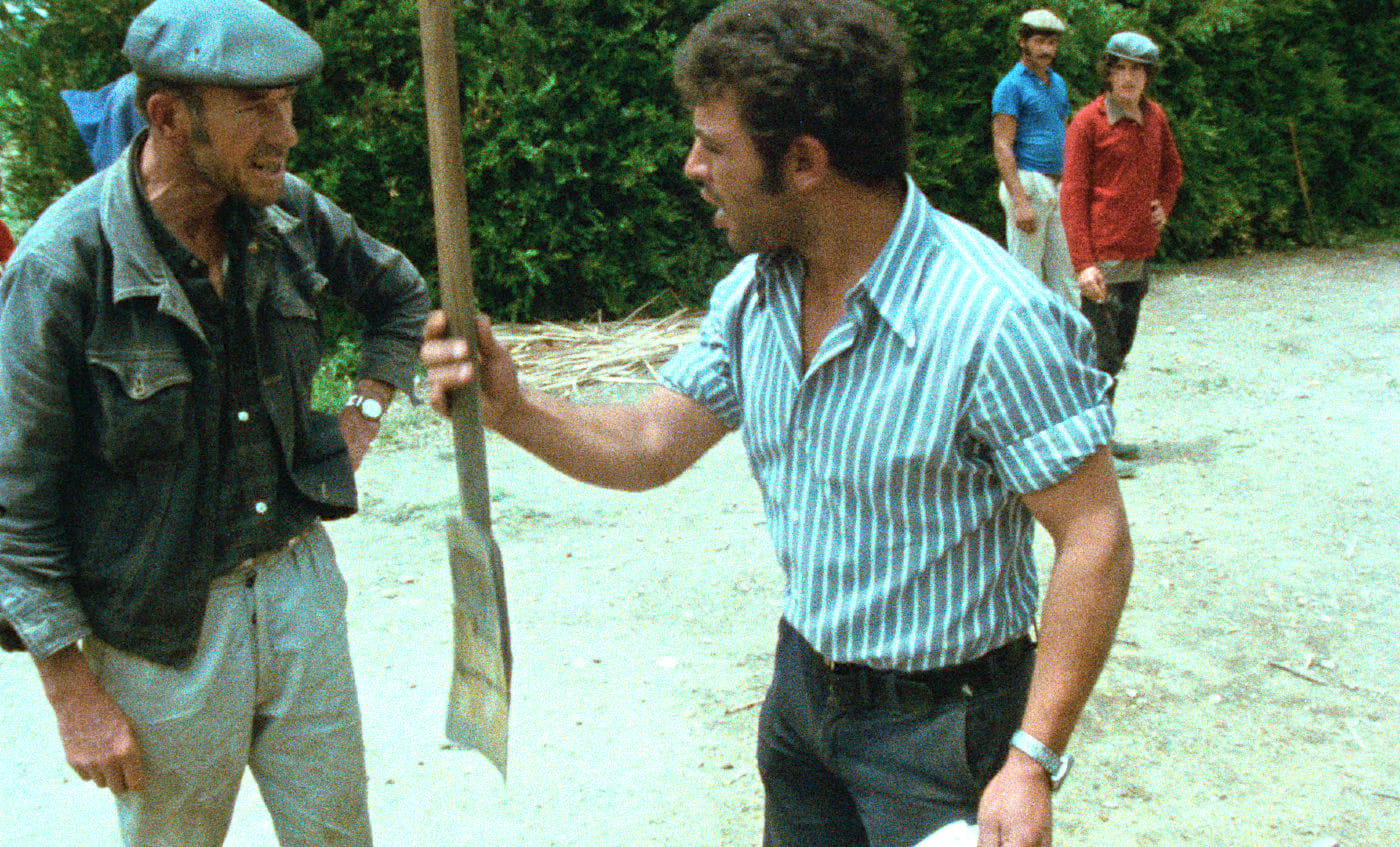
The Cinemateca Portuguesa is hosting a film cycle dedicated to the 1977 documentary 'Torre Bela' by Thomas Harlan, which chronicles the occupation of the Torre Bela estate during Portugal's post-1974 Agrarian Reform. The event features a newly restored version of the film, alongside related works such as José Filipe Costa's 'Linha Vermelha', which investigates the controversial circumstances of the original production. The programme includes screenings, discussions with collaborators, and historical context regarding the revolutionary period and Harlan's complex legacy.

Presented at the 2025 edition of IndieLisboa, 'Which House Are You From?' is now in cinemas. It is another example of a documentary approach seeking a stable place within the dynamics of the theatrical market. The film, by visual artist and director Ana Pérez-Quiroga, explores the personal history of her mother, Angelita Perez, one of the Spanish children exiled to the Soviet Union during the Civil War. It is an existential saga that blends personal memory with 20th-century historical upheavals, from the Spanish Civil War to life in the USSR, without attempting a traditional historical summary. The film highlights that documenting is not merely transcription, but the construction of a specific arrangement of facts, objects, and memories.

The “extraordinary adventure” of visual artist Ana Pérez-Quiroga's mother, through Spain, the Soviet Union, and Portugal, arrives in national cinemas next week in the film “¿De qué casa eres?”.

The “extraordinary adventure” of visual artist Ana Pérez-Quiroga's mother, through Spain, the Soviet Union, and Portugal, arrives in national cinemas next week in the film “¿De qué casa eres?”.

The film “¿De qué casa eres?” arrives in cinemas next week. The film recounts the adventure of artist Ana Pérez-Quiroga's mother through the USSR, Portugal, and Spain.

Documentary tells the story of Angelita Pérez, born in the Basque Country and sent by her family in 1937, at the age of four, to the then Soviet Union.

“Through the stone” is a documentary about sculptor Carlos Oliveira that has just been presented to the public in Caldas da Rainha, the artist's hometown. It showcases his work in the quarry, the “clay factory,” and the “Ninho da Paz” (Nest of Peace), the place where he lives, finds inspiration, and works.
Ukraine and Iran are featured at the Hádoc documentary film festival in Leiria. The two productions from the former territory are “excellent films, not to be missed,” highlighted one of the event's programmers.

The festival begins on Tuesday and will screen seven films until the end of June.

After the Red Hot Chili Peppers distanced themselves from “The Rise of the Red Hot Chili Peppers: To Our Brother Hillel”, a Netflix documentary about co-founder Hillel Slovak, Flea came forward to praise the film: “Now, more people will know the importance he had, and continues to have, for all of us, as a friend and colleague.”
This is the first time a Portuguese production company has been awarded by the Sundance Institute, and the grant will be used to fund the film “The Mammoths that Escaped the Kingdom of Erlik Khan”, shot in Siberia by director Tamara Kotevska.

He died young, but left his mark on the band he helped form. Acclaimed for his originality on the guitar, Hillel Slovak (1962-1988) is remembered in “The Rise of the Red Hot Chili Peppers: To Our Brother Hillel”, a Netflix documentary featuring generous contributions from his former bandmates.

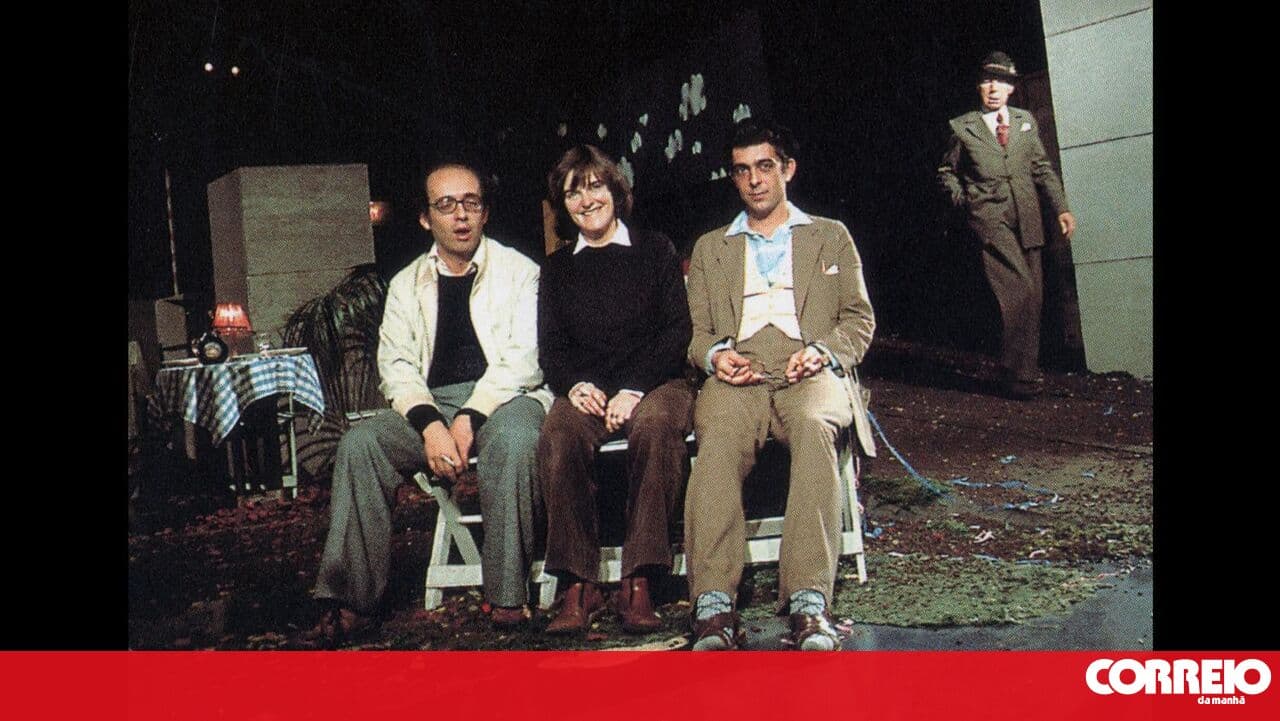
The documentary 'Memórias do Teatro da Cornucópia' explores the history of the iconic Portuguese theatre company founded by Luís Miguel Cintra and Jorge Silva Melo. Directed by Solveig Nordlund, the film serves as a choral archive of the company's artistic independence and its profound impact on the cultural landscape from 1973 until its closure in 2016. Through archival footage and testimonials, including those of Cristina Reis, the documentary examines the unique relationship between the theatre space and the cinematic lens, reflecting on the company's legacy and the political dimensions of its eventual dissolution.

Documentary by Solveig Nordlund premieres on the eve of World Theatre Day celebrations.

Photography and cinema go well together. Moving images can sometimes help us see or revisit still images, allowing us to better understand their origins, creators, and the worlds they reveal. 'Eu Sou Martin Parr' (I Am Martin Parr), a documentary film about the English photographer Martin Parr (1952-2025), arrives in cinemas tomorrow. Directed by fellow photographer Lee Shulman, the film explores the roots, methods, and motivations behind Parr's unique worldview. The documentary celebrates Parr's 70th birthday by revisiting key locations from his career, including his iconic return to New Brighton, the setting for his famous 1986 portfolio 'The Last Resort'. The film captures how Parr's work, which often focuses on the banality of everyday life, uses vibrant colours and unconventional framing to create a surreal atmosphere. Shulman's documentary avoids redundant theory, instead highlighting how Parr, much like Charlie Chaplin, masterfully blends comedy and tragedy. The film also sheds light on Parr's early black-and-white work and his fundamental philosophy: exploring the gap between the mythology of places and their reality.

The programme for the 23rd edition of the international film festival includes documentaries such as “Who is afraid of Zurita de Oliveira?” and other mockumentaries. The festival is scheduled from 30 April to 10 May.

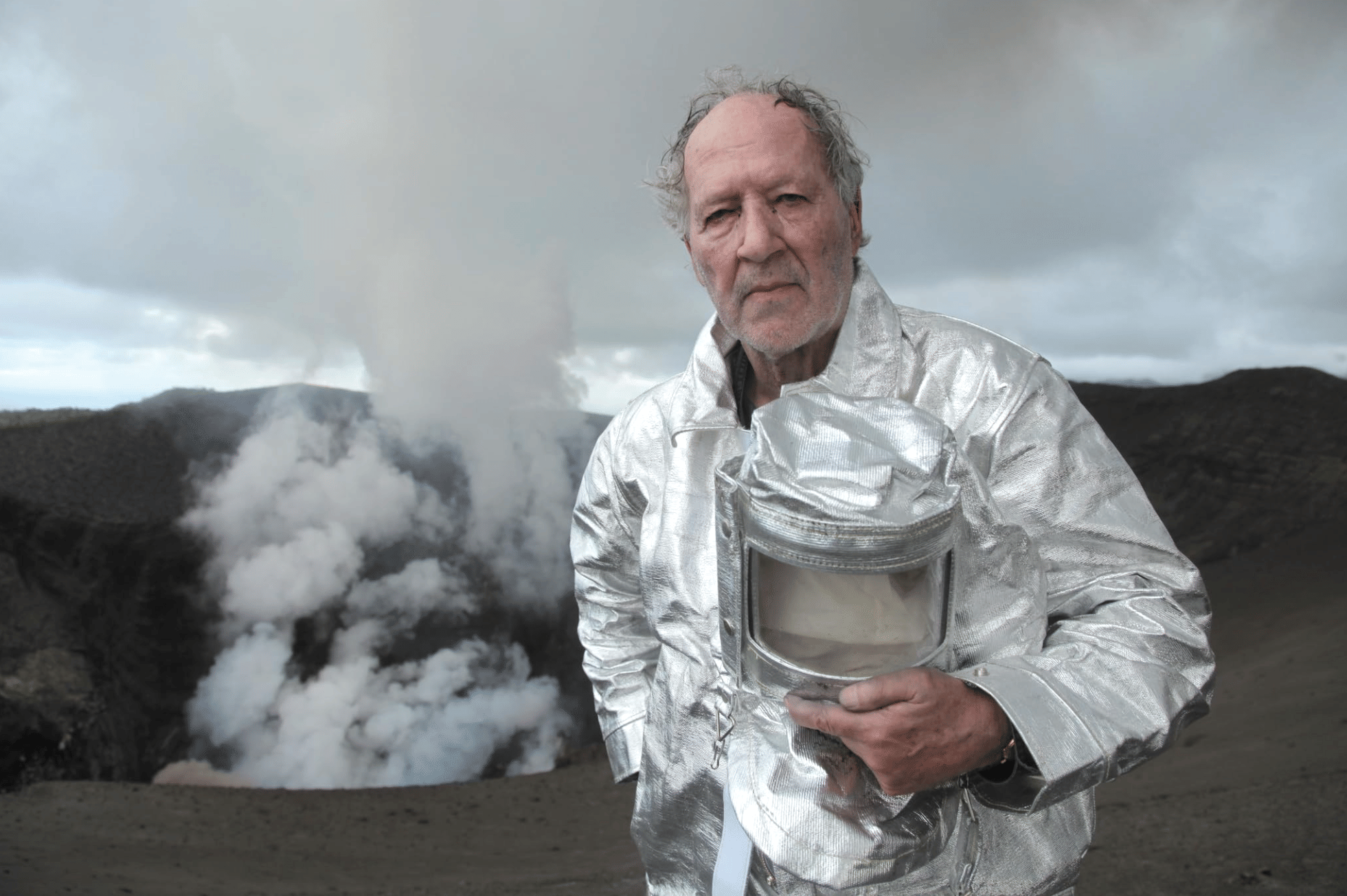
A filmmaker who loves volcanoes is a fitting way to describe the German director Werner Herzog. Beyond the metaphorical implications, it is a literal definition, as seen in his documentary 'Into the Inferno' (2016). Herzog's latest book, 'The Future of Truth', published by Zigurate and translated by Mário Prado Coelho, explores his vision on the nature of truth, narrative, and our relationship with reality in the age of the internet. Drawing on his own filmography, including 'Fitzcarraldo' and 'Lo and Behold', Herzog reflects on how we are all narrators and how the power to shape a narrative often outweighs the underlying reality.


In the 6th century BC, the Hebrew people were conquered and deported to Babylon. Without land or a temple, they dedicated themselves to writing to keep their identity alive. The sixth episode of 'The Stories of the Bible'.

What do we know about Leni, Hitler's filmmaker? A beautiful woman, a demanding professional, an incredible character, and one of the most dangerous divers of the 20th century.

Born in Barcelona in 1960, José Luis Guerín is a filmmaker whose work defies easy categorization, spanning diverse aesthetic and thematic approaches. His filmography includes unique works such as 'Innisfree' (1990), an essay on John Ford's 'The Quiet Man' (1952), and 'Tren de Sombras' (1997), which blends fiction and documentary. His latest film, 'Tales of the Good Valley' (winner of the Special Jury Prize at the San Sebastián Film Festival), arrives in Portuguese cinemas on Thursday, March 19. While it is a documentary about Vallbona, a peripheral neighbourhood in Barcelona, Guerín's approach avoids common sociological clichés. The film uses a mix of black-and-white footage and improvisation to explore the history of the area, which was once intended to be a garden city before the Spanish Civil War changed its trajectory. By starting with a casting process, Guerín captures the diverse faces and memories of the residents, creating a respectful and cinematic portrait of this unique urban island.

A fascinating documentary by Andres Veiel about the official filmmaker of the German Nazi regime, using, for the first time, her formidable estate.

The Community of Portuguese Language Countries (CPLP) announced on Wednesday, March 18, the selection of 25 projects for the 3rd edition of the CPLP Audiovisual Program (PAV III), including four Portuguese entries. The initiative supports a total of seven feature films and 18 short films in documentary and fiction genres. The process received 591 applications, with 79 advancing to the pre-selection phase evaluated by national juries. Projects then participated in development and training workshops before a final decision was made by an international jury. Selected Portuguese projects include the feature documentary 'Maria louva-a-deus' by Ana Delgado Martins, and short films 'O fermento da memória' by Gisele Rech, 'Sou de qualquer lugar' by Érico Medeiros Jacobina Aires, and the fiction 'Matéria prima' by Ines von Bonhorst and Yuri Pirondi. Other selected projects span Brazil, Angola, Cape Verde, Equatorial Guinea, Mozambique, and São Tomé and Príncipe. Production is set to begin on May 1, with premieres scheduled for 2027 across the public television networks of the nine CPLP member states. Selected projects will receive funding of up to 65,000 euros for feature films and 18,000 euros for shorts.