Portuguese Prime Minister Luís Montenegro addresses the migration crisis in Ceuta, urging calm while Spanish officials label the situation an assault on national integrity.
An analytical examination of the shifting demographic landscape and the political discourse surrounding migration policies, challenging official narratives regarding societal changes.
An analytical look at how the growing Indian youth population in the country is navigating cultural integration, shifting societal attitudes, and their contributions to fields like badminton and artificial intelligence.
Journalist Mariana Oliveira discusses the latest crime statistics, highlighting a rise in violent crime in rural areas and a concerning decade-high increase in reported rapes, despite these issues being overlooked in official security priorities.
New data from Portugal's Survey on Living Conditions and Income show one region has the country's highest incidence of monetary poverty, with 17.9% of residents living below the poverty threshold. Analysts and local actors attribute the rise to a combination of state neglect, insufficient social-protection measures, the growth of precarious immigration and unstable work, and wider cost-of-living pressures — factors that together depress incomes and worsen social indicators. The figures point to a need for targeted regional policies on social security, employment quality and integration to reverse the trend.
An exploration of the physical and mental impacts of immigration, featuring accounts from Brazilians living in Portugal regarding shifts in their daily habits, sleep patterns, and overall well-being.
The idea that a society can forgo its own generational and cultural renewal without consequences reveals a profound misunderstanding of what a political community is.
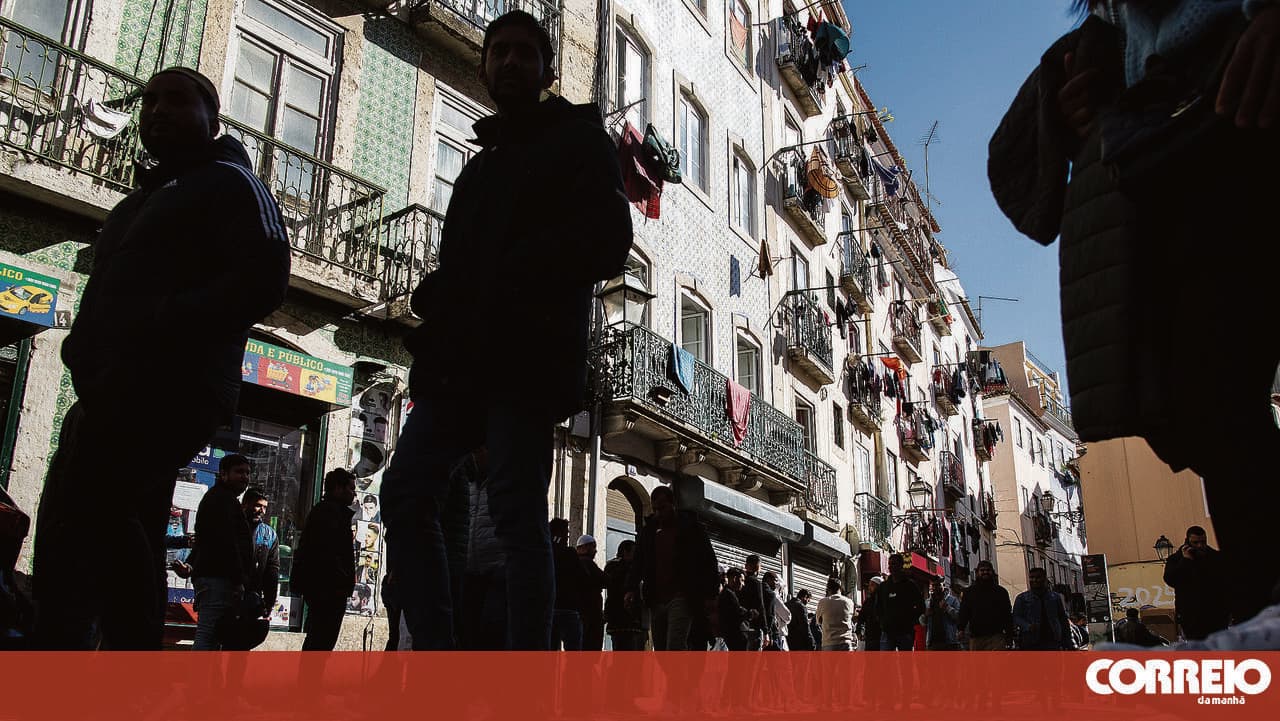
They belong to communities that provide labour in various sectors and are targets of hate speech. We know little about their daily lives. The series listens to young Indians, Bangladeshis, Nepalese, and Pakistanis.
Emigration does not just displace people; it displaces sensibilities. Its impact is not only on the economy or demographics, but on the way society learns to look at and recognise new presences. Opinion by Sérgio Ignácio.
In a week where the country’s central bank made a point of stressing that immigrants who come to Portugal ‘are working, and practically none of them receive social security subsidies’, The post Portugal’s first Nepalese ‘bombeiro’ is welcomed in Moita appeared first on Portugal Resident.
Four years ago, Russia invaded Ukraine, starting a war that continues to this day. Anna and Kateryna chose Portugal as their refuge — and they no longer think about leaving.
It's surprising how much we learn when we decide to listen and take an interest in what others have to share. I continue to meet women and their life stories during rides in app-based cars. Each trip is an opportunity to view the world from a different perspective, understanding the journey of someone who has also worked hard to be there, heading in that direction. In the last month, I met several Brazilian drivers. We laughed, shared memories, and future aspirations. Different accents carry memories, landscapes, and feelings; they awaken the imagination and curiosity. 'Are you well?' greeted the driver from Minas Gerais as she placed my suitcase in the back of the vehicle. I immediately recognized that warm way of speaking that seems to invite one for coffee with warm pão de queijo. The kind reception already indicated a lively conversation along the way. Whenever I hear that cadence, I remember the year I lived in Contagem (MG) for my postgraduate studies. It was a time of effort, adaptation, and good friendships. Living in Portugal for fifteen years, the driver that afternoon was a woman who forged her own path. She emigrated alone, worked as an elderly caregiver for ten years, and has been driving passengers to their destinations for four years. Despite her ever-present smile, she revealed that she has lost enthusiasm due to the lack of respect and disregard experienced in the Lusitanian lands. 'There’s always someone looking at you sideways. Hatred is more explicit. The media has favoured the exposure of feelings - for better or worse,' she reflected. Another day, I was pressed for time to reach a training session when I was welcomed by a driver from Rio de Janeiro who was born in Aveiro. At 65, she is retired from a long career in law but remains active. She is a professor of Constitutional and Administrative Law, also graduated in Anthropology, and has begun studying immigration. We exchanged views on the well-known attendant law, discussed politics, and how religious factors can mobilise emotions. With her anthropological knowledge, she warned: 'In Sociology, we study the SELF in relation to the OTHER, and when we put a face to that OTHER, it becomes easy to manipulate.' In a way, the carioca from Aveiro conducts a social experiment while interacting with clients, discovering each passenger's ideologies and behaviours in the world. On a trip to a meeting, I met a woman from Pernambuco who has lived in Lisbon for nine years. In Brazil, she worked in sales, and in Portugal, she drives for an app after resuming her career post-maternity. She commented on the differences in commissions offered in both markets - 'Insurance doesn’t pay here.' - and her plans to return to the real estate sector. She navigates life with daily experiences in finding better routes. 'A gentleman prayed over me, and God told me I would change countries,' shared another driver, originally from Goiânia, known as the land of pequi. A story that could be from magical realism but materialised twenty-six years ago, the time she has lived in Lisbon. She has tried to bring her daughter and mother to live together, but neither adapted to the cold climate. 'I don’t see myself there (in Brazil), I love it here,' she explained, recounting the critical situation of her three siblings living in Leiria after the Kristen depression: 'A chaos. You know when there’s a war and it ends? Everything is destroyed.' This Saturday, I met another Brazilian from Paraná, who has lived in Loures for twenty-four years. She emigrated to stay for just two years, tried to return after ten, but couldn’t. 'I found it strange, how can we not adapt to our own country?' she recalled when she briefly returned to Brazil. Now permanently living in Portugal, last year, she took her twelve-year-old son to connect a bit with his roots. 'He is proud to be Brazilian.' We said our goodbyes, and I pondered how it would be to return to Brazil for good. But for now, the only change planned is to a new home. Starting next week, I will begin a period of adaptation within the same land. DN Brasil is a section of Diário de Notícias dedicated to the Brazilian community living or intending to live in Portugal. The texts are written in Brazilian Portuguese.
Henrique Soares, president of the Regional Wine Commission of the Setúbal Peninsula (CVRPS), is the latest guest on the podcast 'E Se Corre Bem'. Although he studied agricultural engineering at the Instituto Superior de Agronomia, Henrique Soares always wanted to work in something related to the vineyard — a wish that would go on to extend a family legacy left by his ...
The presence of immigrants in an area reduces crime, which goes against public perceptions, warned the recent winner of the world’s largest criminology prize, Charis Kubrin.
The presence of immigrants in a given area reduces crime, which contradicts public perceptions, warned the US researcher and recent recipient of the world’s most prestigious criminology prize, Charis Kubrin, today.
Immigrants no longer find in Portugal the same symbolic sense of being welcome. Even those who arrive to visit family or to contribute to society realise, already at the airport, that something has changed. Opinion by Maria Klien