The challenge of integration
Cristina Casalinho explores the vital role of civil society in developing practical solutions for the integration of an unprecedented number of migrants.

Latest news and stories about demographics in daily life in Portugal for expats and residents.
Cristina Casalinho explores the vital role of civil society in developing practical solutions for the integration of an unprecedented number of migrants.

The article discusses the growing concerns about sustainability in the workplace, emphasizing the need to balance organizational development, economic growth, environmental protection, and community well-being. It highlights the challenges posed by an aging workforce in Portugal, where recruitment difficulties and talent retention issues are becoming more pronounced. The article also addresses gender disparities in the workforce, particularly the prevalence of part-time work among women and the implications for productivity and career opportunities. It calls for a demographic analysis within organizations to adapt health support and public policies that promote sustainable practices, benefiting individuals, organizations, and society as a whole.

The natural balance for 2025, however, worsened, with the Greater Lisbon region maintaining a positive balance for the third consecutive year.

INE highlighted that the natural balance worsened, although the Greater Lisbon region maintained a positive balance for the third consecutive year.


Portugal continues to hold the ideal family size of two children, a figure that remains higher than the average observed in Western Europe.


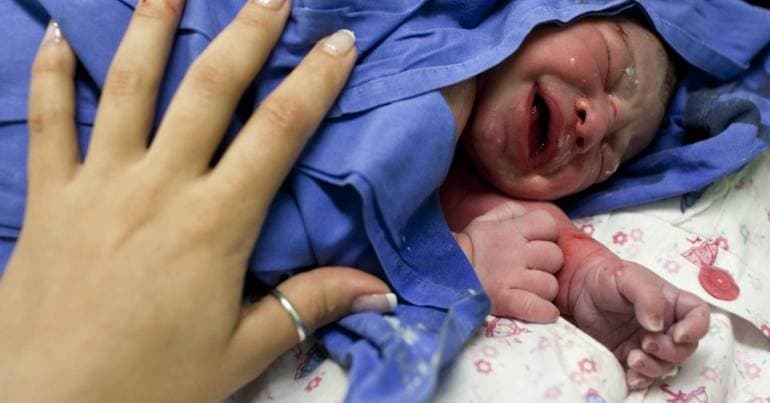
The number of newborns screened in Portugal reached its highest level in the last decade during the first quarter of the year, with 21,813 babies covered by the 'heel prick test'.
21,813 babies were tracked between January and March, one thousand more than in the same period last year. It is the best start to a year in the last decade.
January was the month that recorded the highest number of births in the country, with about 7,908 babies, followed by March with 7,312 and, finally, February with 6,593.

The Portuguese market is quietly transforming. It is visible in demographic statistics and political debates, but above all, in the place where economic changes become most apparent: consumption. On supermarket shelves, in family kitchens, and in shopping carts, a new portrait of the country is emerging: younger and more diverse.

Assunção Cristas was challenged to reveal what she would do if Luís Montenegro invited her to be Minister of Family, but the former centrist leader showed no signs of missing her time in government. Speaking at a CDS-PP parliamentary conference, she noted that Portugal remains stuck at a low birth rate of 1.4 children per woman, highlighting a 'vicious cycle' where fewer births lead to fewer future mothers. While she acknowledged that public policies have struggled to maintain previous gains, she emphasized the gap between the number of children people desire and what they actually have in their lives.
1,782 babies were born and 1,756 men became fathers.

The Chinese community in Portugal increased from 3,282 in 2000 to 23,025 in 2021.

In 2025, 1,946 births were recorded, representing a 6% increase compared with the previous year. The municipalities with the highest numbers of registered births are Viseu with 793 and Guarda with 159.

Press review: births to Portuguese women have experienced a significant decline.

Home News Migrants represent 10% of Portugal population Migrants represent 10% of Portugal population In an interview with SAPO, Estefânia Silva and Joana Tropa reveal that, according to AIMA data, migrants will represent 10% of the Portuguese population by 2025.

The year was the deadliest since 2022, but also the one with the most births in recent years.

Portugal recorded 122,151 deaths in 2025, 3,124 more than in 2024, but deaths of children under one year fell to 241. As of November, 80,206 babies had been born, improving the natural balance.

Marriage is in sharp decline and young people are moving to work in the major cities.

Experts link the rise in the number of births to immigration, noting that 30% of last year's newborns 'were born to mothers who are not Portuguese'.

Home News Portugal records peak birth rate Portugal records peak birth rate More than 87,700 babies were born in Portugal in 2025, the highest figure in the last decade, according to data from the ‘heel prick test’, which covers almost all births in the country.

In 2025, 936 babies were born to Portuguese mothers and 554 to foreign mothers. The number of births represents an increase of about 5.2% compared with 2024, says the Local Health Unit.

936 babies were born to Portuguese mothers and 554 to foreign mothers, with the majority of the newborns being male.

Portugal’s birthrate is showing a welcome new ‘bounce’ after progressive declines since the year 2000 – and a sharp dip during the pandemic. Data from IRN, the notaries and registrars’ The post Babies galore! “There haven’t been this many babies for 13 years” appeared first on Portugal Resident.

Home News 30% of new-borns in Portugal born to foreign mothers 30% of new-borns in Portugal born to foreign mothers In total, there were 89. 162 births in Portugal, 4,520 more than registered last year, which already showed a growth trend.

In reality, we are essentially a country of elderly people.