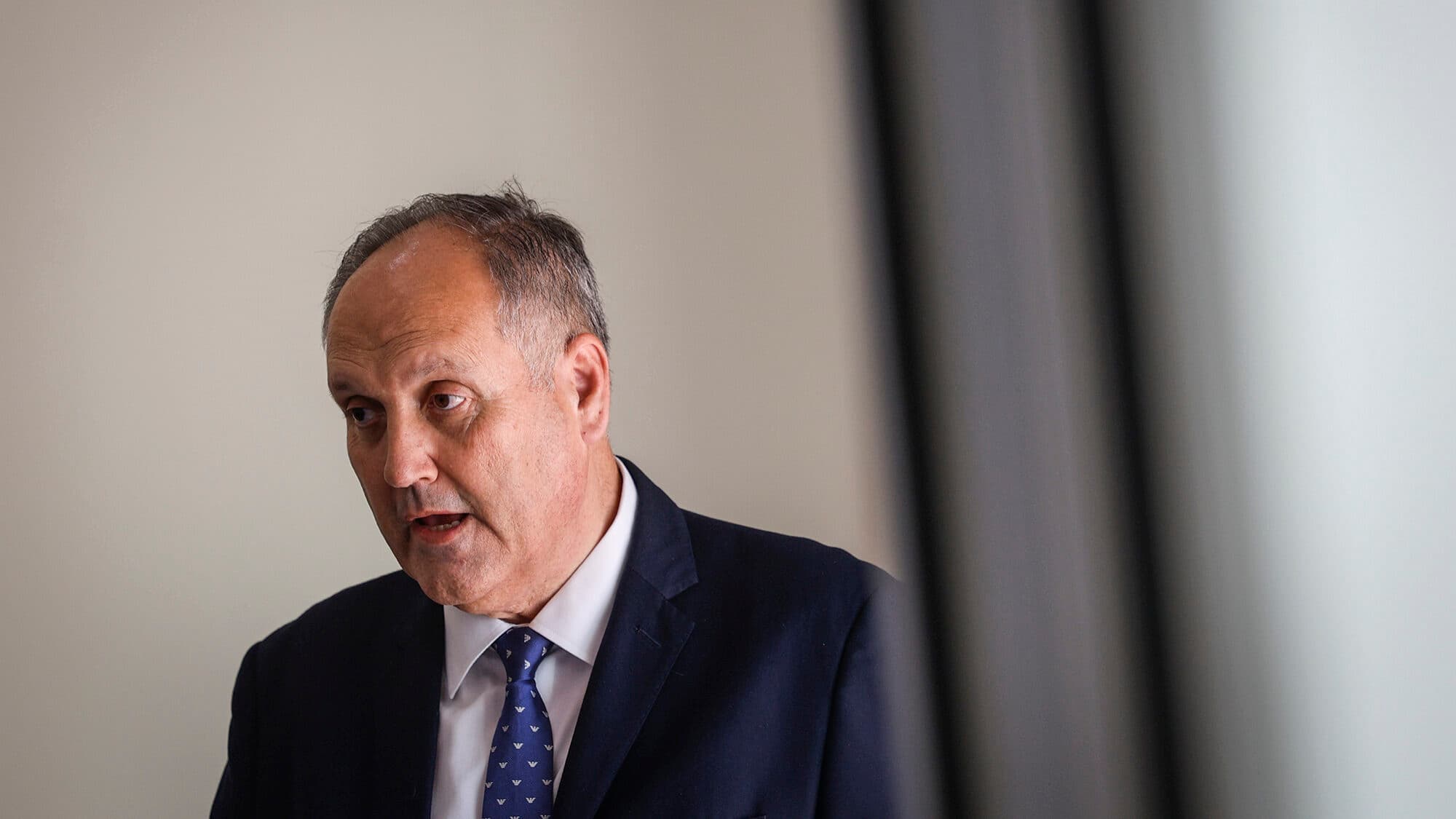
The Public Prosecutor's Office (Ministério Público) has opened an inquiry into the national director of the Judiciary Police (Polícia Judiciária or PJ), Carlos Cabreiro, following a complaint by a police coordinator. The investigation focuses on allegations of abuse of power and false testimony regarding the handling of wiretaps during the high-profile Rui Pinto trial. The PJ has declined to comment on the ongoing investigation.
Public Prosecutor investigates Judiciary Police director for alleged misconduct
Monday, 14 September 2026AI summary
Context & Explainers
Carlos Cabreiro is the national director of the Judiciary Police (Polícia Judiciária or PJ), the agency responsible for investigating serious crimes in Portugal. He has held this leadership role since April 2024, succeeding Luís Neves.

The PJ (Polícia Judiciária) is Portugal's national criminal investigation police agency, founded in 1945. Operating under the Ministry of Justice and supervised by the Public Ministry (prosecutors), the PJ is a "higher criminal police body" specializing in serious and complex crimes. Mission: The PJ assists judicial and prosecuting authorities by investigating terrorism, organized crime, homicide, kidnapping, drug trafficking, corruption, cybercrime, financial crime, and money laundering. It conducts forensic examinations, operates Portugal's Interpol and Europol liaison offices, and maintains specialized units including the National Counterterrorism Unit and National Anti-Corruption Unit. Difference from PSP/GNR: While PSP (civilian urban police) and GNR (military rural police) focus on preventive policing, public order, and investigating minor crimes, the PJ exclusively handles serious crime investigation requiring specialized technical and scientific expertise. PSP and GNR report to the Ministry of Internal Affairs; PJ reports to the Ministry of Justice. PJ officers receive higher pay and prestige but face greater operational risk.
6 sources
- Public Prosecution Service investigates PJ director over suspicions of false statements and abuse of powereco.sapo.pt ·
- Public Prosecutor's Office opens inquiry into PJ director for abuse of powerobservador.pt ·
- PGR confirms opening of inquiry investigating PJ directorpublico.pt ·
- PGR investigates national director of the Judiciary Police for abuse of power and false statements in courtcnnportugal.iol.pt ·
- PGR confirms opening of inquiry into PJ national directordn.pt ·
- Rui Pinto trial: Attorney General's Office opens inquiry into PJ national directorrtp.pt ·