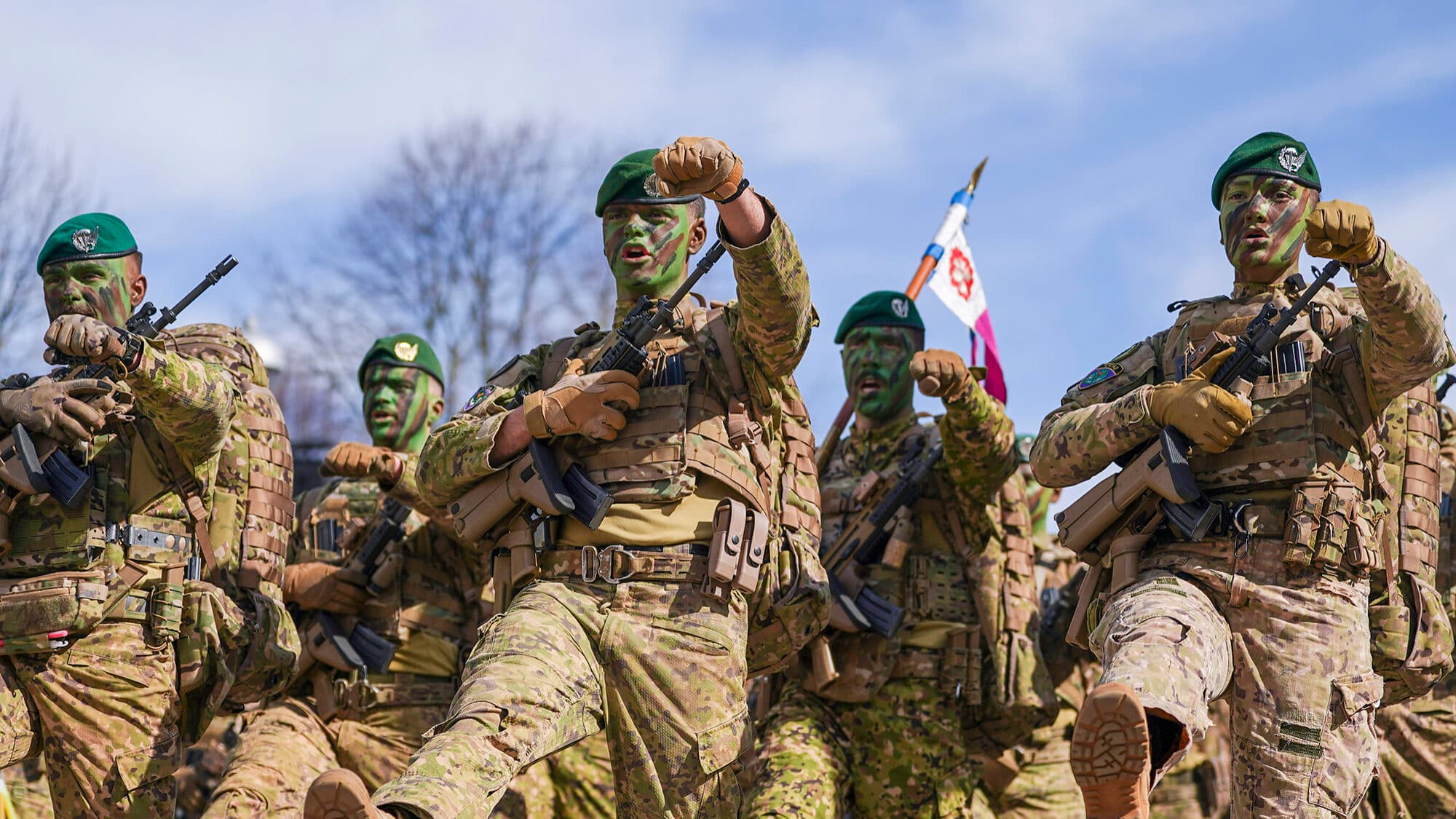
The Assembly of the Republic approved two resolutions proposed by the Social Democratic Party (PSD) and the CDS-PP to encourage youth participation in the Armed Forces. The initiatives, which include the 'Defending Portugal' and 'Strong Mind' programs, received support from both the PS and Chega.
Parliament approves youth volunteering in Defence sector
Wednesday, 13 May 2026AI summary
Context & Explainers

- Leader: Luís Montenegro (Prime Minister)
- Ideology: Liberal conservatism, pro-Europeanism
- Coalition: Social Democratic Party (PSD) + CDS–People's Party (CDS-PP)
The Democratic Alliance (Aliança Democrática, AD) is a center-right coalition primarily composed of the Social Democratic Party (PSD) with 89 seats and the CDS–People's Party (CDS-PP) with 2 seats. Together, they form the current minority government under Prime Minister Luís Montenegro.
The PSD, despite its name, occupies the center-right of Portugal's political spectrum and has been one of Portugal's two dominant parties since 1974, having formed nine governments including four with absolute majorities. The CDS-PP is a smaller Christian democratic party that has historically been the PSD's coalition partner.
The AD coalition governs without a parliamentary majority, requiring case-by-case support from opposition parties to pass legislation. The coalition has imposed a cordon sanitaire against Chega, refusing formal cooperation with the far-right despite its parliamentary strength, which means it must negotiate with the PS or smaller parties to advance its legislative agenda.
The CDS–PP is the Democratic and Social Centre – People's Party (Centro Democrático e Social – Partido Popular), a small centre-right, Christian-democratic party founded in 1974. It often partners with the larger PSD in parliament; in February 2026 it voted with the PSD and IL to approve a housing package, so its parliamentary support can influence housing and other policy outcomes.