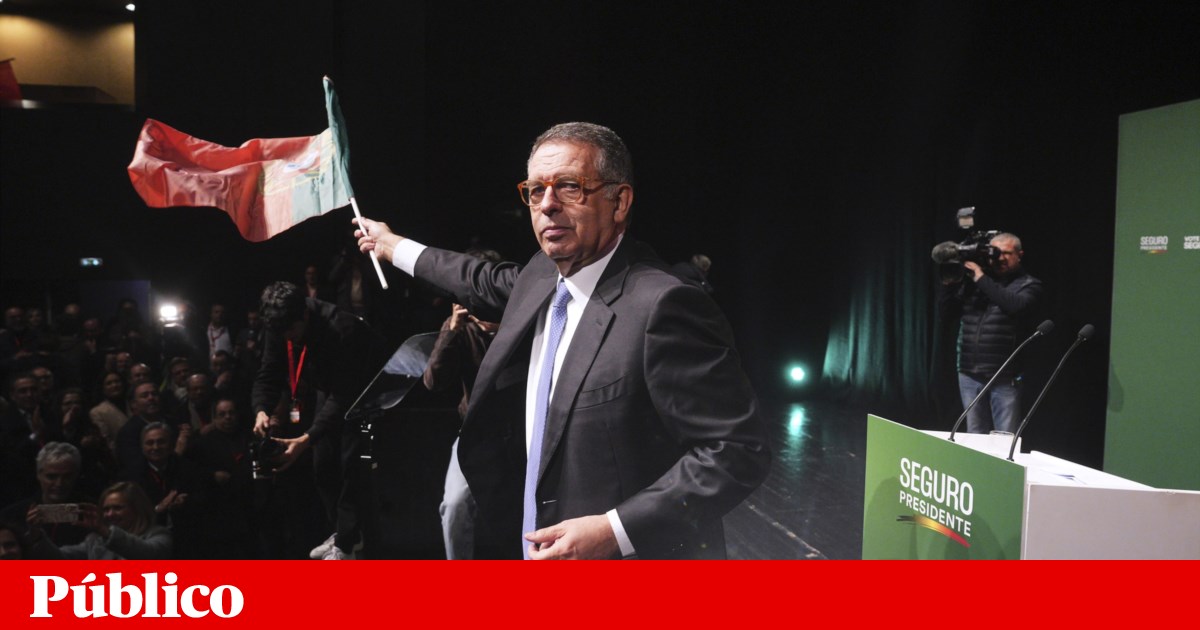
João Cotrim de Figueiredo — who finished third — and leaders on the centre‑right stopped short of recommending either run‑off candidate, with Cotrim saying he will not advise supporters how to vote. The PSD and liberal figures signalled restraint and, according to reports, some centre‑right voices criticised PSD leadership performance after the result. With endorsements mixed or withheld, the second round becomes a contest where each candidate must court undecided and centre voters directly; campaign teams and centrist voters should watch public signals from the PSD and smaller parties.
Centre‑right and third‑place candidates refuse endorsements
Sunday, 18 January 2026AI summary

Context & Explainers

- 2026 Presidential Candidate
- Party: Liberal Initiative (IL) Iniciativa Liberal
- Businessman from Lisbon
- Economic Liberalism, reduced state intervention, pro-Europe
João Fernando Cotrim de Figueiredo (born June 24, 1961, in Lisbon) is a businessman and liberal politician running for Portugal's presidency in the January 18, 2026 election. He grew up in Lisbon, studied Economics at the London School of Economics and earned an MBA from NOVA University Lisbon. He held executive positions at Compal, Nutricafés, Privado Holding, and TVI, and served as president of Turismo de Portugal (2013-2016), overseeing tourism industry growth during his tenure. He was elected as the Liberal Initiative's first parliamentary deputy in October 2019, led the party (2019-2023) while it grew from 1 to 8 seats with 5% of votes in 2022, and was elected European Parliament member in 2024. He announced his presidential candidacy in August 2025, backed by the Liberal Initiative.
Political Philosophy:
Cotrim de Figueiredo champions liberal economics—tax reduction, labour market liberalization, and welfare reform—alongside cultural and secular liberalism. His campaign emphasizes "Culture, Knowledge and Growth," positioning himself as representing younger voters alienated by traditional candidates, and explicitly states he expects a "second-round" runoff result. He advocates for a future-prepared Portugal distinct from current political offerings.

The Democratic Alliance is a centre-right coalition primarily composed of the Social Democratic Party (PSD) with 89 seats and the CDS – People's Party (CDS-PP) with 2 seats. - Major Political Parties and Leaders - Centre-Right: Democratic Alliance (AD) - Leader: Luís Montenegro (Prime Minister) - Ideology: Liberal conservatism, pro-Europeanism
The Social Democratic Party, despite its name, occupies the centre-right of Portugal's political spectrum. Montenegro, who became Prime Minister in April 2024, leads Portugal's current minority government. The PSD has been one of Portugal's two dominant parties since 1974, having formed nine governments including four with absolute majorities. Montenegro, a former party leader from 1996-1999, was elected with the highest approval rating among party leaders at 10.7 points out of 20. The Democratic Alliance coalition includes the smaller CDS – People's Party, a Christian democratic party that has historically been the PSD's coalition partner. Together, they govern without a parliamentary majority, requiring case-by-case support from opposition parties to pass legislation.

The Social Democratic Party ('Partido Social Democrata' or 'PSD') is a liberal-conservative political party in Portugal that is the leading partner of the The Democratic Alliance (AD) which is the country's ruling party, with Prime Minister Luís Montenegro.
The Social Democratic Party, despite its name, occupies the centre-right of Portugal's political spectrum. Luís Montenegro, who became Prime Minister in April 2024, leads Portugal's current minority government. The PSD has been one of Portugal's two dominant parties since 1974, having formed nine governments including four with absolute majorities. Montenegro, a former party leader from 1996-1999, was elected with the highest approval rating among party leaders at 10.7 points out of 20.
The Democratic Alliance is a centre-right coalition that includes the smaller CDS – People's Party, a Christian democratic party that has historically been the PSD's coalition partner. Together, they govern without a parliamentary majority, requiring case-by-case support from opposition parties to pass legislation.