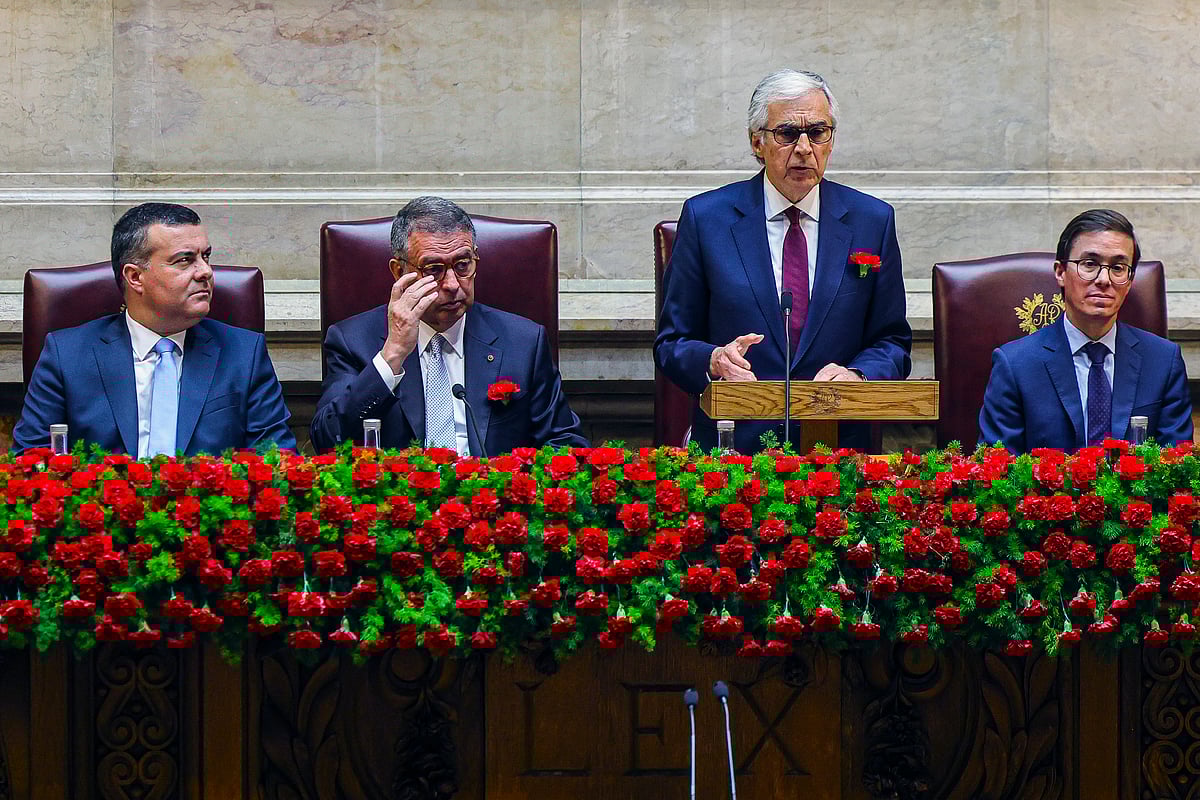
Passos Coelho opts to stay out. Hugo Soares urged MPs to mobilise.
Alarm bells ring in the PSD and the Government: MPs and local councillors called on to back Mendes
Thursday, 8 January 2026RSS

Context & Explainers

The Assembly of the Republic (Assembleia da República) is Portugal's unicameral parliament, located in the Palácio de São Bento in Lisbon. It consists of 230 deputies elected by proportional representation for four-year terms.
The Assembly's powers include making and amending laws, approving the state budget, ratifying international treaties, and overseeing the government through debates, hearings, and committees. It can also pass votes of no confidence to bring down a government, as happened in March 2025.
Following the May 2025 elections, the current parliamentary composition is led by the Democratic Alliance (AD) with the largest share of seats, followed by Chega, PS, and smaller parties including the Liberal Initiative, Left Bloc, Livre, and PCP.

The Social Democratic Party ('Partido Social Democrata' or 'PSD') is a liberal-conservative political party in Portugal that is the leading partner of the The Democratic Alliance (AD) which is the country's ruling party, with Prime Minister Luís Montenegro.
The Social Democratic Party, despite its name, occupies the centre-right of Portugal's political spectrum. Luís Montenegro, who became Prime Minister in April 2024, leads Portugal's current minority government. The PSD has been one of Portugal's two dominant parties since 1974, having formed nine governments including four with absolute majorities. Montenegro, a former party leader from 1996-1999, was elected with the highest approval rating among party leaders at 10.7 points out of 20.
The Democratic Alliance is a centre-right coalition that includes the smaller CDS – People's Party, a Christian democratic party that has historically been the PSD's coalition partner. Together, they govern without a parliamentary majority, requiring case-by-case support from opposition parties to pass legislation.