The PSD has never been right-wing, nor ever will be
To say that the PPD was ever right-wing is false. Even Passos Coelho admitted it - the same one who sent Luís Montenegro as part of the Portuguese delegation to visit Fidel Castro on his deathbed.

Latest news and stories about party politics in Portugal for expats and residents.
This page has only 1 story and is not indexed by search engines.
To say that the PPD was ever right-wing is false. Even Passos Coelho admitted it - the same one who sent Luís Montenegro as part of the Portuguese delegation to visit Fidel Castro on his deathbed.

Inês de Sousa Real says it would be ungrateful to abandon the party given the current political situation.

Taking advantage of the momentum to grow electorally and attempt to surpass the nearly 2 million votes Montenegro received in the last legislative elections.

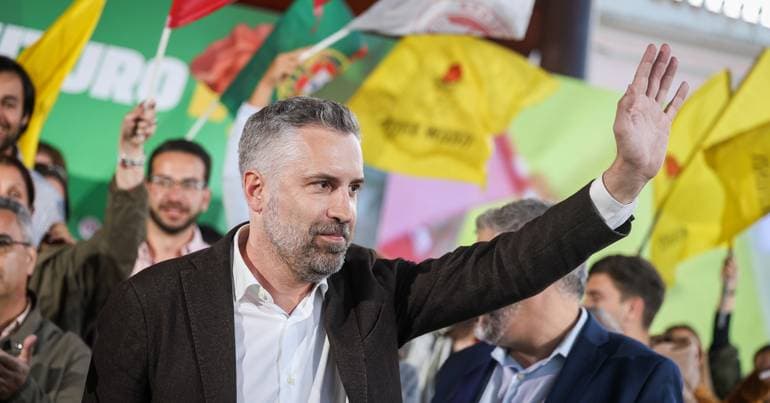
André Ventura has been unable to attract new backing beyond his traditional electoral base. Seguro is gaining increasing support.

André Ventura was surprised by Paulo Portas's support for Seguro and says he would like to know what Passos Coelho thinks about this decision.

Former President of the Republic reiterated that Seguro is “an honest and well-mannered person”.

Gonçalo Lage says Ventura says something different every day and that Seguro is the candidate the PS never wanted. He believes Cotrim's move reveals fragility in both himself and IL.

Mário Amorim Lopes, leader of IL's parliamentary group, says the 2031 Movement is compatible with the party and does not weaken Iniciativa Liberal's leadership. 'It is possible to work in parallel.'

Cotrim has left the door open to a return to national politics. Within IL, a path to Belém is not ruled out and the movement is viewed favourably, provided it is not merely 'Cotrim's face'. PSD plays down the liberal's chances.

More than 5,000 people have already signed an open letter from 'non-socialists' supporting António José Seguro's candidacy. Meanwhile, protests against ICE in the US continue.

Nuno Melo, without giving voting instructions, said: “None of us here is greater than our party, is greater than the CDS. That is why we are here and it is for the CDS that we fight every day.”

The 1986 presidential election shaped the party-political landscape for the following years. Will the same happen in 2026? If so, what is the future of the PSD?

Carneiro defends his own leadership by citing the example of António José Seguro and tells Socialists he will keep seeking agreements in key areas, because people 'reject those who only want to destroy' and value those who want to build, as was shown in the first round of the presidential election.

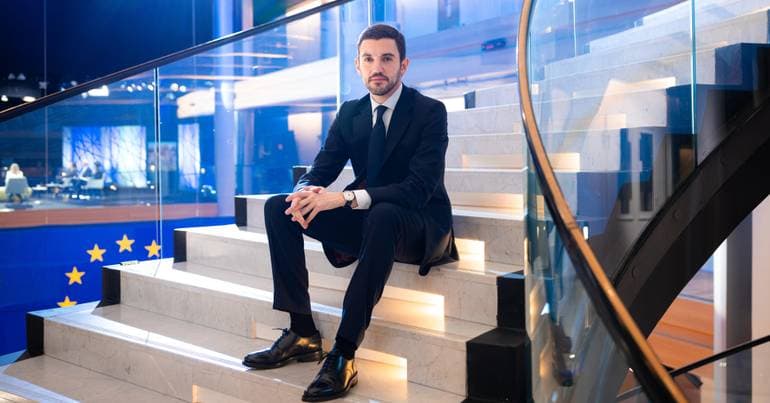
An MEP gives several reasons for AD voters to back Seguro, says Montenegro is a 'federating' figure for the AD space and accuses Carneiro of being rather unintelligent for turning the first-round result into a partisan issue.

If he drags everything through the mud, Ventura will never reach Meloni.

The PSD's autonomy in a political system undergoing transformation is in the interest of those who prefer to preserve — to reform rather than break — that system.

“Without much enthusiasm,” the president of Iniciativa Liberal will vote for António José Seguro, she told SIC Notícias. The party will not support either of the two candidates in the race for Belém.

Marques Mendes declared his support for António José Seguro in the second round of the presidential election, on 8 February.

Was António Costa better than the 'costistas' who, until the last moment, refused to support Seguro?

This is why so many on the right are paradoxically bereft of the PCP and BE. Without the far-left's discourse as a negative reference point, these right-wing intellectuals struggle to think and have nothing to say.

António Lobo Xavier has announced he will back António José Seguro and is weighing up whether to become involved in the campaign.

Rui Gomes da Silva, a supporter of André Ventura, reacts to Luís Montenegro's position of not endorsing votes for either of the two candidates for Belém, André Ventura and António José Seguro.

Despite Luís Montenegro's declared neutrality, António José Seguro is beginning to gather backing from Social Democratic figures. The road to the second round promises to be, above all, ideological.

David Pontes argues that the so-called elections for the presidencies of the CCDRs are a façade: party leaders pick office-holders behind closed doors, depriving voters and local stakeholders of genuine choice. The editorial contends this practice undermines democratic legitimacy, concentrates power within party machines and weakens accountability in regional policy, and calls for transparent, competitive selection procedures and broader electoral reform.