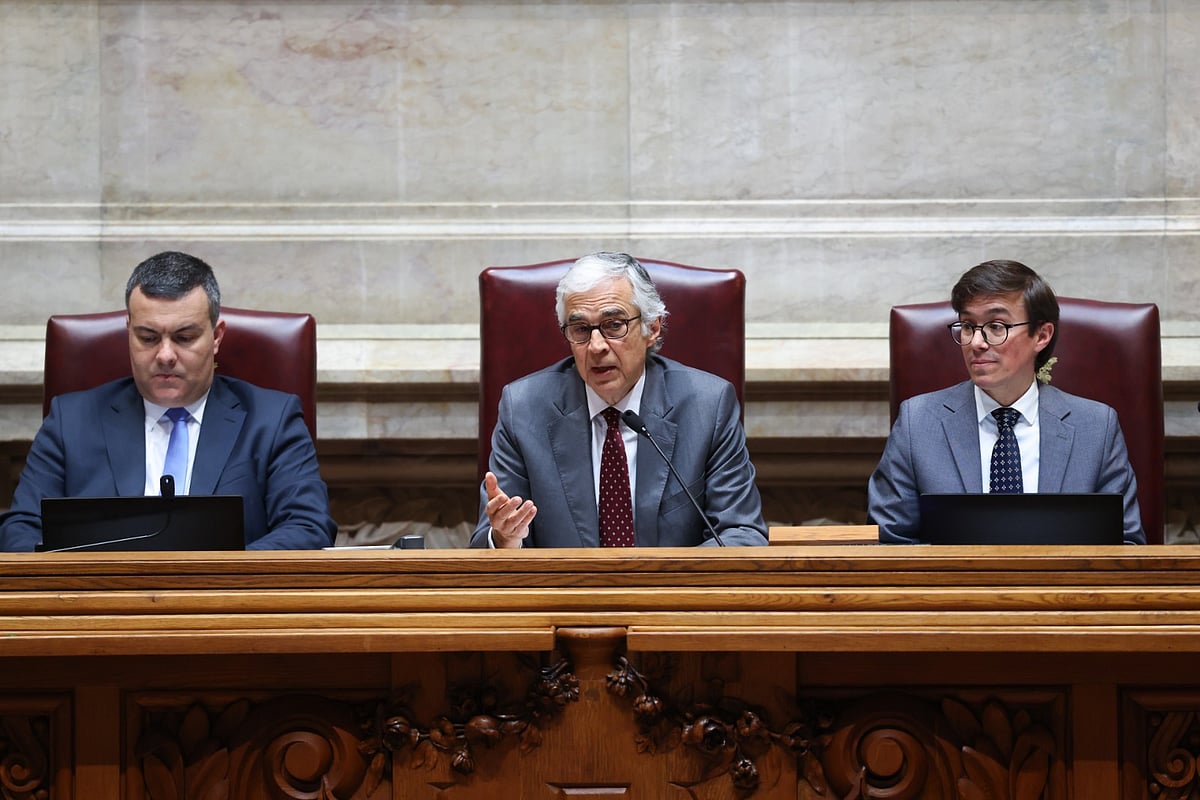
The Constitutional Court is not an accessory body; it is the ultimate guarantor of the Constitution of the Portuguese Republic. It holds the responsibility of curbing potential excesses of political power and safeguarding the fundamental principles of the democratic rule of law. The Constitution requires a two-thirds qualified majority to elect its judges, a mechanism designed to ensure balance, compromise, and a sense of responsibility. With the need to elect new judges, the PSD faces a decision that goes far beyond parliamentary arithmetic. It is a question of with whom they wish to build that qualified majority and, above all, at what cost. Establishing agreements with a political force that has repeatedly questioned the fundamental pillars of the Constitution and the democratic regime cannot be treated as a simple exercise in viability. Regardless of the individual in question, being nominated by the far-right does not inspire confidence. There is no rule that mandates agreements with the second-largest party in parliament; that idea is as convenient as it is false. Other majorities are possible, starting with the second most-voted political force (PS). Ignoring this is not an inevitability, it is a choice. The Constitutional Court relies on its credibility, and the mere suspicion of ideological capture weakens it. Ultimately, the question is whether we are willing to protect the Constitution with consistency or if we accept relativizing it for political convenience.
Majorities - the choice that weighs heavy

Context & Explainers
The Constitutional Court (Tribunal Constitucional) is Portugal's highest court for constitutional review, responsible for checking whether laws and statutes comply with the Constitution and for annulling or suspending unconstitutional measures. FNAM's push for a review matters because the court can strike down or block parts of the regional emergency services statute, directly affecting how emergency care is regulated.
The Council of State (Conselho de Estado) is the President's primary advisory body, composed of senior political figures including the Prime Minister and former presidents. It provides non-binding opinions on major issues such as dissolving parliament or declaring a state of emergency. Residents should note that the council acts as a stabilizing force during periods of political deadlock or institutional tension.
Ana Catarina Mendes is a Member of the European Parliament and a senior figure in the Socialist Party (Partido Socialista). She previously served as the Minister in the Presidency from 2022 to 2024, where she managed government coordination and parliamentary relations. Those following national politics should note her role in mediating high-level agreements between the country's major political parties.
RSS source
Other news coverage of this topic
- IL joins PSD and Chega at the Constitutional Court. Will it be enough?12:40am, 26 Mar 2026 • Público
- “Friendly pressure” from Belém helps reach consensus on the Constitutional Court12:19am, 26 Mar 2026 • Diário de Notícias
- PS divided over how far to break with the PSD10:46pm, 25 Mar 2026 • Observador
- Constitutional Court judges. "We believe José Luís Carneiro's tantrum has come to an end"9:55pm, 25 Mar 2026 • CNN Portugal
- Constitutional Court judges. "If the PSD is unable to present its list, the IL, as a last resort, will present its own names"9:54pm, 25 Mar 2026 • CNN Portugal
- Constitutional Court judges. "The focus should be on the PSD, it is the PSD that chooses with whom it wants to form a two-thirds majority"9:54pm, 25 Mar 2026 • CNN Portugal
- André Ventura's statements are very similar to those of José Sócrates regarding all the legal proceedings in which he was involved8:30pm, 25 Mar 2026 • CNN Portugal
- Three PSD deputies distance themselves from Chega's gender identity bill, despite having voted in favour8:20pm, 25 Mar 2026 • Expresso
- Ana Catarina Mendes says PSD can still build a majority "with the democratic spectrum" for the Constitutional Court7:46pm, 25 Mar 2026 • Correio da Manhã