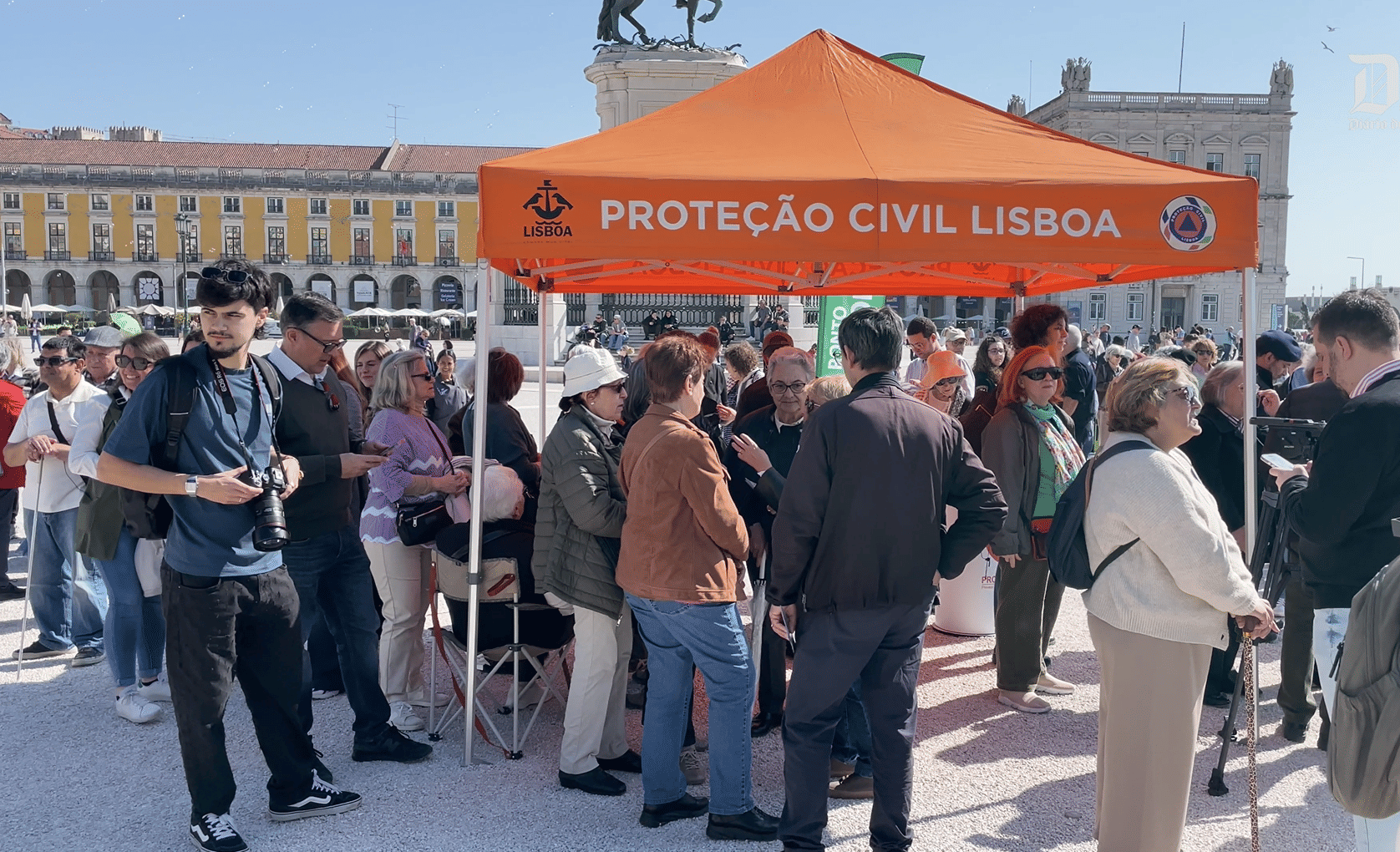
The first test exercise for Lisbon's tsunami warning system took place on the morning of Tuesday, March 24. Sirens sounded at Terreiro do Paço with audio messages indicating it was an emergency evacuation drill. Over one hundred personnel from Civil Protection, Municipal Police, Public Security Police, and the National Maritime Authority were involved in the operation. Carlos Moedas, Mayor of Lisbon, stated he will propose holding these tests every two months, though the municipal Civil Protection director confirmed only one more for this year. Carlos Moedas: 'I have no coalition with Chega, nor will I ever have one.' The Governor of the Bank of Portugal refuses to comment on Mário Centeno's early retirement.
Tsunami alert: See how Lisbon's first giant wave preparedness drill went
Tuesday, 24 March 2026RSS
Context & Explainers
Civil Protection (Proteção Civil) is Portugal's national system for preventing, preparing for, and responding to disasters and emergencies — from wildfires and floods to earthquakes and storms.
The system is coordinated by the ANEPC (Autoridade Nacional de Emergência e Proteção Civil), which issues warnings, activates response plans, and coordinates firefighters, police, military, and municipal services. During major events, the ANEPC can activate the SIOPS (Sistema Integrado de Operações de Proteção e Socorro), a unified command structure for managing multi-agency responses.
Portugal's Civil Protection framework operates at three levels — national, district, and municipal — each maintaining its own emergency plans. The system has been under ongoing reform, with emergency associations pushing for clearer single-command structures to reduce confusion between responders during major incidents.
During weather emergencies, Proteção Civil issues safety advisories, may close roads and access routes, and coordinates rescue operations. Residents should follow official ANEPC guidance and call 112 for emergencies.