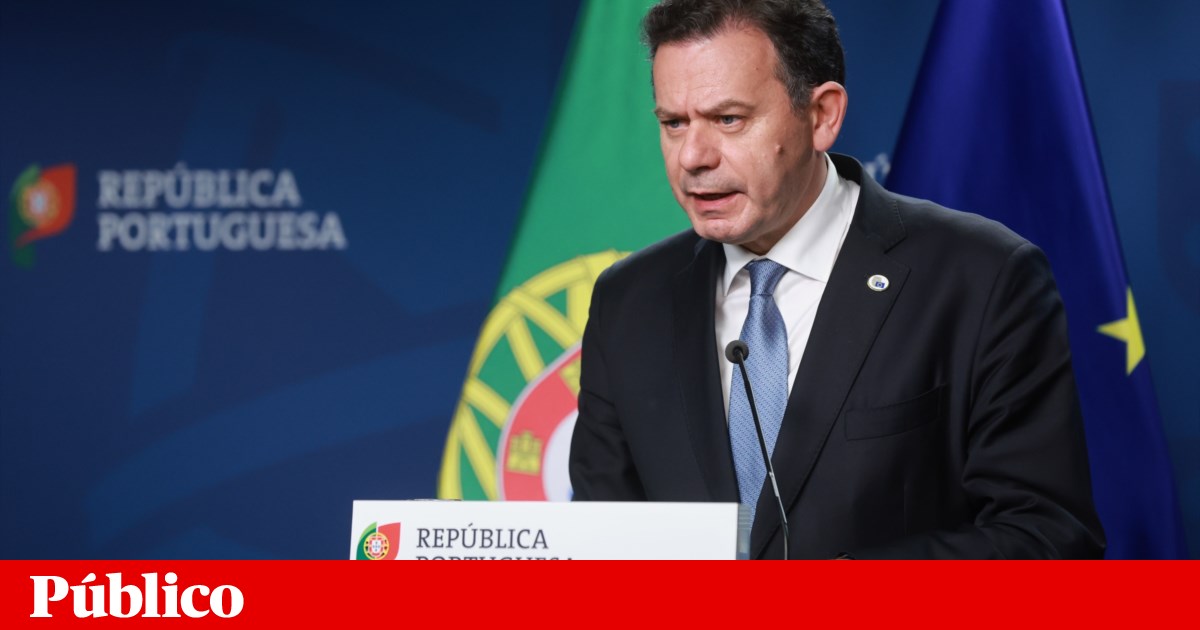
At issue are funds for projects that were not executed due to the storms. The Prime Minister requested agility and flexibility so that Portugal does not lose funding.
Bad weather: Montenegro asks Brussels for an “ingenious solution” to avoid losing RRP funds
Friday, 20 March 2026RSS
Context & Explainers

- Prime Minister, Portugal: 2024 - Present
- Party: Social Democratic Party (PSD)
Luís Filipe Montenegro Cardoso de Morais Esteves (born February 16, 1973, in Porto) is a Portuguese lawyer and center‑right politician who has served as Prime Minister of Portugal since April 2, 2024. A long‑time member of the Social Democratic Party (PSD), he is the leading figure of the post‑Troika generation of Portuguese conservatives. Montenegro was elected to the Assembly of the Republic in 2002 for the Aveiro district and remained an MP for 16 years, becoming PSD parliamentary leader from 2011 to 2017 during the bailout and austerity period under Prime Minister Pedro Passos Coelho. He was a prominent defender of strict austerity measures, arguing in 2014 that “the life of the people is no better, but the life of the country is a lot better,” a phrase that has followed his public image since. After an unsuccessful leadership bid against Rui Rio in 2020, Montenegro won the PSD leadership in 2022. He then forged the centre‑right Democratic Alliance (PSD–CDS‑PP and allies), which won a plurality of seats in the 2024 legislative election. Refusing to partner with the far‑right Chega, which he has called “often xenophobic, racist, populist and excessively demagogic,” he formed a minority government as head of the XXIV Constitutional Government on April 2, 2024. His first government fell in March 2025 after a no‑confidence vote linked to a conflict‑of‑interest affair, but fresh elections saw the Democratic Alliance increase its seat share, allowing Montenegro to return as prime minister leading the XXV Constitutional Government. His importance to Portugal lies in attempting to re‑center the traditional centre‑right after the crisis years, defending liberal‑conservative economics and EU alignment while drawing a sharp line against formal cooperation with the radical right, thus shaping how Portuguese democracy manages its new multi‑party era.
The PRR (Plano de Recuperação e Resiliência) is Portugal's national program under the EU's NextGenerationEU recovery fund, worth approximately €22.2 billion — roughly €16.6 billion in grants plus €5.6 billion in loans. Approved in 2021, it funds reforms and investments across housing, digital transition, climate action, healthcare, and public administration.
Payments from the European Commission are tied to specific milestones and targets. Missed deadlines or incomplete reforms can delay disbursements, affecting public works, infrastructure projects, and social programs that depend on PRR funding.
The PRR is one of the largest investment programs in Portugal's recent history and touches areas from affordable housing construction to hospital modernization, school renovation, and green energy transition. Progress is monitored by the European Commission through regular reviews.
AI Summary AvailableEU guarantees Portugal will not lose recovery funds from delaysRead the synthesized summary with context and explainers
View full article on publico.ptRSS source
Other news coverage of this topic
- Storms. Montenegro guarantees that Portugal will not lose funds • RTP Notícias
- Montenegro asks Von der Leyen for an “ingenious solution” to avoid losing RRF funds • Expresso
- Montenegro says he has a guarantee from Brussels that Portugal will not lose PRR funds • Dinheiro Vivo
- PM guarantees that Portugal will not lose PRR funds • Observador
- Montenegro says he has a guarantee from Brussels that Portugal will not lose PRR funds • CNN Portugal