For 40 years, this family has been selling ceramic pieces at fairs in Portugal
A look at a family business that has spent four decades selling pottery at various markets across Portugal.

Latest news and stories about traditional crafts in Portugal for expats and residents.
A look at a family business that has spent four decades selling pottery at various markets across Portugal.
The secretary-general of the Portuguese Pavement Association warned today about the risk of the stonemason profession becoming extinct and the consequences for the state of conservation of the pavement, requesting that the Government take measures.
Who remembers the shop on the old Rua Nova in Viseu, where one could hear the clinking of tinplate on the workbench, where lanterns, roasters, traps, funnels, watering cans, distaffs, and oil cans were born?

Straw coats were used to protect against extreme temperatures, because 'what keeps out the cold, keeps out the heat', and against the rain that ran off the fibre. Also, burel wool capes, which are still used today.

What is the “black pottery” of Molelos, which despite being “centuries-old” is not at risk of disappearing? And how is black clay made in the 21st century? The answer lies in the Terras de Besteiros Museum.
The author pays a heartfelt tribute to Cândida do Céu Ferreira, a paper flower artisan from Fragosela, a craft she learned as a girl from her grandfather.
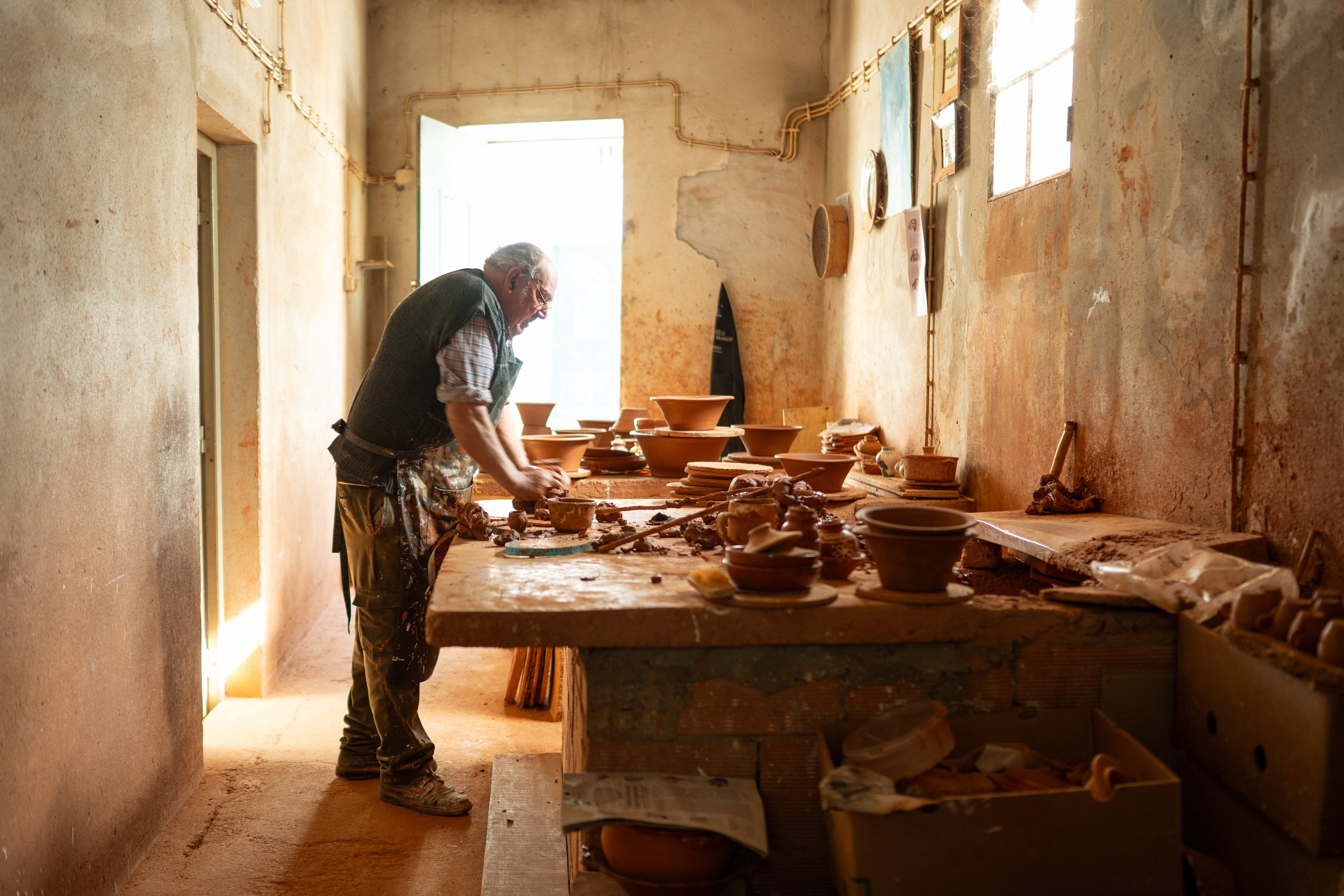
Four creatives spent a week working with master potters Feleciano Agostinho and Feliciano Mira Agostinho in Viana do Alentejo. The project, organised by the association Passa ao Futuro, aims to revitalise traditional pottery by collaborating with contemporary artists to create new, limited-edition collections. This initiative seeks to provide the artisans with new commercial opportunities and ensure the continuity of their craft, which faces the risk of disappearing as traditional markets decline.
On the day that celebrates World Artisan Day, it is important to remember those who promote, create, and preserve art. Among them are Ana Silva and José Vitorino, two artisans who work together from São Bartolomeu de Messines, in the Algarve. He builds musical instruments out of cane. She makes toys and household objects from wood or plant-derived materials.
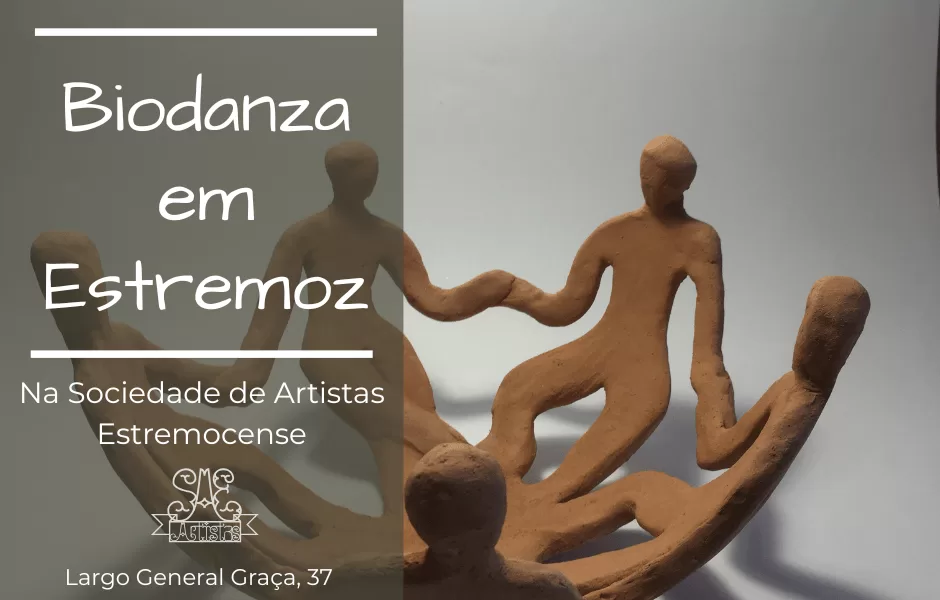
The article highlights ongoing cultural activities in Portugal, particularly in the Alentejo region. It reports on regular Biodanza classes held every Tuesday at the Sociedade de Artistas in Estremoz, led by Leonor Gonzalez, promoting personal development, human connection, and well-being through movement and music. Additionally, it mentions upcoming workshops in Évora focused on modeling and painting traditional Bonecos de Estremoz, a UNESCO-listed craft, organized by the Palácio do Barrocal in partnership with INATEL. The article also notes municipal road maintenance in Reguengos de Monsaraz, requiring traffic restrictions. Overall, the region is actively engaging in cultural, artistic, and community initiatives to foster local heritage and social well-being.
“The Government is preparing to create a Working Group for the Promotion of the calceteiros (traditional pavement craftsmen) and the Portuguese pavement. The initiative aims to protect, dignify and ensure the continuity of this intangible cultural heritage, which is unique in the world and is a candidate for inscription by UNESCO as Intangible Cultural Heritage of Humanity,” an official source from the Ministry told the Lusa news agency.

Councillor Ricardo Silva hopes the designation will serve as a key means to protect and preserve the city's Portuguese pavement, and says that, besides protection, it is necessary to train calceteiros (traditional stone‑paving craftsmen).
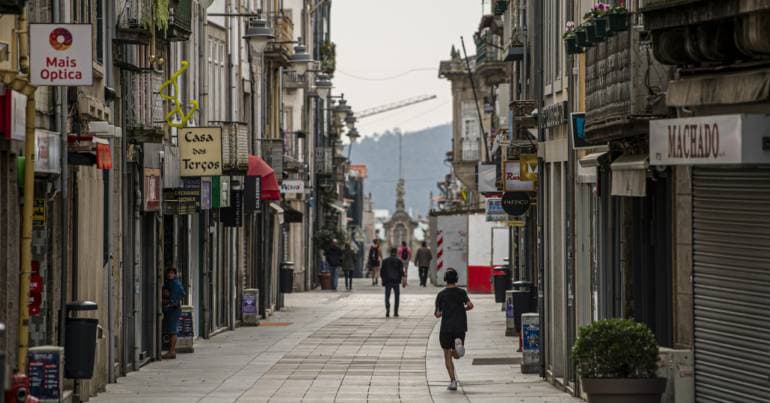
Councillor Ricardo Silva said that, besides protecting the pavement, it is also necessary to upskill the pavement-layers.

Home Portugal Portuguese Ceramics Portuguese Ceramics Besides the world-famous Azulejos, the blue and white ceramic tiles can be found in almost all Portuguese towns.

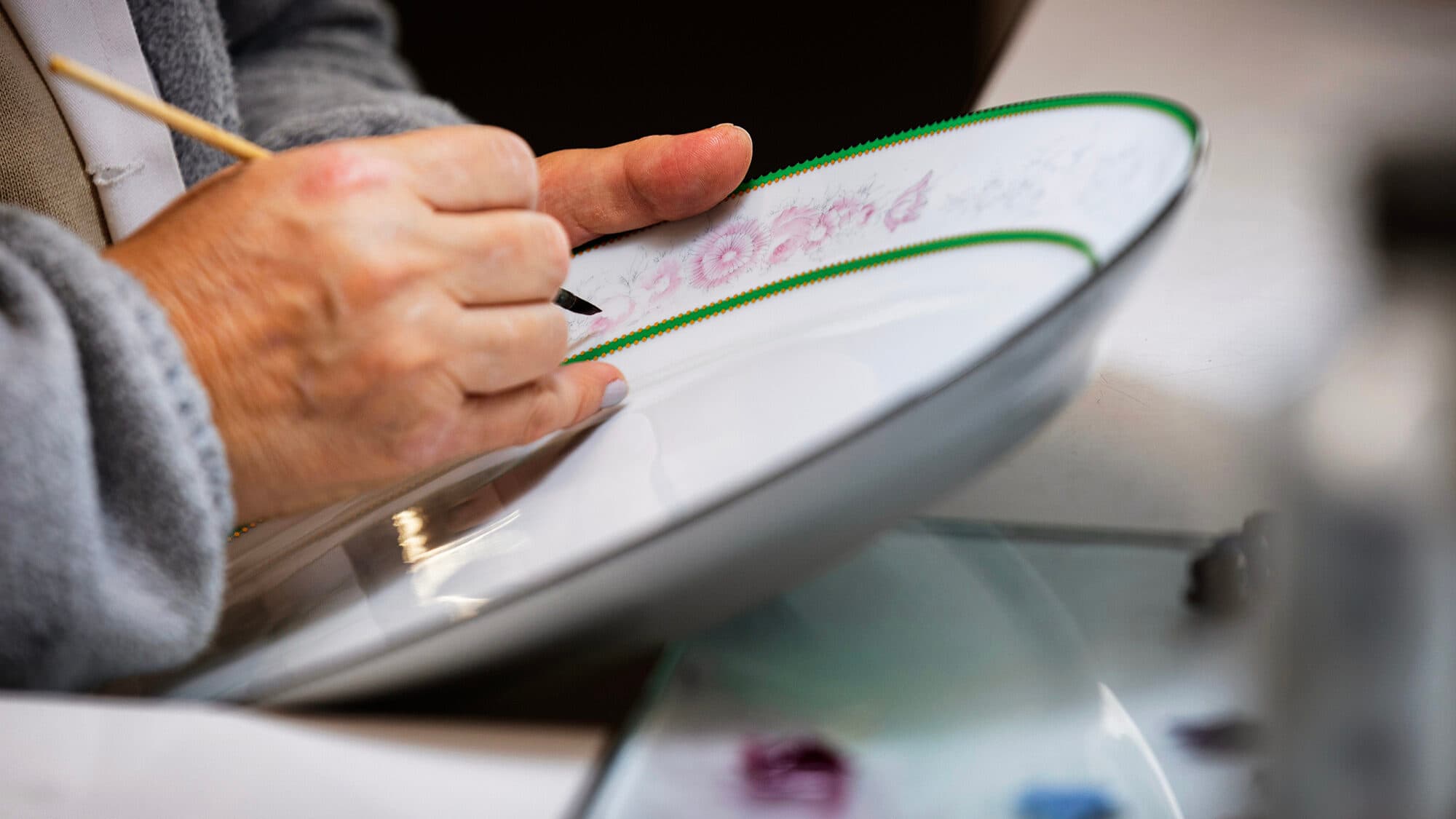
This article is part of the 16th edition of ECO magazine. You can buy it here. A hand-painted floral plate at the Vista Alegre factory in Ílhavo can only be made by the most experienced. “A doctor studies for six years, the speciality another two to four years. At Vista Alegre it is ten years before painting flowers …