

National fund for catastrophic risks in Portugal: it is time to decide.
A discussion on the necessity and urgency of establishing a national fund to address catastrophic risks in Portugal.

Latest news and stories about risk management in Portugal for expats and residents.
A discussion on the necessity and urgency of establishing a national fund to address catastrophic risks in Portugal.
The recent publication of a joint discussion paper by the European Insurance and Occupational Pensions Authority (EIOPA) and the European Stability Mechanism (ESM) on April 9th, following a series of joint papers by EIOPA and the European Central Bank (ECB) since April 2023, refocuses the European debate on the impact...

If the goal is to protect against the risks that society faces at any given moment, it makes sense for insurers to adjust to the social, economic, technological, and legal changes that shape those very risks. It would be a failure if they did not. Not only would they be ignoring new risks that they might not be able to cover, but they would also...

The Portuguese Hotel Association (AHP) and Seguramos have established a partnership with the goal of supporting companies in the hotel sector with risk management. The initiative aims to strengthen and provide the 980 AHP members with insurance solutions tailored to the reality of the hotel industry, as well as specialized consulting services, promoting a...
For decades, the insurance industry has been accustomed to being the professional guardian of uncertainty while projecting an image of absolute robustness, predictability, and tradition. While other sectors oscillated between crises, reinventions, and disruptions, insurance remained the last bastion of stability. The sector thrived, supported by an almost mechanistic narrative of analyzing risks, pricing, and investing.

Claudia Buch called on the banking sector to monitor its exposure to the most vulnerable sectors.

Geopolitics is no longer just a backdrop, but has become a central variable in the investment, financing, and risk management decisions of Portuguese companies. The worsening conflict in Iran and, in particular, the risk of disruption in the Strait of Hormuz, have shifted the focus of business leaders' concerns away from balance sheets and results.

A well-protected company is prepared to compete for new contracts and grow. A poorly protected company lives in a state of permanent vulnerability.

New and emerging risks are taking shape, and old, familiar ones are metamorphosing into new unknowns that insurance risk analysts must face. In an interview with ECOseguros, actuary Vanda Antunes, member of the Executive Committee and Chief Risk Officer of the Ageas Portugal Group, explains how she thinks about this new world of uncertainty. She also discusses...

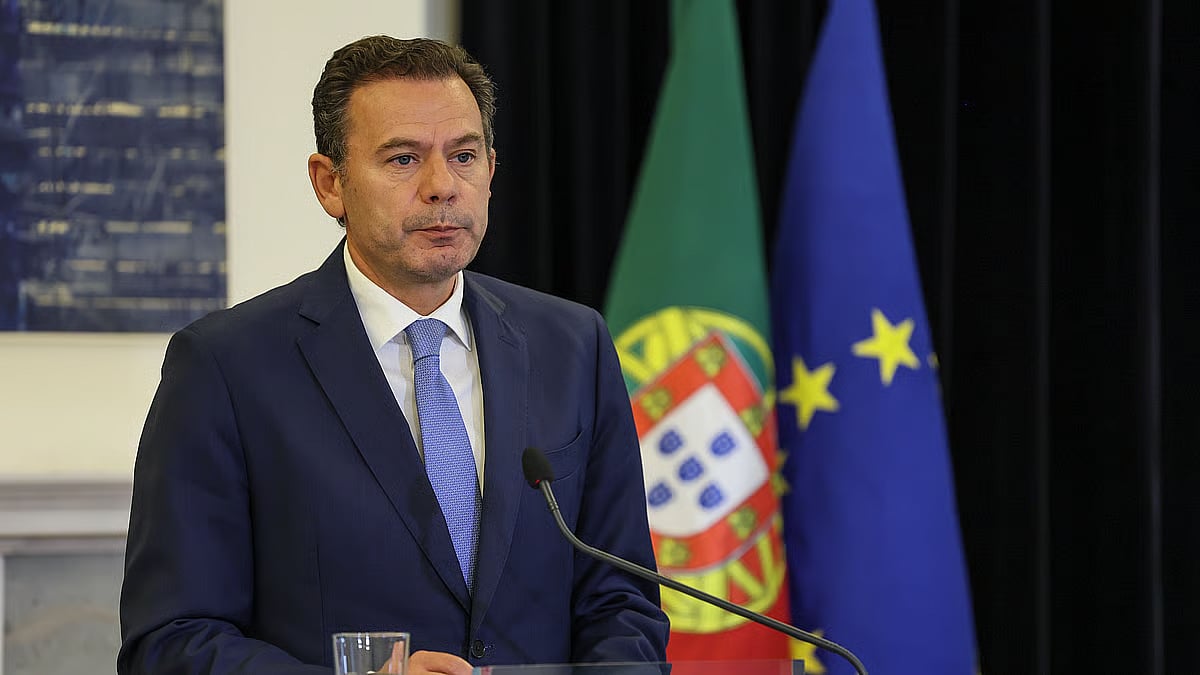
The Government will evaluate the creation of a Disaster and Earthquake Fund and plans to develop a Severe Earthquake Response Plan as part of the Portugal, Transformation, Resilience and Recovery (PTRR) initiative, announced Prime Minister Luís Montenegro on Friday, February 20. In a statement following the Council of Ministers, Montenegro outlined measures for the three pillars of the PTRR, particularly regarding seismic risk. These measures include revising and updating national legislation related to resilience and seismic reinforcement, as well as developing monitoring, transparency, and oversight solutions for the seismic resistance of buildings. The Government also aims to enhance seismic coverage of properties and create a Severe Earthquake Response Plan. According to the package presented today, the review of the Regime and Incentives for Disaster Insurance will proceed, along with adopting financial risk management solutions for disasters and earthquakes, “assessing the creation of a Disaster and Earthquake Fund, and positively differentiating more vulnerable populations, small businesses, and small farmers.” The insurance sector has been advocating for the establishment of this fund, with the president of the Insurance and Pension Funds Supervisory Authority (ASF) stating this week that it is “essential” to have an integrated national system for protection against natural disasters, not solely focused on earthquakes. Gabriel Bernardino noted during a hearing in the Budget, Finance, and Public Administration Committee that when he spoke with the Minister of Finance upon his appointment as supervisor, he said: “We need to have a disaster fund, not just an earthquake fund.” He emphasized the need for an “integrated national system for protection against natural disasters,” indicating that he hopes to present it to the Government in due course. The Government aims to have the PTRR approved in April, with the financial envelope to be defined after national consultations. The Prime Minister has already requested meetings with President Marcelo Rebelo de Sousa and elected head of state António José Seguro, in addition to scheduled meetings with parliamentary parties next Wednesday. The “small deficits” caused by the PTRR will still maintain “balanced public finances.”
The climate has changed, and the safety culture must change as well. Continuing to react as if storms are mere inconveniences is a silent form of collective risk.

Portugal's candidacy for the new body responsible for managing customs risk control will be examined by the European Parliament, and a decision could be announced in February.

The level of risk we may be exposed to in investments changes over time and should be reviewed annually.
